
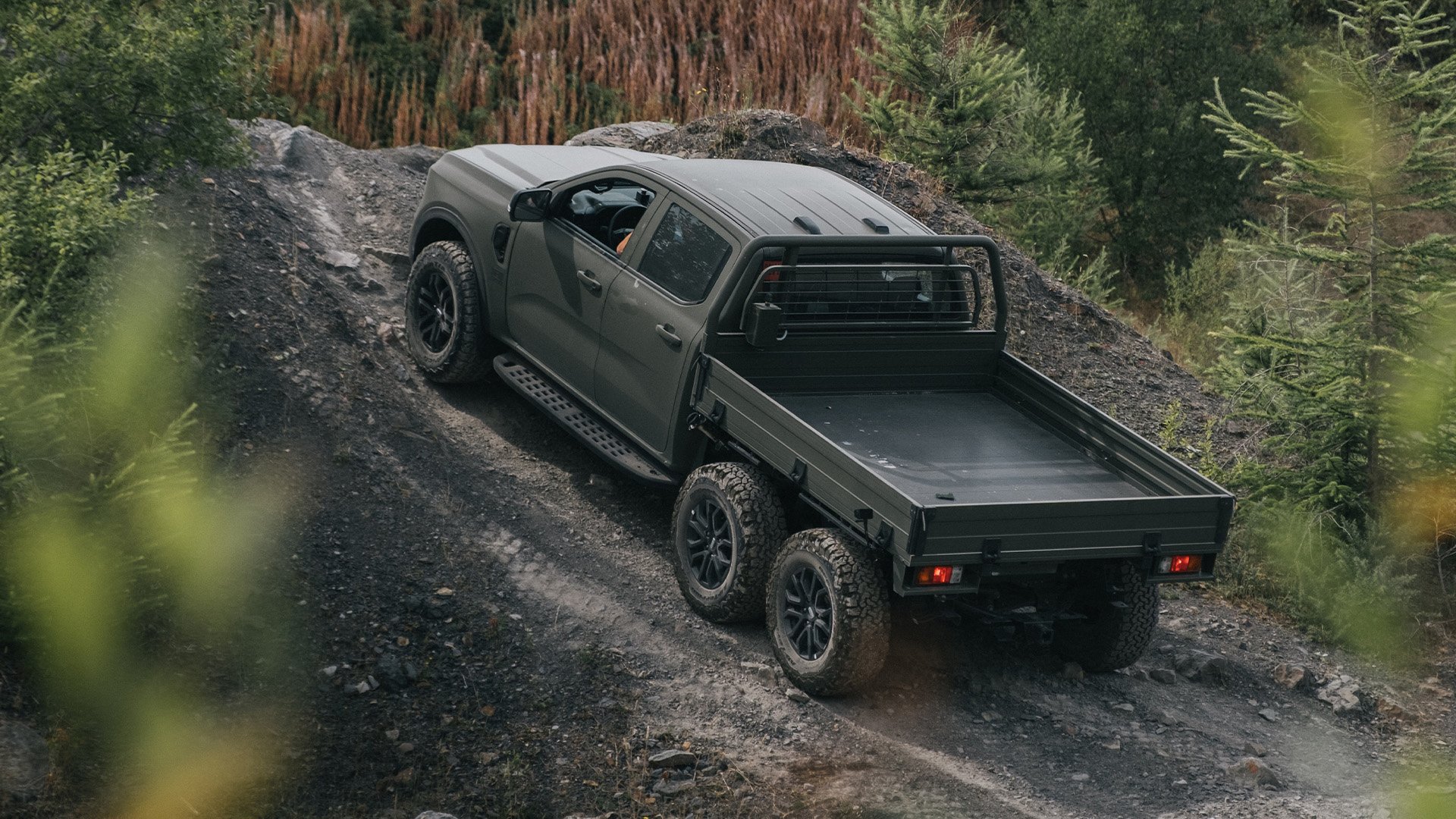


Ford just rolled out a six-wheeled Ranger Super Duty prototype with a tray bed, and it wasn’t built for overlanders or mall crawlers. This truck was engineered specifically to compete for the United Kingdom Ministry of Defense’s Light Mobility Vehicle program.
The Ranger Super Duty already punches well above its weight class for a midsize truck. In stock form, it tows 9,920 pounds and hauls 4,370 pounds of payload, courtesy of beefed-up suspension and a 3.0-liter turbodiesel V6. That truck sells in markets like Australia, where working hardware matters more than chrome badges.
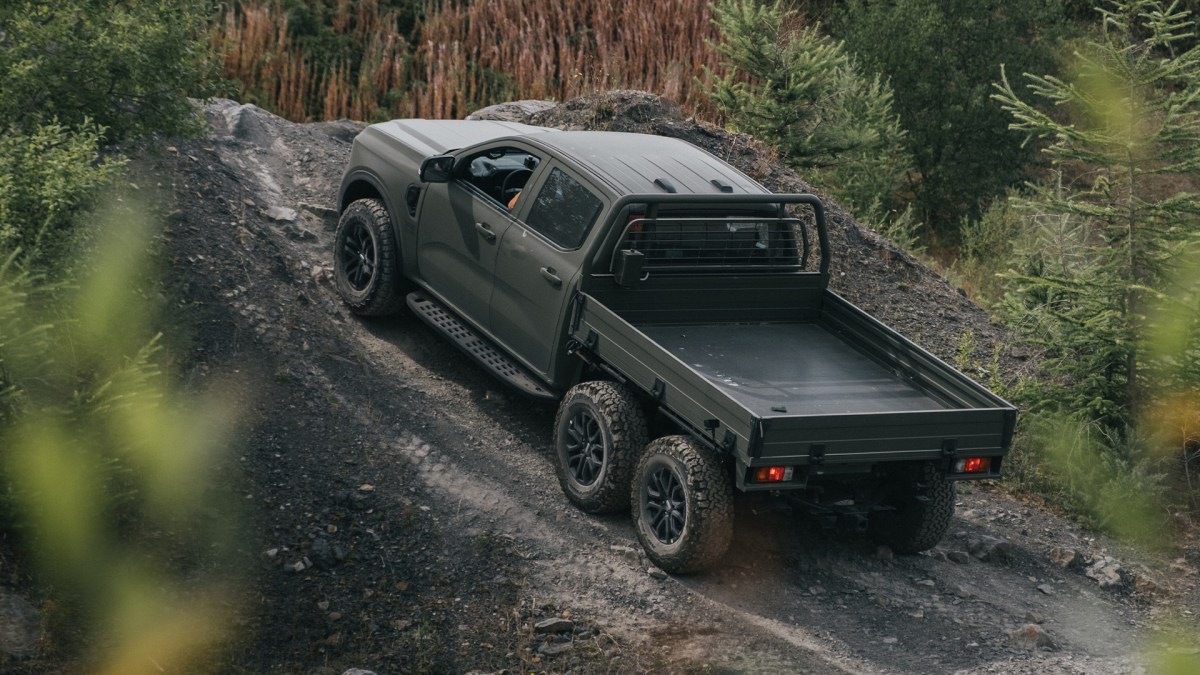
The 6×6 version adds a third axle and swaps the pickup bed for a flat tray, turning a capable workhorse into something closer to a light military platform. Ford designed it for two roles: troop carrier and battlefield ambulance.
We engineered Ranger for conversion from day one,” said Jim Baumbick, president of Ford Europe. That’s a telling statement. It means the Ranger’s architecture was deliberately built with military and commercial upfitters in mind from the start, not retrofitted after the fact.
The cab reflects that thinking. A 12-inch screen runs third-party tactical mission software, and pre-wired auxiliary switches handle emergency lighting, communications, and other field equipment.
Sharp-eyed observers noticed something odd in the prototype photos. The wheels appear to carry six lugs, while the standard Ranger Super Duty runs eight. Whether that’s a development quirk or a deliberate choice for the military spec remains unclear.
Ford has not won the UK contract yet. The LMV program is a competition, and other manufacturers could land the deal. But the fact that Ford showed up with a purpose-built 6×6, rather than a modified aftermarket conversion, signals how seriously the company is chasing government and defense business outside the United States.
The American truck market gets plenty of attention with the F-150 Raptor R and its competitors. But the real action in global truck development is happening in places like Australia, the Middle East, and now the UK defense sector, where trucks still need to do actual work under extreme conditions. Ford’s decision to build the Ranger Super Duty platform with conversion flexibility baked in suggests the company sees a future where military, commercial, and emergency services contracts are just as valuable as retail sales.
None of this is coming to U.S. dealers. The Ranger Super Duty doesn’t sell here in any configuration, let alone a six-wheeled military variant. American buyers who want a heavy-duty midsize truck remain out of luck, stuck choosing between the standard Ranger and the jump to a full-size Super Duty.
Ford hasn’t disclosed pricing, production timelines, or whether the 6×6 would be offered to other defense customers beyond the UK. The prototype exists and the engineering exists. The question now is whether a government contract follows, or whether this stays a one-off flex from Dearborn aimed at a market most American truck buyers will never see.

Share this Story