
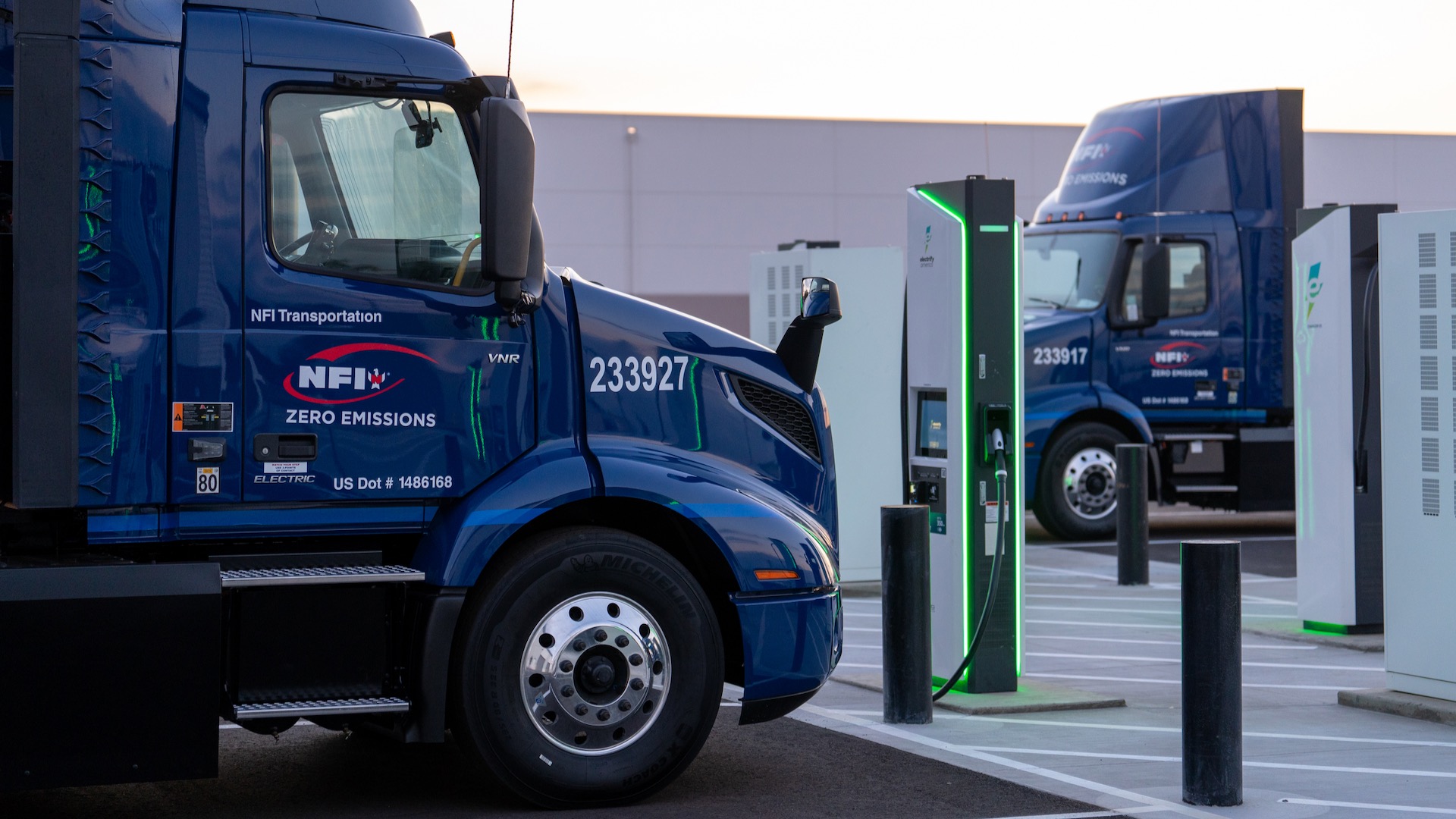


California just committed $1 billion to a question the trucking industry has been dodging for years: can you actually get fleets to go electric?
Starting June 26, the California Air Resources Board will hand out rebates ranging from $7,500 to $120,000 per vehicle for battery-electric commercial trucks, from Class 2B pickups all the way up to Class 8 semis. The money comes not from the state’s general fund but from its Low Carbon Fuel Standard, a cap-and-trade-style program that has quietly generated enormous revenue since 2009 by forcing fuel companies to buy credits when they miss lifecycle emissions targets. CARB expects $250 million to flow this year alone, with the rest rolling out through 2030.
The structure borrows directly from what worked in the passenger-car market. Rebates hit at the point of sale, not months later through a mail-in application. A 2022 study found that immediacy mattered to car buyers, and California is betting fleet managers will respond the same way. Dealers are already being recruited to participate before the launch date.
There’s a catch, though. The lowest tier, that $7,500 for Class 2B trucks, is restricted to public fleets only. Hydrogen fuel-cell trucks, which Toyota and PACCAR have been demonstrating at the Ports of Los Angeles and Long Beach, don’t qualify.
Neither do hybrids, used vehicles, or electric motorcycles. This is a battery-electric-only play, aimed squarely at new purchases by commercial operators.
That’s a deliberate choice, and a revealing one. California is picking a technology winner at a moment when the hydrogen-versus-battery debate in heavy trucking remains genuinely unresolved. The state’s own ports have hosted Toyota’s “Project Portal” hydrogen drayage trucks for years, but the rebate dollars are going elsewhere.
The program joins an existing initiative, the Clean Truck and Bus Voucher Incentive Project, which CARB says has already distributed $1 billion to fund 11,600 zero-emission vehicles across 2,000 fleets. Together, the two programs are meant to push California toward a target set in 2020: 100 percent zero-emission truck sales by 2045.
Progress so far looks deceptively strong. CARB claims 23 percent of medium- and heavy-duty truck sales in the state were zero-emission in 2024, more than double the state’s own target. But percentages can flatter small numbers. The installed base of diesel trucks on California roads remains overwhelming, and the 2045 deadline means the state needs to sustain and accelerate adoption for two more decades.
The timing carries its own tension. The federal government under the Trump administration has pulled back from enforcing automaker emissions rules, leaving states like California to fund and enforce their own clean-vehicle ambitions. That $1 billion isn’t just an incentive program. It’s a hedge against federal inaction.
Commercial trucks are the unglamorous backbone of emissions reduction. They cover vastly more miles than passenger cars and pump out pollution at industrial scale. A single long-haul semi can burn 20,000 gallons of diesel a year. Converting even a fraction of California’s commercial fleet to electric would move the needle in ways that another thousand Teslas in Malibu driveways never could.
Whether $120,000 off the sticker price of an electric semi is enough to overcome the range anxiety, charging infrastructure gaps, and sheer operational inertia of an industry built on diesel remains the open question. California has placed its bet. The trucks haven’t arrived yet.


Share this Story