
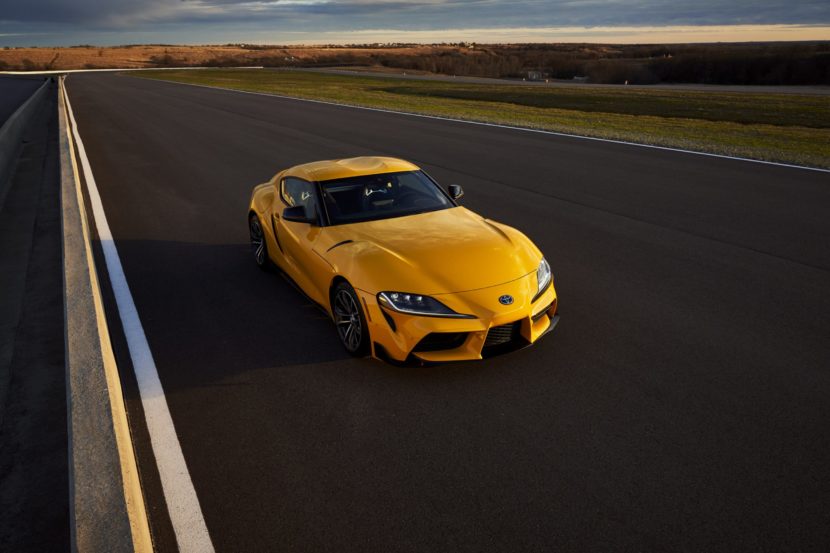


The most entertaining applications of BMW’s B48 turbocharged four-cylinder don’t wear a roundel. They wear a Toyota badge, a Morgan wing, and a MINI emblem. Three wildly different cars, three different drivetrain layouts, and one shared truth: BMW’s versatile 2.0-liter deserves far more outside placements than it has received.
Start with the Toyota GR Supra 2.0, the version most enthusiasts overlook. Its B48 makes 255 horsepower and 295 pound-feet of torque, routed rearward through an eight-speed automatic. Five seconds to 60 mph, and roughly 200 pounds lighter over the nose than the inline-six model.
The four-cylinder Supra was the better-balanced car, and Toyota killed it in the U.S. after 2024. The company never offered it with the manual gearbox either, likely to protect GR86 sales. That decision now looks shortsighted, given how quickly used Supra 2.0 values have climbed.
Then there is the Morgan Plus Four, which might be the single most fascinating deployment of any modern BMW powertrain. A 2,300-pound roadster with styling that predates the jet age, built on a bonded-aluminum platform that is anything but old-fashioned. The B48 makes 255 horsepower here too, but it has to push roughly 1,200 fewer pounds than it does in a typical 3 Series.
Morgan offers a six-speed manual. The automatic gets the full 295 pound-feet and hits 62 mph in 4.8 seconds. It is also the most expensive B48 car you can buy without a BMW badge, starting north of $95,000. The price buys one of the purest driving experiences left in production.
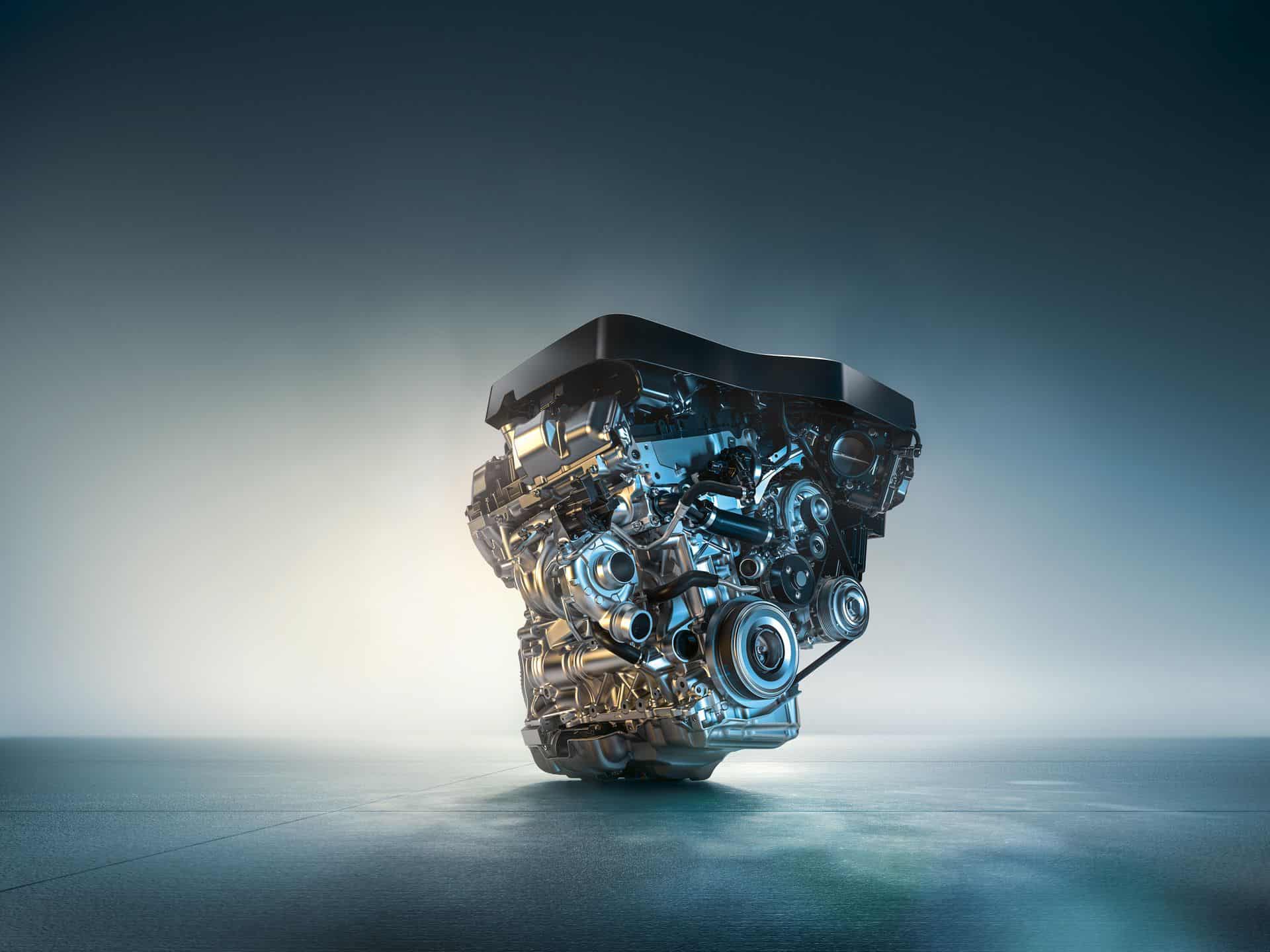
MINI pushed the engine hardest. The third-generation John Cooper Works GP extracted 301 horsepower and 331 pound-feet from its B48, all directed through the front wheels via an eight-speed automatic and a mechanical limited-slip differential. Rear seats deleted, sound insulation stripped, only 3,000 built worldwide. Top speed: 165 mph from a MINI.
The JCW Clubman ALL4 used the same output but added all-wheel drive, rear seats, usable cargo space, and those quirky split rear doors. It hit 60 mph in 4.9 seconds, quicker than the stripped-out GP in a straight line. Clubman production ended in February 2024, and the market for clean examples is already tightening.
The JCW Countryman ALL4 rounded out the trio, putting the formula into a crossover body. None of these MINIs follow BMW’s rear-drive playbook, and that is precisely what makes them interesting. The same engine block supports transverse front-drive, longitudinal rear-drive, and all-wheel-drive configurations without complaint.
So why hasn’t anyone else used it? Most automakers already have their own turbocharged fours, and sourcing a competitor’s engine adds cost, complexity, and a certain institutional reluctance. The B48 requires integration with BMW’s electronics architecture, which is not a trivial exercise for an outside manufacturer.
But the results speak clearly. Toyota got a genuinely balanced sports car. Morgan got a modern heart for a timeless body. MINI got a trio of pocket rockets that punched well above their size.
Each application revealed something the engine couldn’t fully express inside a 3 Series or X1. The B48’s production window is narrowing as electrification reshapes BMW’s lineup. The cars that already carry it outside the family are becoming the definitive proof of what the engine could do when freed from the constraints of BMW’s own product planning, and the used market is starting to figure that out.

Share this Story