
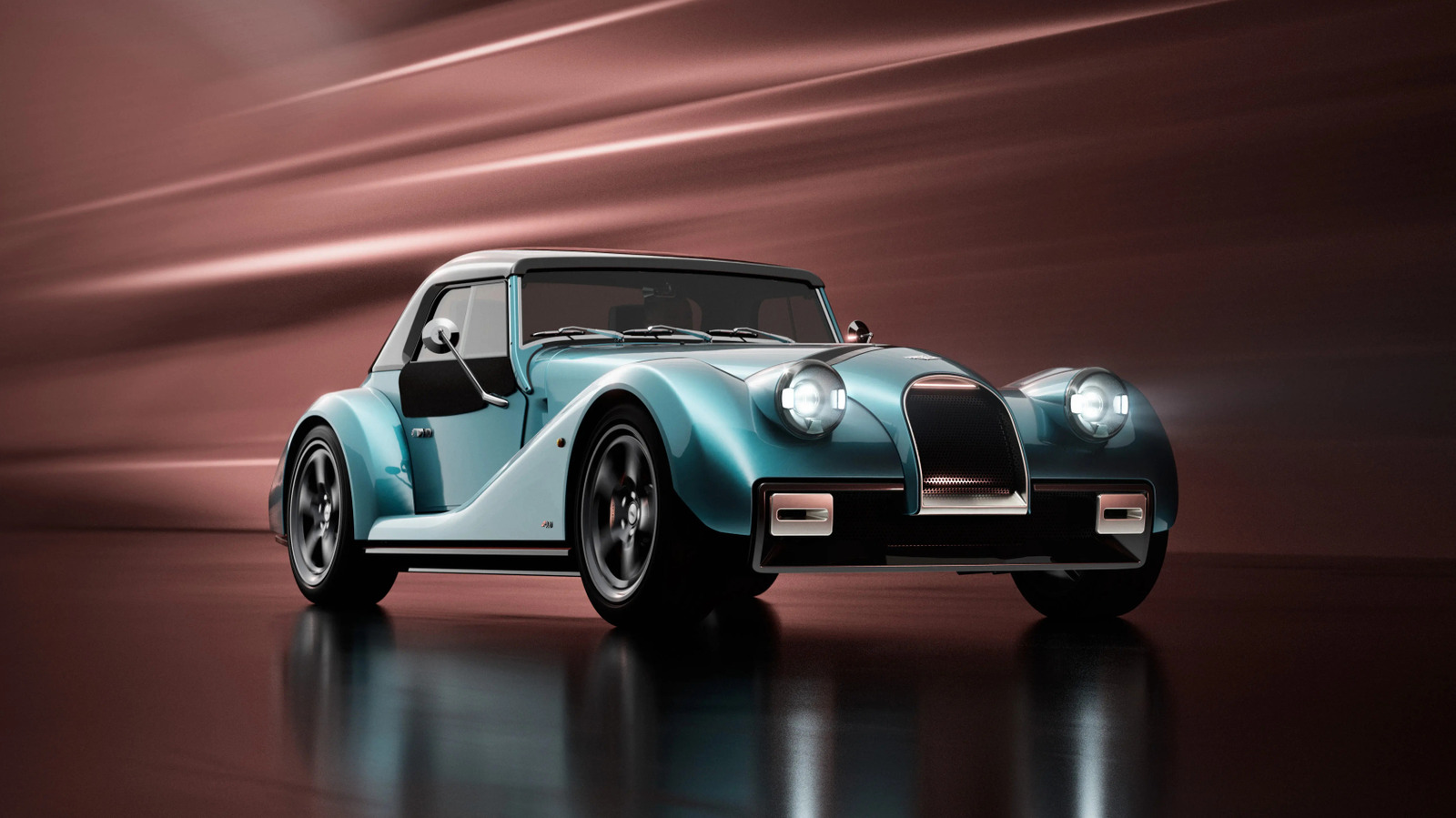


Morgan just dropped a car with 402 brake horsepower, a BMW turbo six under the hood, and an ash wood frame holding the whole thing together. The Supersport 400 is the most powerful production Morgan ever built, and it looks like something Stirling Moss would have raced at Goodwood in 1957.
The numbers are genuinely startling for a car this small and this anachronistic. That BMW B58 3.0-liter inline-six — the same engine doing duty in everything from the M340i to the Toyota Supra — pushes 396 horsepower and 369 pound-feet through a ZF eight-speed automatic to the rear wheels. Morgan claims a curb weight of just 2,579 pounds.
Do the math: that’s a power-to-weight ratio that embarrasses sports cars costing twice as much. The result is a claimed 3.6-second sprint to 62 mph and a 180-mph top speed. That’s quicker than the BMW Z4 M40i running the same engine family, and the Z4 doesn’t have to route its power through timber.
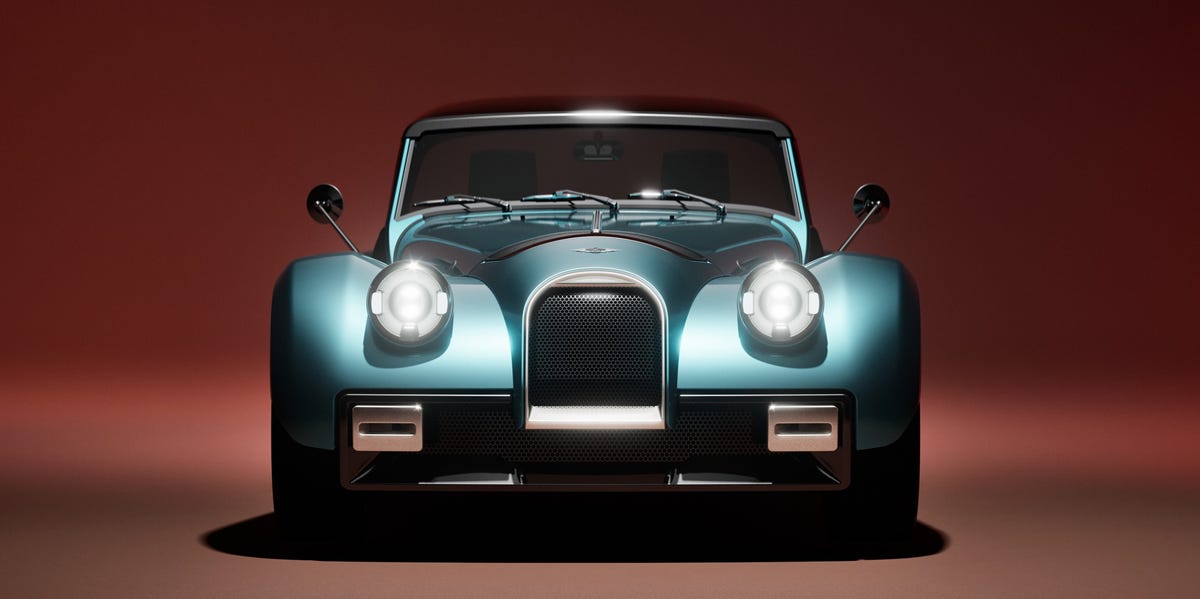
Morgan’s CXV-Generation bonded-aluminum platform provides the structural backbone, engineered for high torsional rigidity. But the company hasn’t abandoned its signature construction method — that aluminum chassis still wraps around an ash wood frame, a technique Morgan has used since your grandfather was young. The tension between aerospace-grade aluminum bonding and wood joinery is either brilliant artisanal engineering or magnificent British stubbornness.
The Supersport 400 arrives as a sharper, more deliberate version of the Supersport that Morgan introduced last year as a successor to the Plus Six. Output jumps 67 horsepower over the standard car’s 335-hp tune. The suspension gets serious attention too: Nitron dampers with 24 clicks of adjustment, revised geometry, and Morgan’s Dynamic Handling Package come standard.
A limited-slip differential is available but costs extra, which feels stingy on a car north of $150,000. That price — 112,965 British pounds, roughly $152,105 — plants the Supersport 400 squarely in Porsche 911 Carrera S territory. Except the 911 comes with decades of motorsport development, a global dealer network, and no structural lumber.
Morgan is selling something else entirely: the experience of piloting a handmade, coach-built roadster that will never be mistaken for anything else on the road. And they’ll let you spend considerably more. Want paint? That’s an extra $1,275.
The aluminum gear selector replacing BMW’s plasticky stock shifter runs $2,344. A hardtop with mohair hood will set you back $9,203. By the time you’ve ticked every box, you’re well past $160,000 for a car with an open differential and no roof.
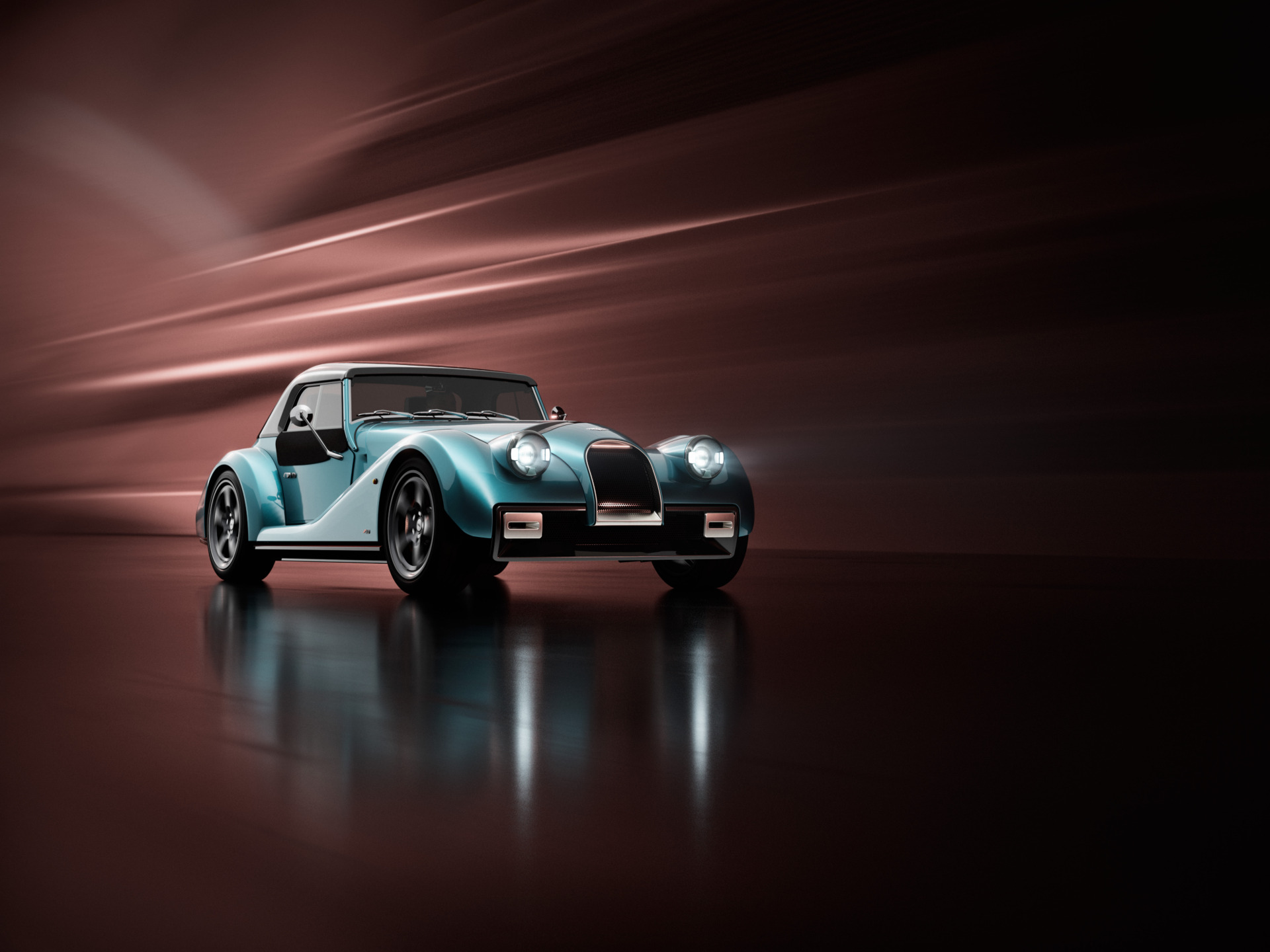
Inside, the cabin mixes leather and Alcantara with analog-style gauges from Welsh instrument maker Caerbont — dials that look vintage but communicate through modern CAN and LIN protocols. It’s a perfect metaphor for the whole car: old-world aesthetics layered over contemporary engineering, daring you to figure out where the theater ends and the substance begins.
Production starts in May at Morgan’s Pickersleigh Road factory in Malvern, with first deliveries expected by autumn. Every car is coach-built, and Morgan insists no two will be alike given the customization options available.
American buyers shouldn’t bother calling their local Morgan dealer. The Supersport 400, like the standard Supersport, won’t be sold in the United States. Emissions regulations and tariff headaches have kept it offshore, where Morgan sells only the Plus Four and the three-wheeled Super 3 stateside.
Managing Director Matthew Hole says the Supersport 400 signals “the next step” for Morgan, with bespoke and limited-run editions planned over the next 18 months. Translation: if you thought a 400-horsepower car built around wood was peak Morgan, they’re just getting started.

Share this Story