
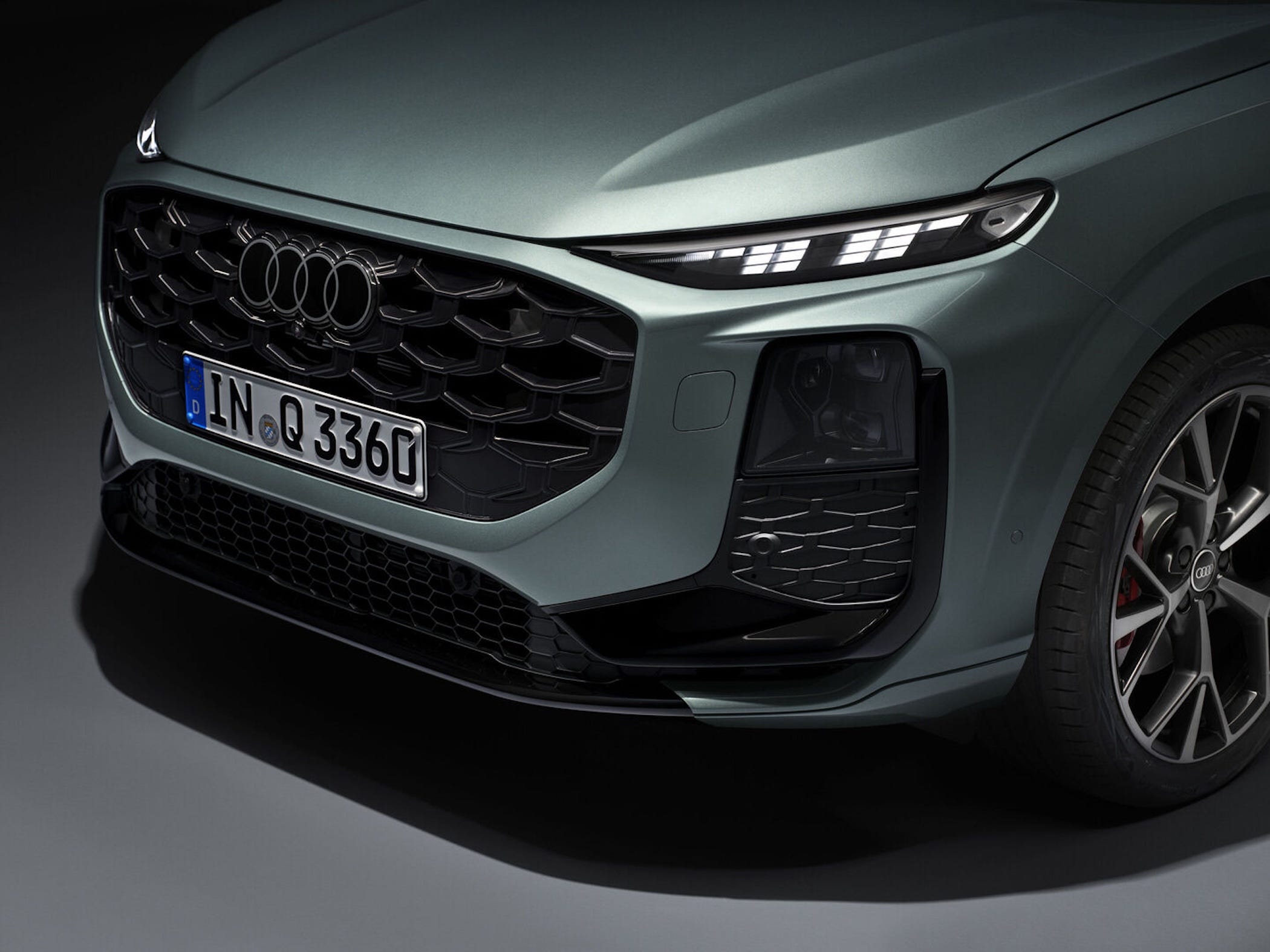


The technology has existed since 2013. Audi’s Digital Matrix headlights have been shielding European drivers from blinding glare for over a decade while Americans squinted through every nighttime commute. Now, finally, the system is crossing the Atlantic — debuting on the 2027 Q9 three-row SUV.
The delay wasn’t engineering. It was bureaucracy. U.S. Department of Transportation regulations banned adaptive-beam headlights until a rule change in 2022. The federal government kept a proven safety technology off American roads for nearly a decade after it was already standard equipment in parts of Europe.
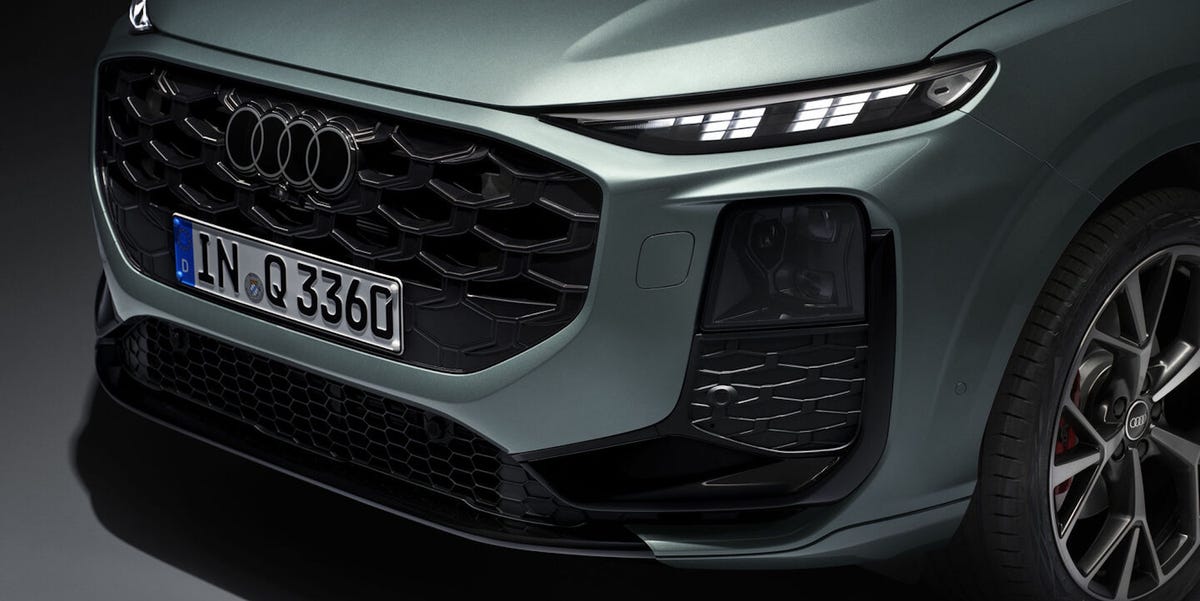
Once the regulatory door cracked open, Audi’s engineers went to work adapting the system to meet federal specs. The result is a headlight housing packed with 25,600 individually controlled micro-LEDs per side. Each LED measures just micrometers across, arranged in half-inch-wide modules. Think of it as a high-resolution display screen, except instead of streaming video, it’s sculpting light on the road ahead in real time.
The system leans on front-facing cameras to detect oncoming traffic — similar to the auto-dimming high beams already found on dozens of vehicles. But where conventional systems crudely toggle between high and low beams, Digital Matrix headlights do something far more refined. They selectively dim individual LEDs in a rolling pattern as an approaching vehicle changes angle, carving a shadow around the oncoming car while keeping everything else lit up.
The high beams stay on. The road stays illuminated. The other driver doesn’t get flash-fried.
On a dark, winding two-lane road with no streetlights — exactly the kind of road where visibility matters most and where a blinding oncoming car is most dangerous — this is a game-changer. It’s also the kind of road where American drivers have been left unprotected for years while their European counterparts enjoyed the tech.
The irony is thick. The U.S. has spent those same years watching headlight complaints pile up. The spread of high-powered LEDs, combined with the SUV and truck boom that puts headlights at sedan-driver eye level, has turned nighttime driving into a gauntlet. Studies, complaints to NHTSA, angry Reddit threads — none of it mattered until regulators finally modernized rules that dated back to the sealed-beam headlight era.
Audi chose its flagship to carry the technology stateside. The Q9 is a full-size luxury SUV aimed squarely at the BMW X7 and Mercedes GLS, and Digital Matrix headlights give it a genuine differentiator. But the real beneficiaries aren’t Q9 buyers. They’re every other driver on the road who won’t get blinded by one.
The question now is how quickly other manufacturers follow. BMW, Mercedes, and several other brands offer similar adaptive-beam systems in Europe. The regulatory barrier is gone. The engineering exists. The only thing left is execution and will.
Meanwhile, the rest of the American fleet — millions of SUVs and trucks with poorly aimed, overpowered LED headlights — remains untouched. Adaptive beams solve half the problem. The other half is an industry that still ships vehicles with headlights aimed like searchlights and no requirement to do better.
Audi deserves credit for being first through the door. But the door should have been open a long time ago.
Share this Story