
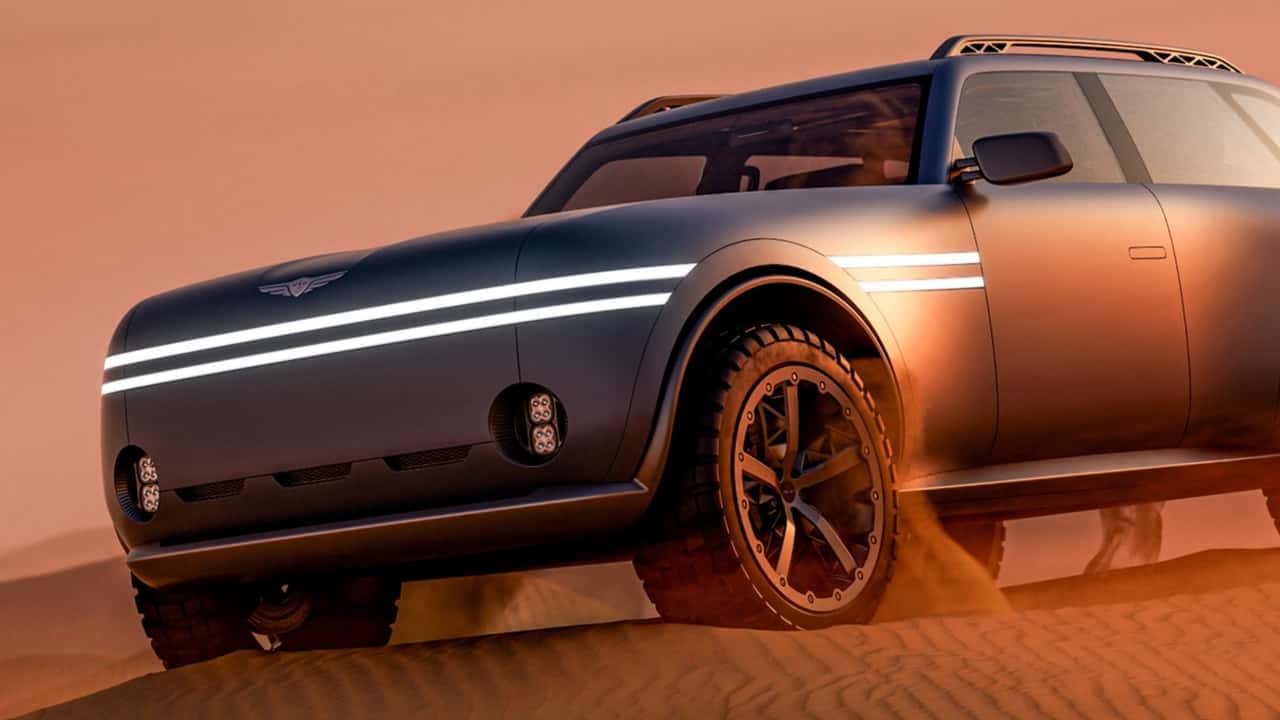


A year ago, Genesis design chief Luc Donckerwolke all but buried the idea of a luxury pickup truck from the Korean brand. Now Hyundai Motor Group’s Australian COO has dug it back up.
Gavin Donaldson, speaking to Australia’s Carsales, said a Genesis pickup remains a live possibility — contingent on Hyundai first bringing its own mid-size truck to market. His words were carefully chosen but unmistakable: “If there’s an opportunity that it’s going to be able to create, build the brand, support the brand, build that luxury image, then you would look at what it is.
Translation: the door is open, but nobody’s walking through it yet.
The logic is straightforward and familiar. Genesis has built its entire existence by riding Hyundai’s engineering coattails, then layering on premium materials, refined tuning, and striking design. A pickup would follow the same playbook — let the parent company absorb the massive development costs, then dress the result in quilted leather and Genesis badges.
That parent company, however, hasn’t even finalized its own truck yet. Hyundai’s long-anticipated mid-size pickup remains in development limbo, with executives floating two very different paths: borrowing Kia’s body-on-frame platform or leveraging technology from Hyundai’s partnership with General Motors. A hybrid powertrain is expected, but a production timeline remains conspicuously absent.
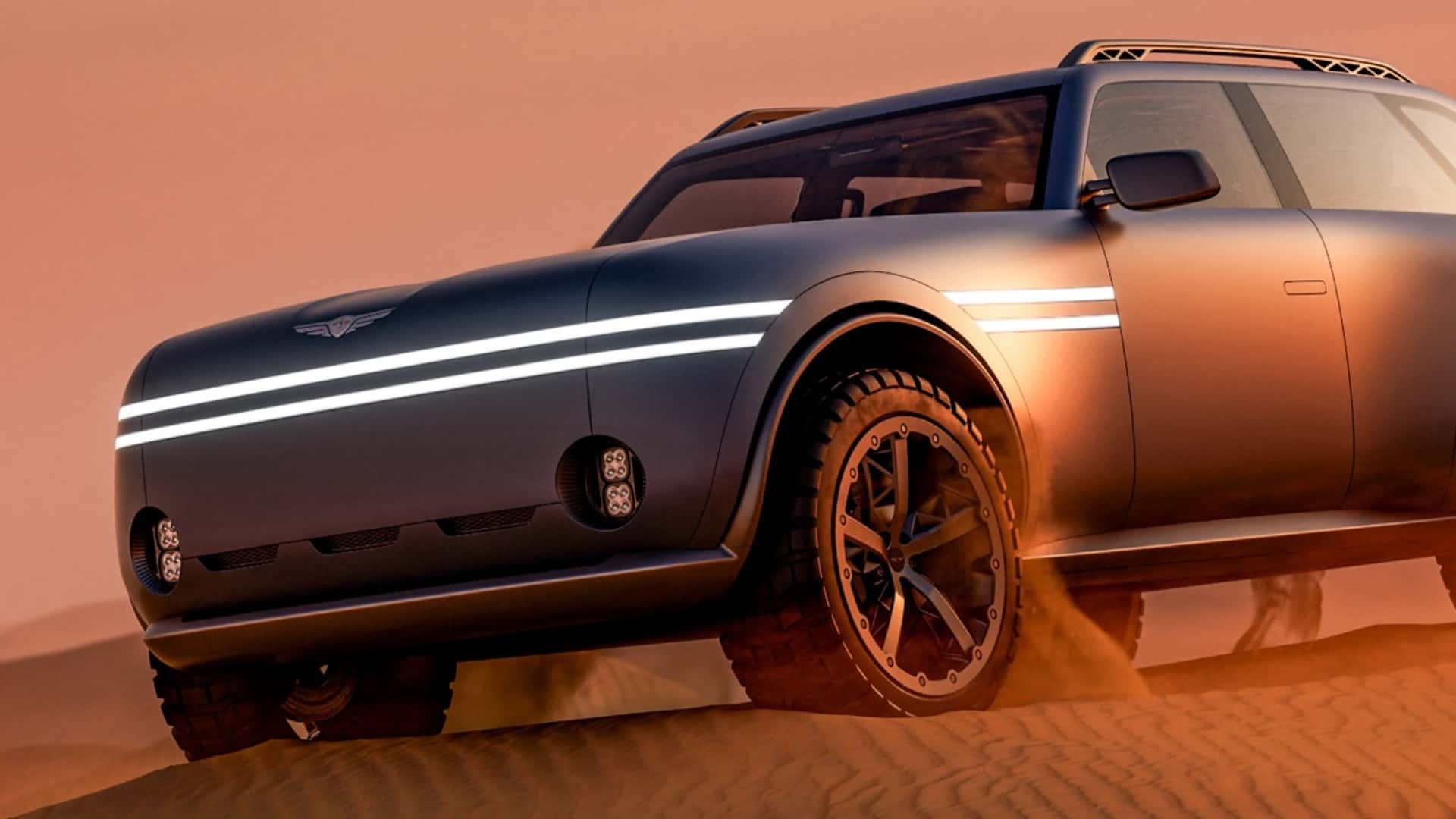
So what we have is a luxury truck concept tethered to a mainstream truck that doesn’t exist yet, built on a platform that hasn’t been chosen, powered by a drivetrain still being sorted out. The enthusiasm is real. The product is not.
Genesis has explored this territory before. The brand mocked up a pickup concept internally, and industry observers noted how well the aggressive design language translated to a truck body. But concepts are cheap. Tooling a factory for body-on-frame production is not.
Donaldson was careful to distinguish between a legitimate Genesis product and a lazy badge job. That distinction matters because the luxury truck segment, while small, is brutally competitive. Ram’s 1500 Tungsten starts north of $90,000, and the GMC Sierra Denali Ultimate pushes past $80,000 without breaking a sweat.
Buyers spending that kind of money notice when a truck feels like a costume rather than a purpose-built machine.
Genesis, meanwhile, has a full plate. The Magma performance sub-brand is the current priority, with hotter versions of existing models rolling out alongside a production version of the X Gran Coupe concept. Those projects have budgets, timelines, and executive sponsors. The pickup has a COO in Sydney saying “maybe.”
Still, the math could eventually work. If Hyundai’s truck sells well in markets like Australia, the Middle East, and the United States — all regions where pickups print money — the incremental cost of a Genesis variant drops dramatically. The platform exists. The dealer network exists. The only question is whether the brand equity can support the price premium.
That’s the real gamble. Genesis has spent a decade clawing its way toward credibility in sedans and SUVs. A truck could accelerate that momentum or undermine it entirely, depending on execution.
The pickup isn’t approved. It isn’t scheduled. It isn’t even fully conceptualized. But for the second time in three years, someone senior enough to matter has publicly refused to kill it. In a corporate culture as deliberate as Hyundai Motor Group’s, that qualifies as progress.

Share this Story