
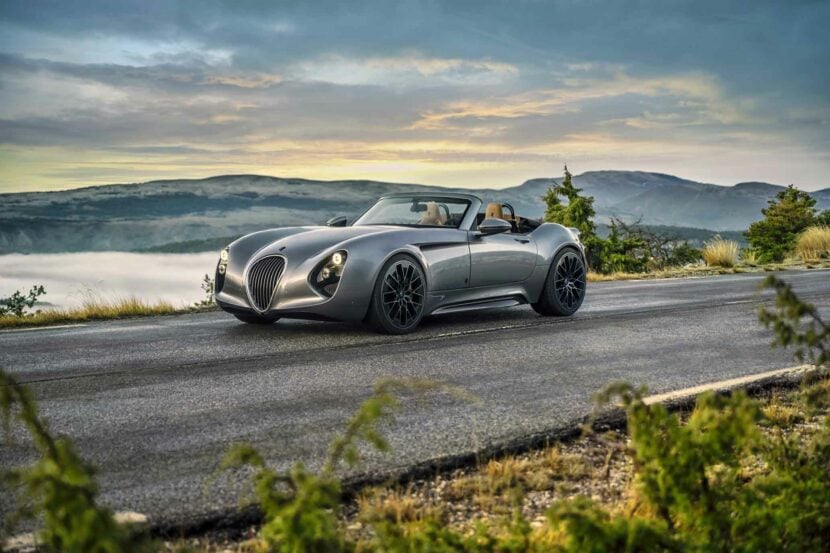


Five cars. All reportedly sold. And an engine spec sheet that doesn’t add up. Wiesmann rolled its MF5 Tributo into Monterey Car Week with the kind of low-volume mystique that plays well on the peninsula, but the details behind the coachbuilt revival deserve more scrutiny than applause.
The boutique German manufacturer says the Tributo pairs a “naturally aspirated BMW M5 V8” with a “seven-speed dual-clutch gearbox.” That is a powertrain combination that has never existed in any production BMW.
The E39 M5’s naturally aspirated S62 V8 came only with a six-speed manual. The E60 M5 had a seven-speed gearbox, but it was the SMG automated manual bolted to a 5.0-liter V10, not a V8. BMW did offer its naturally aspirated S65 V8 with a seven-speed DCT, but that was the E9X M3’s 4.0-liter unit, never badged as M5 anything.
So what’s actually in this car? Wiesmann has disclosed no displacement, no power figure, no engine code. The Instagram post the company collaborated on is the only source, and it may simply contain a mistake.
Or Wiesmann has done something genuinely unusual, like mating an S62 block to a dual-clutch unit sourced from outside BMW’s M5 production line. Without confirmed specs, it’s a guessing game dressed up as exclusivity.
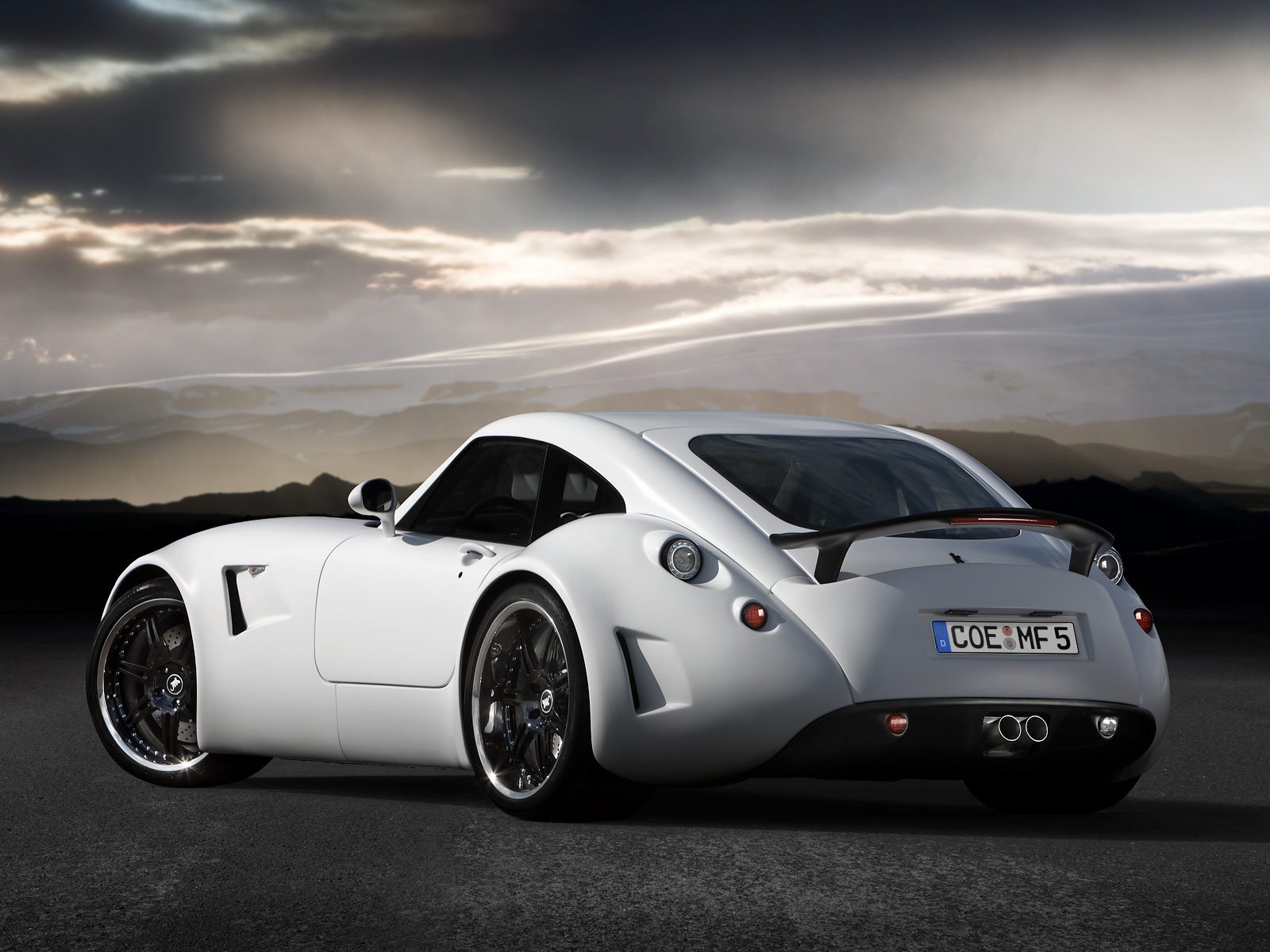
The original MF5 launched with the E60’s screaming S85 V10 before later models moved to the twin-turbo 4.4-liter N63-based V8 from the first-generation X5 M. Wiesmann built fewer than 200 MF5 coupes and roadsters total, so limiting the Tributo to five units fits the brand’s history of scarcity.
Hand assembly is happening at the Gecko factory in Dülmen. Wiesmann says all five are spoken for, though a €3,000 reservation button still sits on its website. Take from that what you will.
The Tributo matters less for what it is and more for what it replaces. Wiesmann’s previous attempt at a comeback was Project Thunderball, an electric roadster revealed in 2022 with 680 horsepower, dual rear motors, and a claimed 311-mile range. Customer deliveries were promised for 2024 and never came.
Supply chain disruptions and tariff complications pushed the timeline repeatedly. By May 2025, Wiesmann was still insisting Thunderball would happen. It hasn’t.
Pivoting from a delayed EV concept to a handful of hand-built, combustion-powered specials is pragmatic in the way that only small companies can be. There’s no infrastructure to write off, no massive retooling cost. Just five cars, a familiar body, and an engine from a BMW parts bin, whichever bin that turns out to be.
Wiesmann is already teasing what comes next. A project called Meisterwerk is scheduled for a spring 2027 debut. No engine details, no design previews, no pricing, no production numbers.
After Thunderball, the pattern is familiar. A promise, a timeline, and very little verification in between. The Tributo at least puts physical metal in front of cameras. That alone separates it from its predecessor’s vapor.
Whether five coachbuilt cars constitute a real business or an expensive proof of concept is a question Meisterwerk will have to answer. Wiesmann has been dying and reviving for over a decade now. The company went bankrupt in 2013, restructured under new ownership, and has been teasing its return in one form or another ever since.
Each comeback gets a little smaller. Each promise gets a little harder to track. The cars that actually get built can be counted on your fingers.
Share this Story