
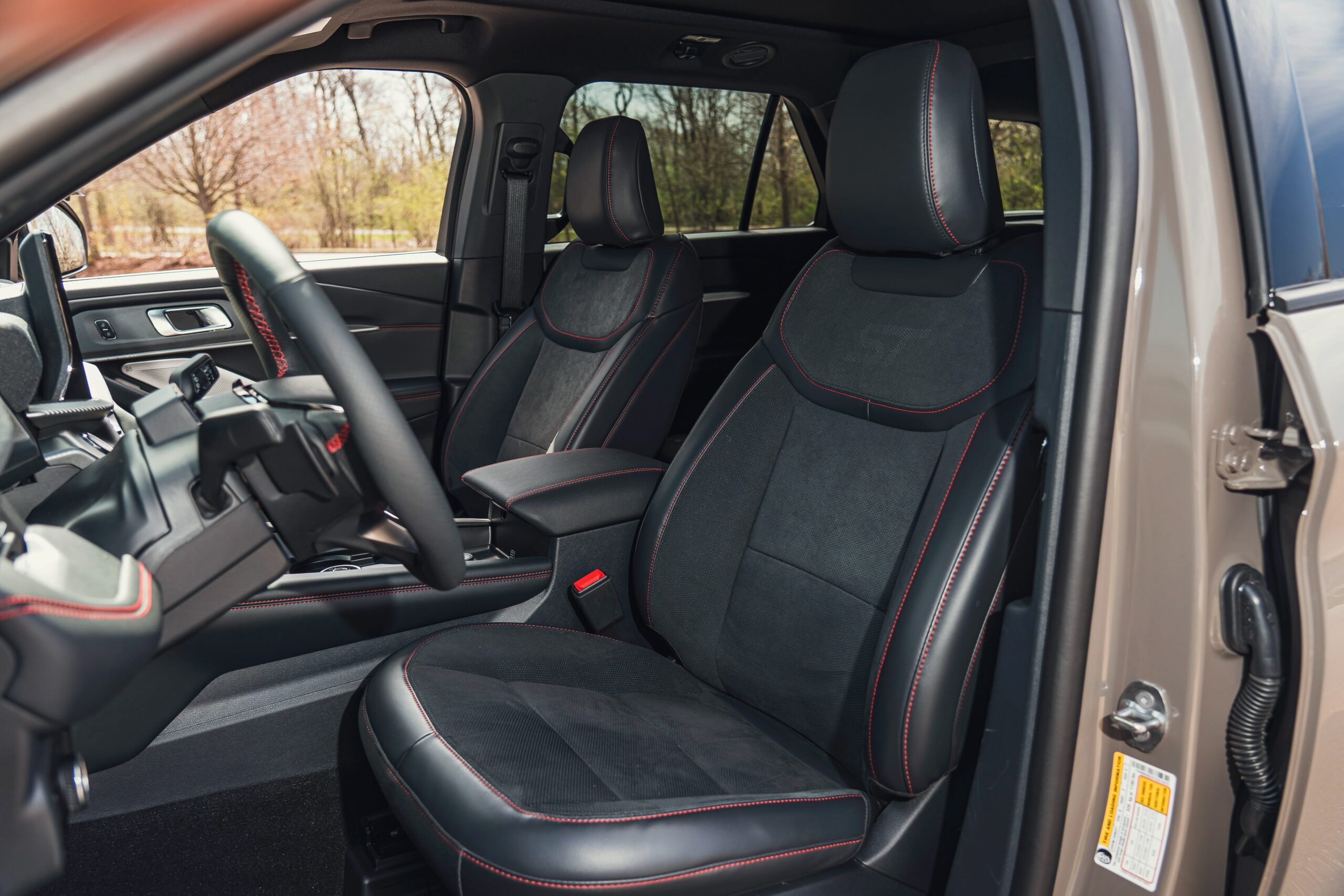


Ford has a new problem, and it’s an odd one. Nearly 80,000 Ford Explorers and Lincoln Aviators are being recalled because the driver’s seat may decide to recline itself without anyone touching it.
The recall covers 64,409 Explorers and 15,170 Aviators from the 2026 and 2027 model years. According to documents filed with the National Highway Traffic Safety Administration, the driver’s seat can automatically drop backward when the vehicle is unlocked, remotely started, or simply when a key fob comes within range. The driver doesn’t need to be in the seat, and the glitch only activates when the seat is empty.
The culprit is a faulty memory recall function, the feature designed to slide and adjust the seat to a driver’s saved preferences when they approach the vehicle. Instead of nudging the seat into position, the system sends it reclining.
That creates a specific hazard for anyone sitting in the second row. A fully reclining driver’s seat can pin a rear passenger’s legs, and Ford’s own investigation found that the seat motor stalls when it meets resistance rather than reversing course. So if someone is behind that seat when it decides to lay flat, they could be trapped until the seat is manually returned.
No injuries have been reported. Ford attributes that to the narrow circumstances required: an unoccupied driver’s seat, a parked vehicle, and a second-row passenger who happens to be sitting there while someone else unlocks the car from outside. It’s a slim window, but it’s a real one, particularly for families where kids might be waiting in the back seat.
Ford has not yet scheduled owner notifications and says it is still developing a fix. Recalls typically arrive with a remedy attached or at least a timeline. This one has neither.
Owners are directed to the NHTSA website for updates, which is the corporate equivalent of “we’ll get back to you.” In the interim, Ford’s advice is practical if slightly absurd: keep the second row clear of people and valuables when unlocking the vehicle. It’s the kind of guidance that sounds simple until you remember these are family SUVs built to haul people in their second and third rows.
This is the second major Ford recall to surface in recent weeks. The company also pulled back Bronco models over possible engine fires and issued a separate recall for 741,000 trucks and SUVs that could roll away. Ford’s recall volume has been a persistent story for years, and the pace shows no sign of easing.
Seat systems have grown enormously complex as automakers layer in memory positions, power adjustments, massage functions, and ventilation. Each added feature introduces another potential failure point. A seat that moves on its own, even slowly, crosses a line from inconvenience into safety concern.
The 2026 Explorer starts around $38,000 and the Aviator north of $55,000. Buyers at those price points expect the technology to work as advertised. A seat that autonomously decides it’s nap time is not what anyone signed up for.
Ford has yet to say whether the fix will be a software update or a hardware replacement. Until then, roughly 80,000 owners are left checking their back seats before pressing the unlock button on their key fob.
Share this Story