
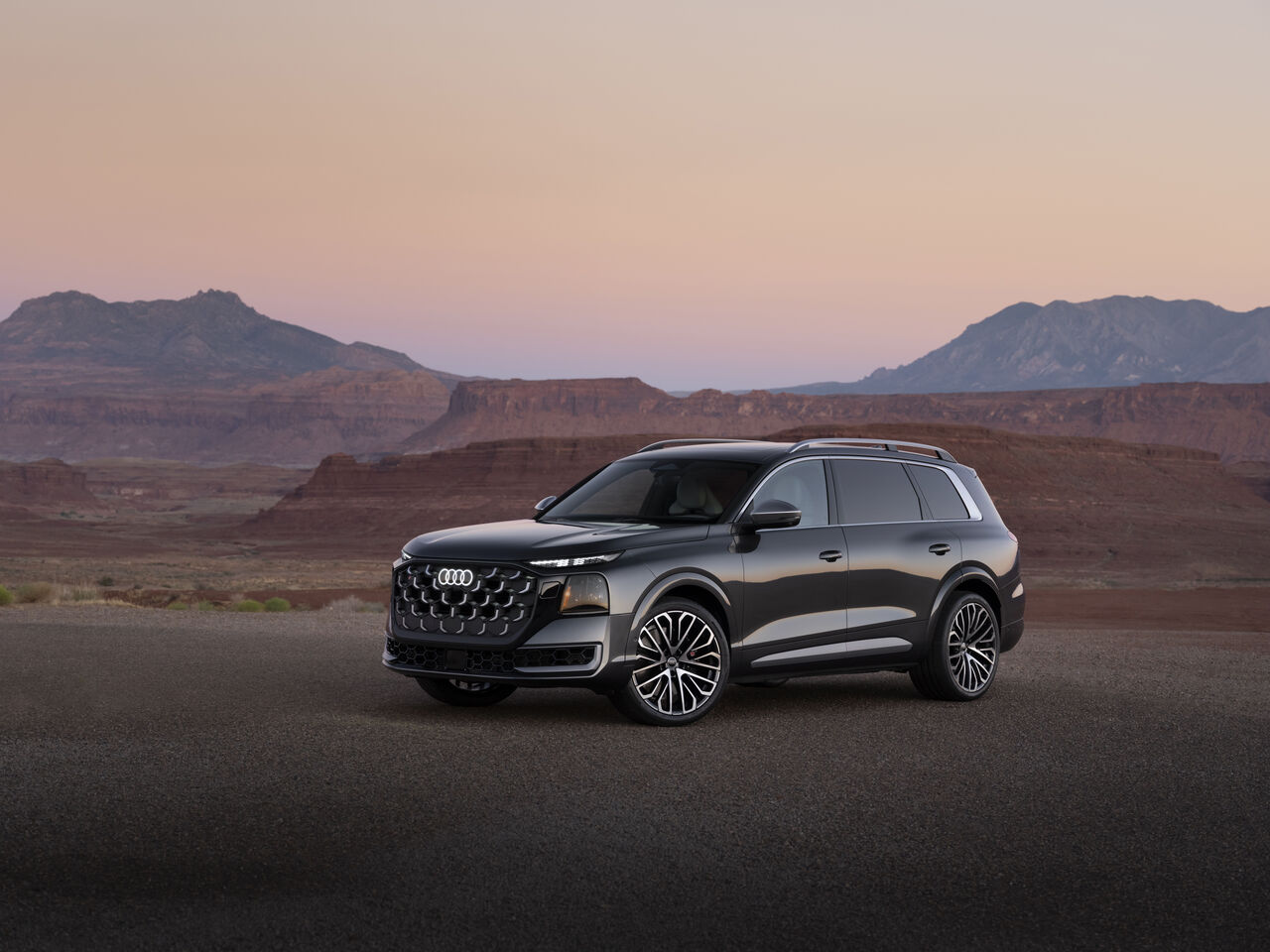


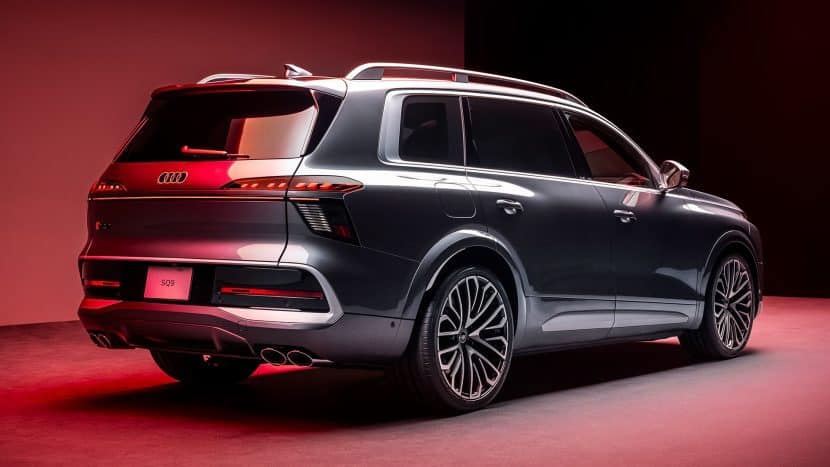
Audi just revealed the largest vehicle it has ever built. The Q9, a full-size three-row SUV stretching 5.31 meters long with a 3.14-meter wheelbase, is the German brand’s unsubtle play for a slice of the American market that BMW, Mercedes, and domestic trucks have owned for years. Orders open late July 2026, with deliveries starting in November.
The timing is deliberate. While Audi has spent the past two years flooding its lineup with electric and refreshed models, the Q9 is a combustion-powered land yacht aimed squarely at U.S. buyers who want luxury, space, and towing capacity. In America, it gets a turbocharged 3.0-liter V6 gasoline engine. In Germany, a V6 diesel starting at 108,400 euros. Neither powertrain is electrified beyond mild-hybrid assist.
That’s the tension here. Audi is building its biggest, thirstiest SUV at the exact moment regulators worldwide are tightening emissions rules. The Q9 TDI’s CO2 output lands it in Germany’s worst emissions class, Class G. The company isn’t hiding from that fact, but it isn’t dwelling on it either.
CEO Gernot Döllner framed the Q9 as a listening exercise. “This shows how closely we listen to our customers,” he said. What those customers apparently want is a seven-seat SUV with automatic doors, a 1.5-square-meter panoramic sunroof, five-zone climate control, and a business-class second row with individual electric seats.
The third row folds at the push of a button. It tows 3,500 kg. It’s a Range Rover competitor with four rings on the grille.
The SQ9 performance variant, offered in the U.S. and Canada among select markets, brings a reworked 4.0-liter V8 twin-turbo producing 591 horsepower and 590 lb-ft of torque. Zero to 100 km/h takes four seconds flat. It gets rear-biased quattro all-wheel drive, a controlled rear differential lock, and staggered tires up to 315-section width at the back. That’s sports car rubber on a three-row family hauler.
Audi is also loading the Q9 with tech meant to justify its flagship billing. Adaptive cruise assist plus offers hands-free highway driving at speeds up to 85 mph, available at launch in the U.S., Canada, and Germany. Curved digital OLED taillights wrap into the bodywork in what Audi calls a world first. Turn signals project onto the ground at night when changing lanes.
Production happens in Bratislava, Slovakia, at the same Volkswagen Group plant that has built the Q7 since 2005 and the Q8 since 2018. That factory knows large SUVs. Audi is banking on its experience to deliver the fit and finish expected north of six figures.
Vito Paladino, head of Audi of America, called the Q9 the completion of a full SUV portfolio alongside the refreshed Q3, Q5, and Q7. He used the word “flagship” without hesitation. A strong SUV lineup, he said, is the foundation of Audi’s growth strategy in the U.S.
That strategy reads clearly enough. Audi sold its first car in America in 1969, the efficient, aerodynamic Audi 100. Fifty-seven years later, it is betting its future in that market on the exact opposite kind of vehicle. Whether the regulators, the market, or Audi’s own electrification roadmap will let this formula run for long is a question nobody in Ingolstadt seems eager to answer yet.
Share this Story