
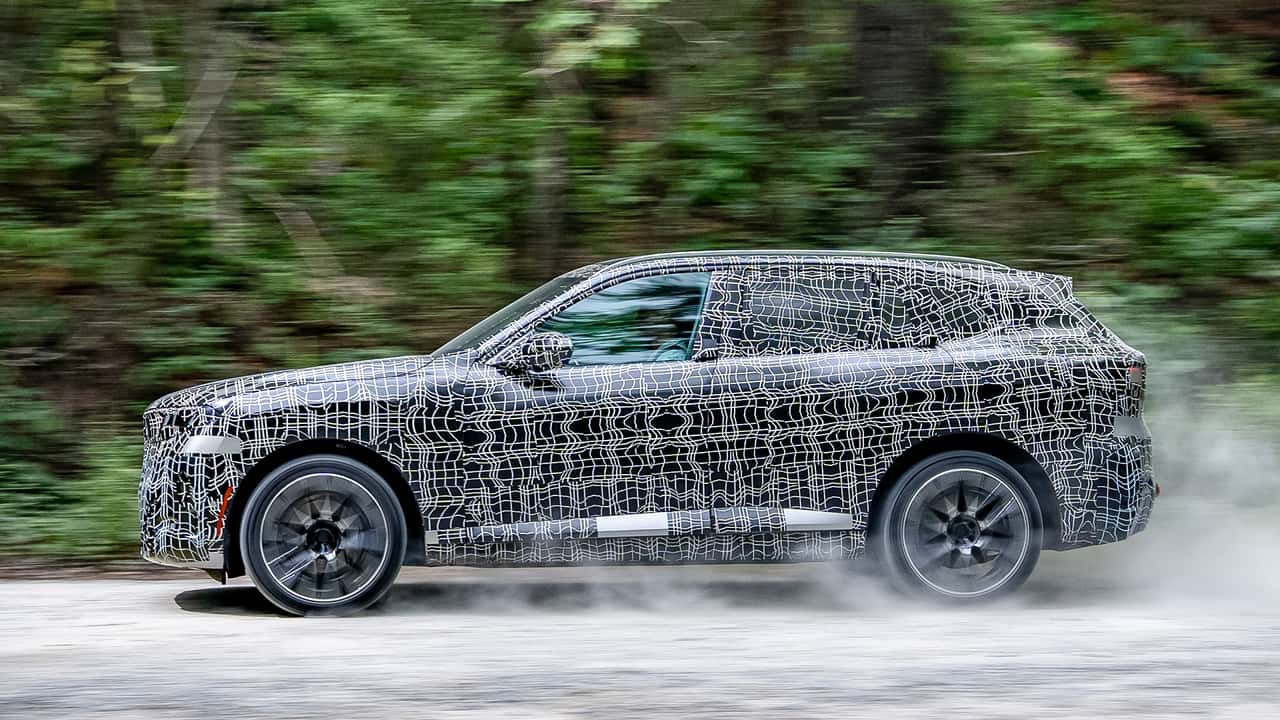


The next-generation BMW X5 won’t have door handles where your hand instinctively reaches. Instead, small winglets integrated into the beltline replace the conventional grab point. This design choice will ripple across BMW’s entire large-SUV lineup within two years.
Camouflaged prototypes of the G65-generation X5, set for an official reveal in the coming weeks, clearly show the new arrangement. It’s not a concept sketch or a design study. It’s stamped metal heading for production.
BMW tested the idea first on the Skytop, a limited-run M8-based targa built in a batch of just 50 units, and the Speedtop shooting brake, capped at 70. Low-volume experiments with wealthy collectors are one thing. Committing the brand’s best-selling SUV to the same treatment is something else entirely.
The Mustang Mach-E already uses beltline-integrated handles up front, but Ford kept conventional pulls for the rear doors. BMW went further, applying winglets to all four doors. The Neue Klasse design language prizes surface reduction above almost everything else, and cleaner sides mean fewer disruptions in airflow, which matters more than usual when one variant of this X5 will be fully electric.
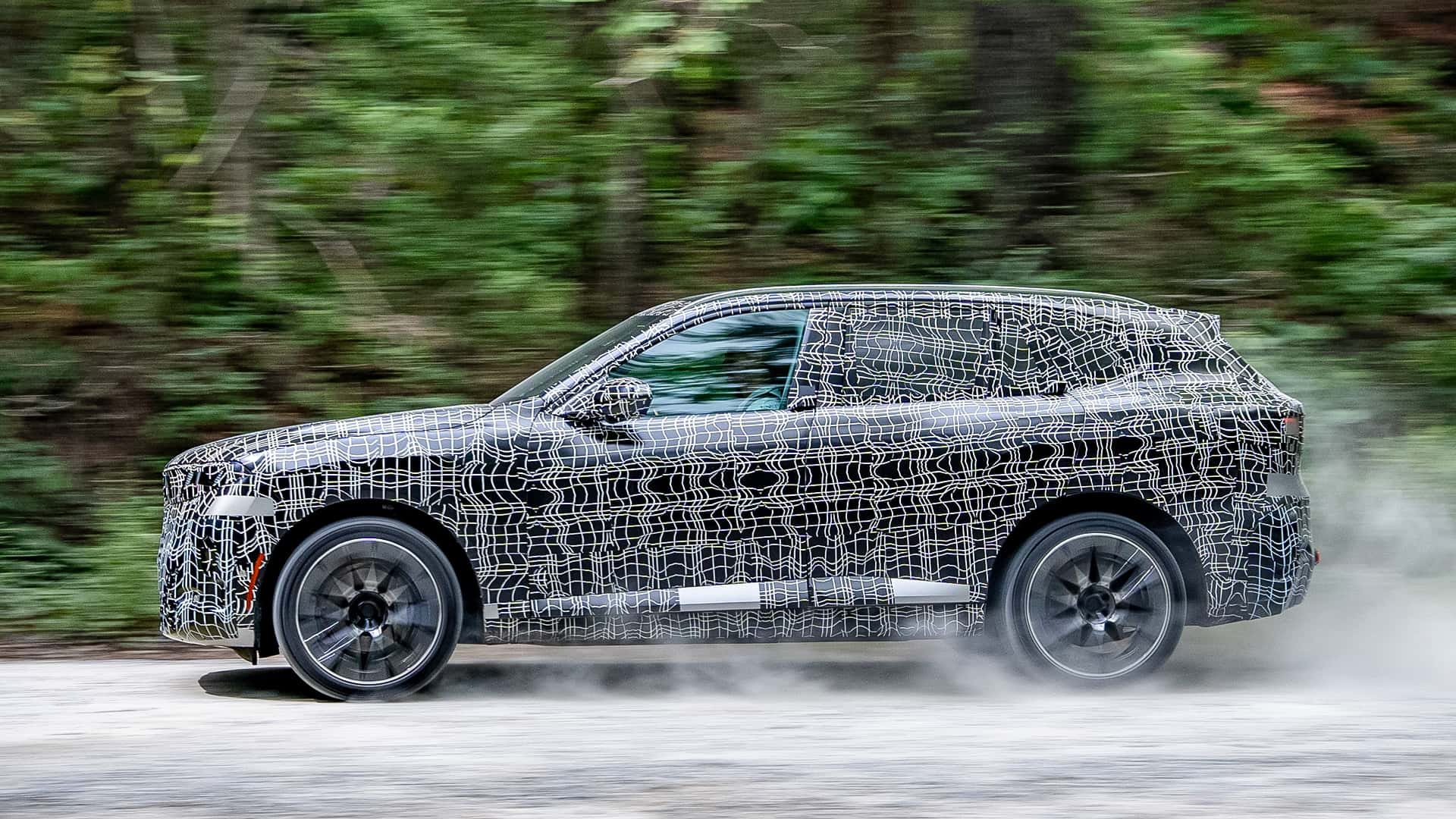
That electric variant, the iX5, will carry the largest battery pack BMW has ever installed — 141 kWh usable in Europe, 144 kWh in the U.S. Every fraction of aerodynamic drag counts when you’re hauling that much lithium-ion at highway speed.
Spy photos confirm the next X7, also due in 2027, will adopt the same electrically operated winglet handles. The X6 coupe-SUV, expected in 2028, is a likely candidate too. BMW is clearly standardizing this across its large platform, which means there’s no going back to traditional handles without expensive retooling.
That commitment carries risk. BMW already learned the hard way in China, where new safety regulations forced an emergency redesign of pop-out handles on the iX3 and i3. The company had to swap them for semi-enclosed units at the last minute. Whether winglet handles satisfy Chinese regulators — or customers who simply want to open a door without a tutorial — remains an open question for the long-wheelbase X5 destined for that market.
The X5 itself is breaking new ground in more ways than one. It becomes the first BMW in history to offer five powertrain options: gasoline, diesel, plug-in hybrid, battery-electric, and hydrogen fuel cell. The hydrogen iX5, arriving in 2028, is a joint project with Toyota, the world’s largest automaker and hydrogen’s most stubborn evangelist.
BMW has built hydrogen prototypes before but never sold one to a customer. This time, the car gets a price tag. Five powertrains on a single platform tells you everything about where BMW sees the market — which is to say, everywhere at once. The company isn’t picking a lane. It’s paving all of them and hoping volume justifies the complexity.
But it’s the door handles that will define the first impression. Owners will interact with them multiple times a day, in rain, in gloves, in frustration, in parking lots where muscle memory counts. BMW is betting that a cleaner silhouette outweighs decades of ergonomic convention.
The Skytop’s 50 buyers probably didn’t mind learning a new gesture. The hundreds of thousands of X5 buyers who keep BMW’s books healthy are a different audience entirely.
The reveal is weeks away. The debate over whether this is elegant minimalism or unnecessary complication will last considerably longer.

Share this Story