
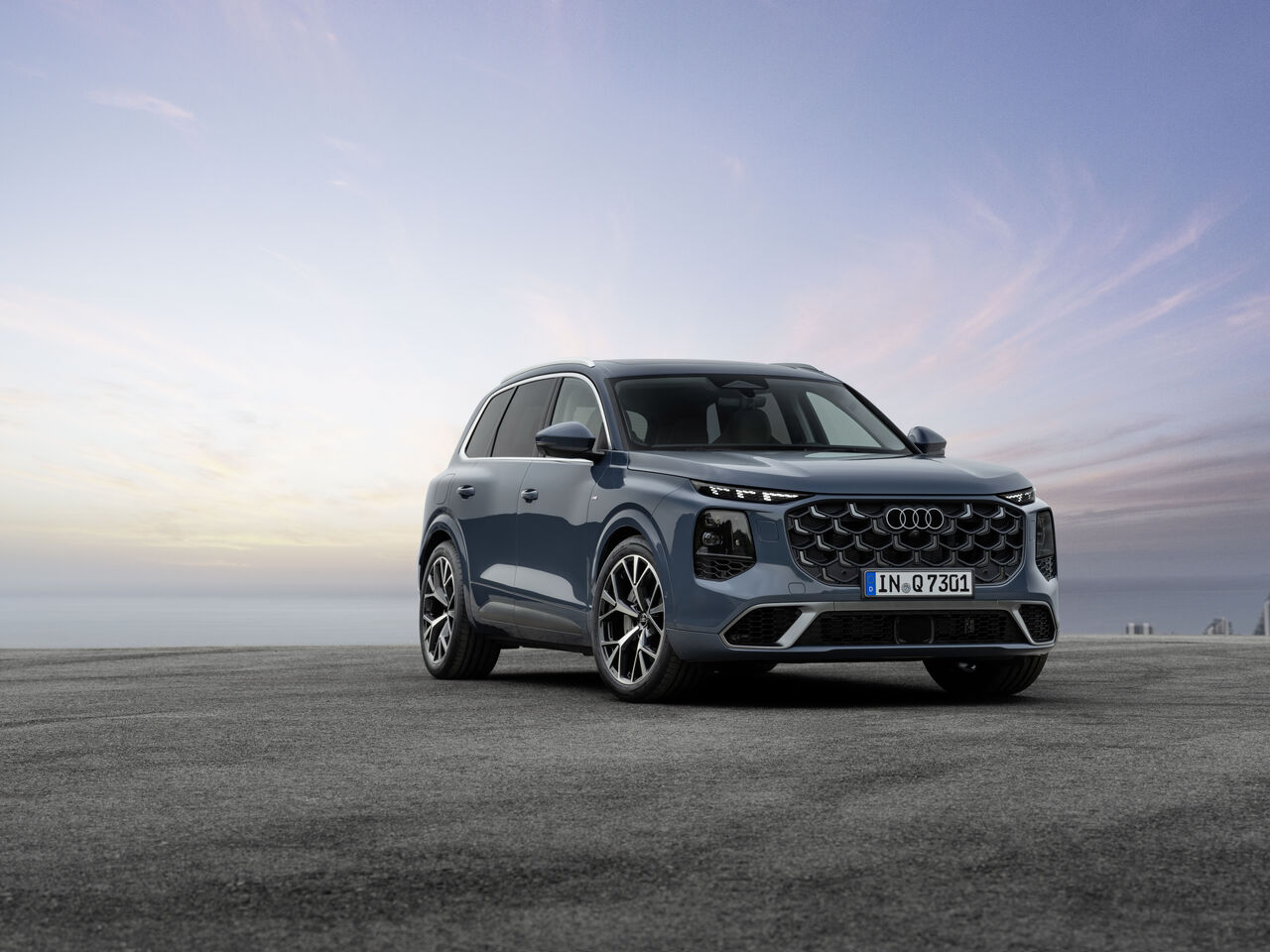


The third-generation Audi Q7 launches with exactly zero electrified powertrain options. No plug-in hybrid. No battery-electric variant. Just a pair of 3.0-liter V6 diesels, a mild-hybrid system, and a starting price of 87,900 euros in Germany.
That’s either a bold statement of confidence or a calculated retreat, depending on where you sit.
Audi CEO Gernot Döllner framed it as continuity. For more than 20 years, the Audi Q7 has represented the perfect premium SUV,” he said. “With its new generation, we carry this mission forward.” The mission, apparently, involves burning diesel at a combined 7.1 to 8.0 liters per 100 kilometers, earning the vehicle a CO2 class of G — the worst rating on the European scale.
This from a company that barely two years ago was promising an all-electric future by 2033.
The Q7 has always been Audi’s Swiss Army knife — big, capable, unapologetically combustion-powered. Two engine choices sit on the menu: a 245-horsepower version and a 299-horsepower version, both turbodiesel sixes paired with an eight-speed automatic and permanent quattro all-wheel drive featuring a new limited-slip center differential with preload. Mild-hybrid tech adds a modest 24 horsepower through a powertrain generator, while an electric-powered compressor fills the turbo lag gap off the line.
It’s a thoroughly engineered drivetrain. It is also thoroughly conventional.
The interior tells a different story, one of genuine ambition. For the first time, the Q7 offers a six-seat configuration with individual second-row chairs, alongside the standard five-seat and optional seven-seat layouts. The panoramic sunroof is the showpiece — switchable transparency across nine independent zones, 78 integrated LEDs that sync with ambient lighting, and a slimmer structure that actually gains headroom.
No mechanical blind required. UV blocking exceeds 99.5 percent. Wireless Qi2.2 charging handles two phones at 25 watts each, with magnetic retention so they don’t slide around.
Third-row passengers get 100-watt USB-C. Every seat adjusts electrically.
Outside, the lighting technology is where Audi flexes hardest. Digital Matrix LED headlights with micro-LED modules project high-resolution patterns directly onto the road. Third-generation digital OLED taillights offer communication lighting and up to eight selectable signatures front and rear.
A new feature projects a stylized turn signal onto the ground, synced with the vehicle’s dynamic indicators — aimed squarely at alerting cyclists and pedestrians. Lane guidance lights display assistance-system information directly into the driver’s forward field of view. Trained parking learns custom maneuvers, and reverse assist memorizes your path and backs you out.
Built again in Bratislava, the Q7 goes on sale in Germany from June 2026 with deliveries starting in September. The 299-horsepower variant commands 90,500 euros.
Here’s the tension Audi can’t quite paper over. The Q7 competes with the BMW X5, which offers plug-in hybrid options, and the Mercedes GLE, which does the same. Both hedged their bets.
Audi went all-in on diesel at launch, banking on the fact that its core Q7 customer — the school-run-to-ski-trip buyer, the executive who needs three rows and 2,000 liters of cargo space — doesn’t want to think about charging infrastructure. They might be right. The Q7’s predecessors sold extremely well precisely because they never pretended to be anything other than big, comfortable, and capable.
The third generation is more refined, more connected, more dramatically lit. But the powertrain strategy feels like a company that looked at the market’s EV hesitancy and decided to stop apologizing for internal combustion. Whether that’s pragmatism or denial depends entirely on what happens next.




Share this Story