
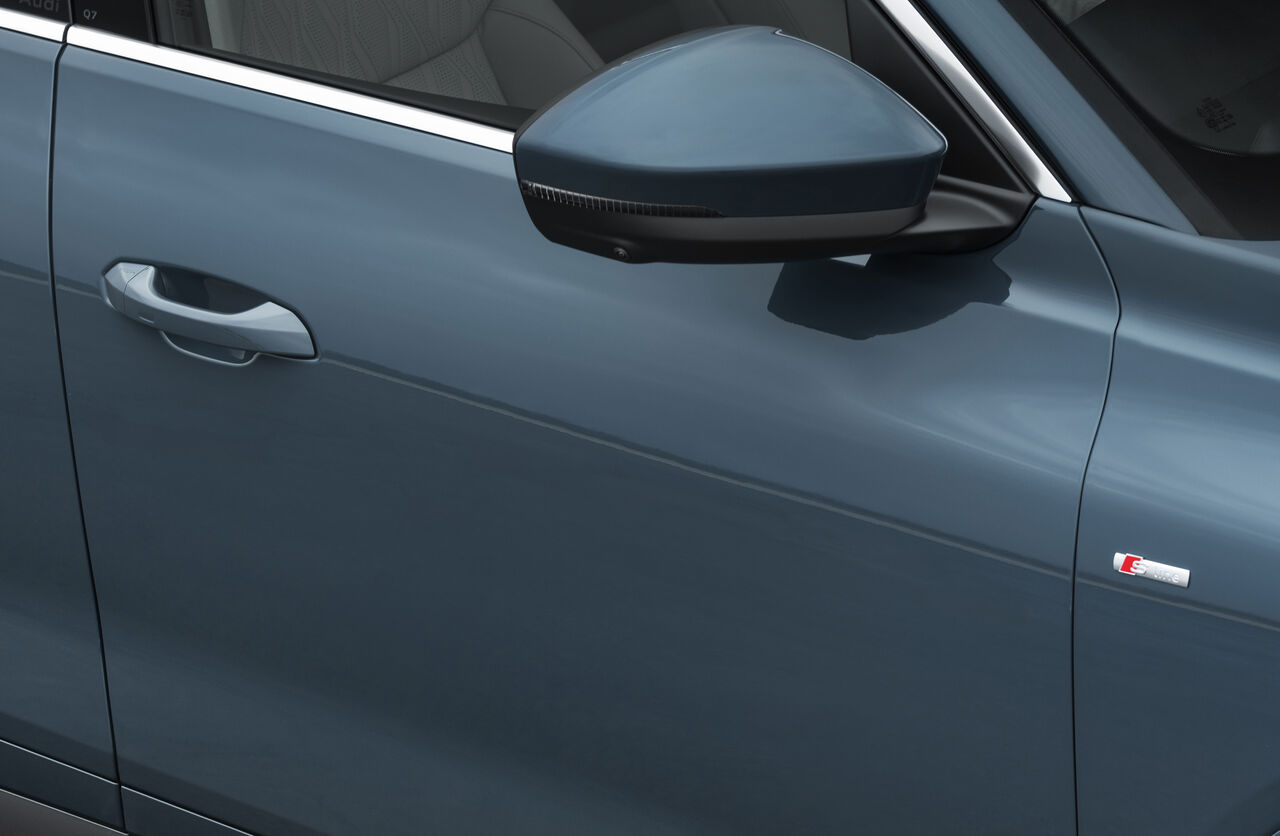


Twenty years after the original Q7 carved out space in the premium SUV segment, Audi is rolling out its replacement. The third-generation Q7 was announced from Ingolstadt with little more than a teaser image and a handful of adjectives — sporty, powerful, versatile — but the timing says more than the press release does.
The new Q7 arrives as part of what Audi is calling a “model initiative,” a rapid-fire product cadence designed to keep its combustion and hybrid lineup competitive while the brand pushes its EV portfolio at the same time. It’s a balancing act every legacy automaker is performing right now. Audi is leaning hard into the side that still writes the checks.
The Q7 has been a workhorse for the four rings. The first generation debuted in 2005 and immediately became one of the brand’s best-selling global models. The second generation followed in 2015 with a significant weight reduction and more refined road manners.
A decade later, generation three is being positioned to defend territory that’s under siege from every direction — Mercedes GLS, BMW X7, and a growing swarm of Chinese competitors clawing at the luxury SUV space in Europe and beyond.
Audi’s announcement was conspicuously thin on specifics. No powertrain details. No platform confirmation. No interior shots beyond a close-up tease.
The language points to a combustion or hybrid architecture rather than the PPE platform underpinning the electric Q6 e-tron and A6 e-tron. That distinction matters. Audi is telling its traditional buyers, loudly, that it hasn’t forgotten them.
Perhaps more revealing is what was mentioned alongside the Q7. The first-ever Audi Q9 will make its world debut in the second half of 2025, sitting atop the SUV lineup as a new flagship. That two-punch strategy — refreshing the proven Q7 while launching an entirely new nameplate above it — signals Audi sees room to grow at the top of the market, not just defend what it has.
The Q9 is aimed squarely at the ultra-luxury SUV space that Range Rover and the BMW XM have been mining. Slotting it above the Q7 lets Audi push pricing upward without abandoning the customer base that made the Q7 a staple in suburban driveways from Munich to Minneapolis.
For the Q7 itself, the promise of first-class materials and user-centric technologies suggests Audi will carry forward design language and digital architecture from the latest A5 and Q6 e-tron models. Expect the latest MMI with a passenger-facing display, and likely a heavy dose of the flat, angular surfacing that defines Audi’s current design direction.
What Audi didn’t say is whether the Q7 will offer a plug-in hybrid option at launch. Given tightening EU CO2 regulations and the brand’s stated electrification commitments, it would be a glaring omission if it didn’t. The second-gen Q7 offered a TFSI e variant, and market pressure all but demands its successor follow suit with more electric range.
A full reveal hasn’t been dated, but the teaser campaign has started, and Audi’s product cadence suggests we’ll see the complete car before year’s end. The Q7 isn’t just getting a refresh. It’s getting a running mate in the Q9 and a mandate to hold the line while Audi figures out how fast the electric future is actually arriving.

Share this Story