
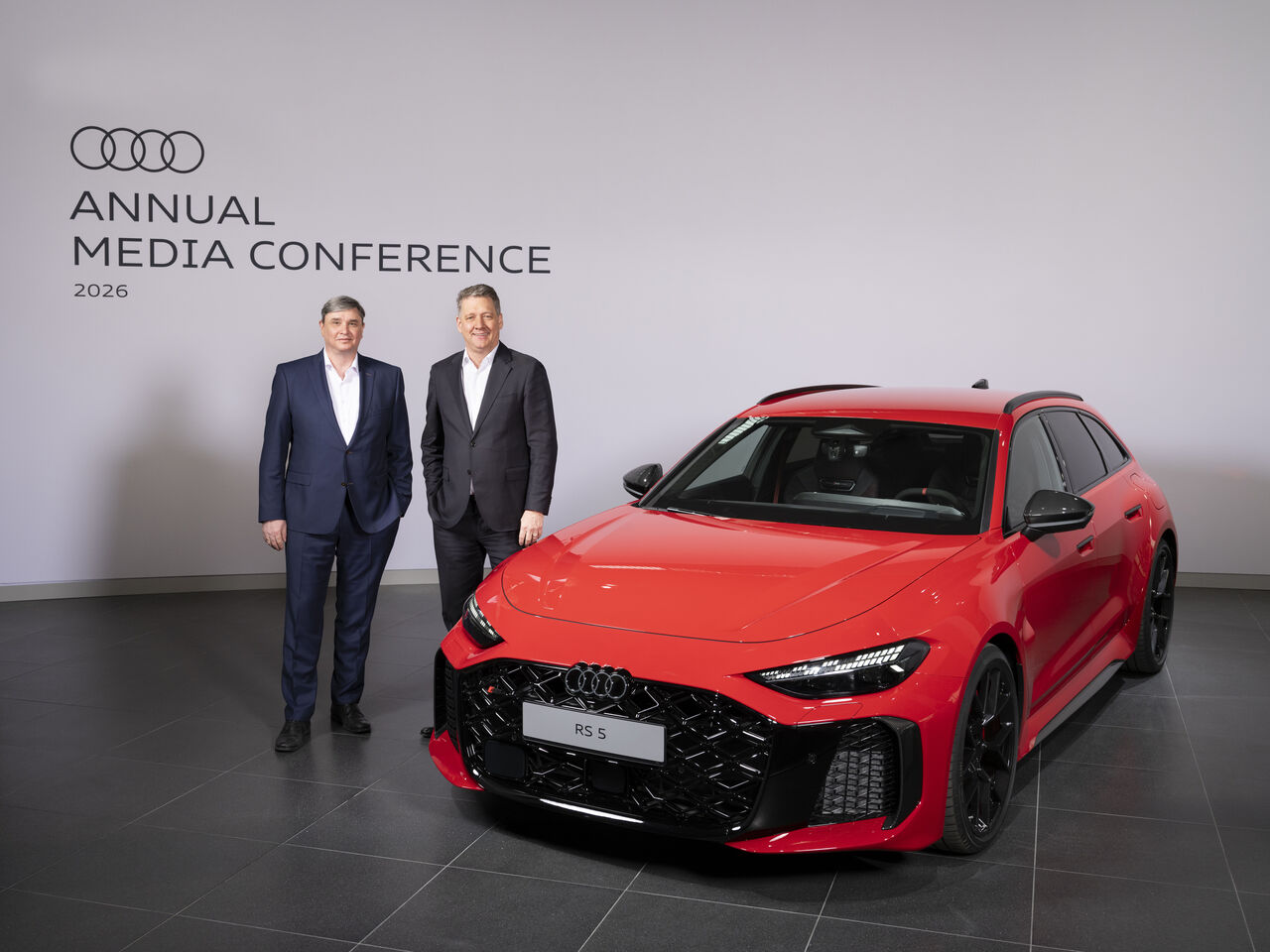


A $1.2 billion tariff hit, declining China sales, and no American factory. That’s the hand Audi is playing in 2026, and CEO Gernot Döllner wants you to focus on the “new chapter” instead.
At its Annual Media Conference in Ingolstadt, the Volkswagen-owned premium brand reported 2025 revenue of €65.5 billion, a modest bump from €64.5 billion the year prior. But operating profit dropped to €3.4 billion from €3.9 billion, a 14 percent decline that compressed margins from 6.0 percent to 5.1 percent. The culprits were clear: U.S. import tariffs, CO2 compliance costs, and the expensive business of trying to reinvent a legacy automaker for an electric future.
CFO Jürgen Rittersberger called the results “resilient.” That’s a generous word for a luxury brand hemorrhaging margin while its competitors sharpen their knives.
The tariff exposure is especially painful because Audi has no manufacturing capacity in the United States. Every vehicle sold there crosses a border and picks up a surcharge. The company said a decision on a potential U.S. production site could come this year, contingent on trade conditions.
That’s corporate-speak for “we’re watching and waiting,” which is precisely the posture that got German automakers into trouble in China.
Speaking of China, the picture isn’t pretty. Deliveries declined, and the China-specific AUDI brand, built with local partner SAIC to compete with domestic EV powerhouses, stumbled out of the gate. Early sales of the E5 Sportback fell short of expectations in a market where BYD and its ilk are eating the luxury segment alive.
Electric vehicle deliveries across the broader Progressive brand group did jump 36 percent to 223,032 units, pulled by the Q6 e-tron and A6 e-tron. That’s real momentum, but it’s coming off a low base. Total group deliveries held roughly flat at 1.64 million vehicles.
Döllner’s strategy leans hard on product. The new Q9 flagship SUV targets the American appetite for large premium haulers, a segment Audi has conspicuously lacked. The A2 e-tron, arriving in fall 2026, aims to be an affordable entry into electric mobility in Europe.
A vehicle built on the joint Volkswagen-Rivian electrical architecture is promised for 2028. That partnership only makes sense if Rivian survives long enough to deliver on it.
Meanwhile, the cost-cutting machine grinds forward. Audi is eliminating 7,500 jobs in Germany by 2029 without forced layoffs, and roughly 65 percent of a nearer-term 6,000-position reduction is already done or agreed upon. The company is getting leaner, but leaner doesn’t automatically mean faster.
Lamborghini, Bentley, and Ducati, the luxury subsidiaries sheltered under Audi’s umbrella, all reported weaker profitability. Lamborghini’s deliveries ticked up slightly, but profit fell. Bentley and Ducati saw both volume and margins shrink.
The halo brands aren’t generating the glow they once did.
For 2026, Audi guided revenue of €63 billion to €68 billion and an operating margin of 6 to 8 percent, suggesting management believes it can claw back ground. The longer-term target is a return to double-digit margins, which feels aspirational given the headwinds.
Döllner framed Germany and Europe as falling behind the U.S. and China on technology. He’s not wrong. But diagnosis isn’t treatment.
Audi is entering Formula 1 to boost brand visibility, betting on partnerships with Rivian and Chinese joint ventures, and launching products into segments it ignored for too long. Each move carries execution risk.
The one number that tells the real story: profit after tax actually rose to €4.6 billion, buoyed by financial discipline below the operating line. Audi knows how to manage a balance sheet. The question is whether it can manage a transformation at the same time, in a world where tariffs, Chinese competition, and the EV transition aren’t waiting for anyone to catch up.
Share this Story