
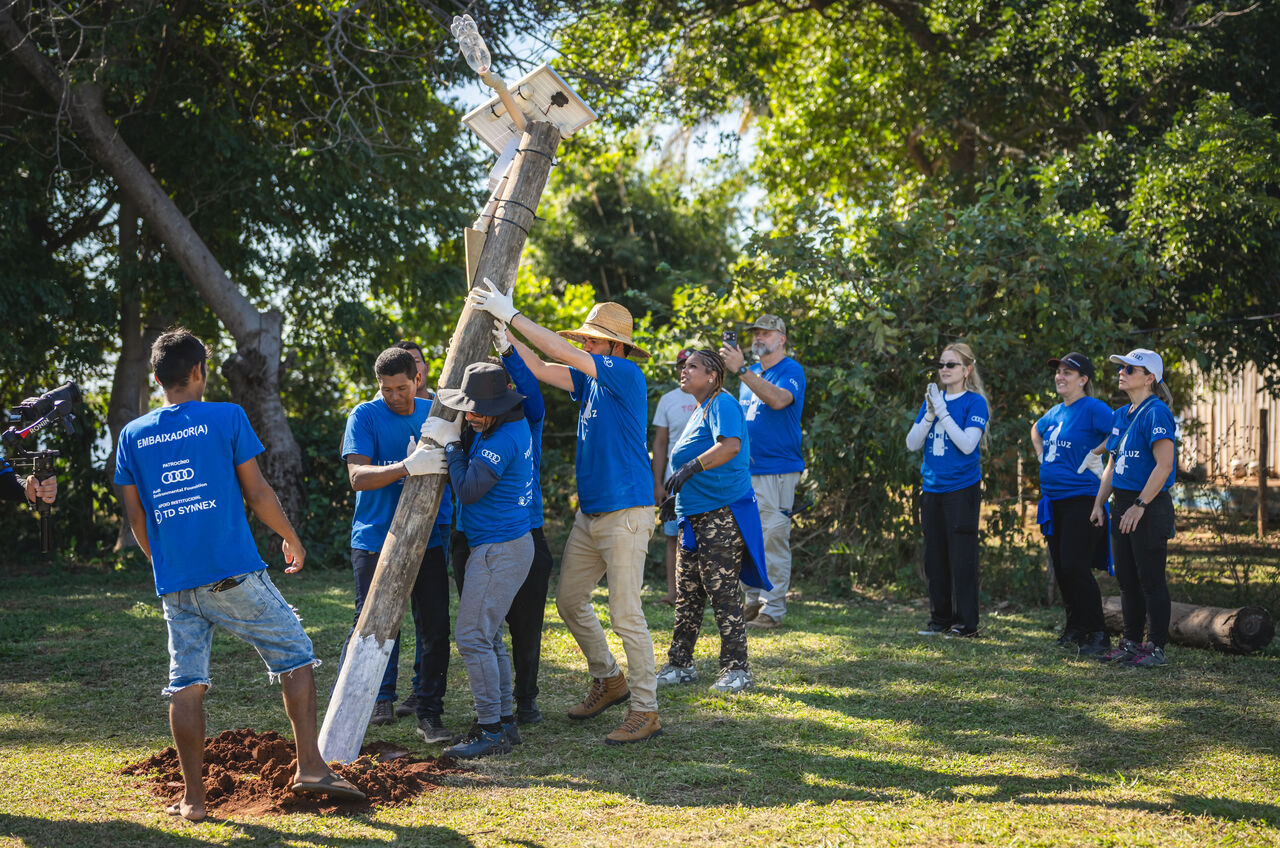


Somewhere in the Pantanal wetlands of Mato Grosso do Sul, 158 families now have light after dark. Not from a grid connection. Not from diesel generators. From solar lamps built out of PVC pipe, PET bottles, batteries, and LEDs.
Between June 4 and 10, volunteers from Audi do Brasil and the Brazilian NGO Litro de Luz assembled 178 portable lighting units across eight remote communities, including Aldeia Uberaba, Barra do São Lourenço, and Ilha Verde. The effort included 158 individual solar lamps and 20 solar-powered streetlights. The Audi Environmental Foundation backed the initiative financially.
This is the fifth consecutive year the three partners have run this kind of deployment, rotating through some of Brazil’s most infrastructure-starved regions. The Amazon in 2022 and 2025. The southern coast of São Paulo in 2023, the Xingu region in 2024, and now the Pantanal.
The cumulative reach since 2022: 2,985 people served. Those numbers are small by corporate philanthropy standards. That’s also what makes them believable.
Litro de Luz, which operates in dozens of countries, designs its own tech specifically for off-grid conditions. The solar lamp is simple enough that community members assemble the units themselves during workshops. Local ambassadors are then trained to handle maintenance and stay in contact with the NGO.
When batteries degrade, Litro de Luz collects them for recycling and ships replacements.
The Pantanal, the world’s largest tropical wetland, is ecologically rich but chronically underserved. Much of it lacks permanent electricity infrastructure. Seasonal flooding makes conventional grid expansion impractical in many areas, so mobile, self-contained solar units sidestep the problem entirely.
“The Pantanal, with its rich flora and fauna, remains largely undeveloped, making such mobile solutions all the more significant,” said Karine Fernandes, Head of People and Culture at Audi do Brasil.
Anton Poll, Managing Director of the Audi Environmental Foundation, called the partnership deeply moving. Rodrigo Eidy, President of Litro de Luz Brasil, pointed to growing volunteer engagement year over year.
What sets this project apart from typical corporate sustainability campaigns is the granularity. Thirty-nine Audi do Brasil employees have volunteered over the five-year span, alongside 95 from Litro de Luz. The site selection process involves consultations with local authorities, and the preparatory workshops happen before installation begins, not as an afterthought.
None of this will move Audi’s global emissions needle. It won’t offset the carbon footprint of manufacturing luxury SUVs in São José dos Pinhais. The company doesn’t pretend it does.
But for a family in Barra do São Lourenço who previously navigated their home in complete darkness after sunset, a solar lamp built from a soda bottle changes the texture of daily life. Kids can study. Adults can move safely. Community gathering spaces get lit.
The five-year track record also reveals a pattern. Each year the project scales modestly, not dramatically. The 2022 Amazon deployment reached roughly 200 communities with 180 lights, the 2025 Amazon return delivered 199 units to 177 families, and this year’s Pantanal effort hit 178 units for 158 families.
Consistent, not flashy.
Litro de Luz has already begun identifying locations for next year’s deployment. The partnership appears locked in for a sixth round, though neither Audi nor the NGO has confirmed the region.

Share this Story