
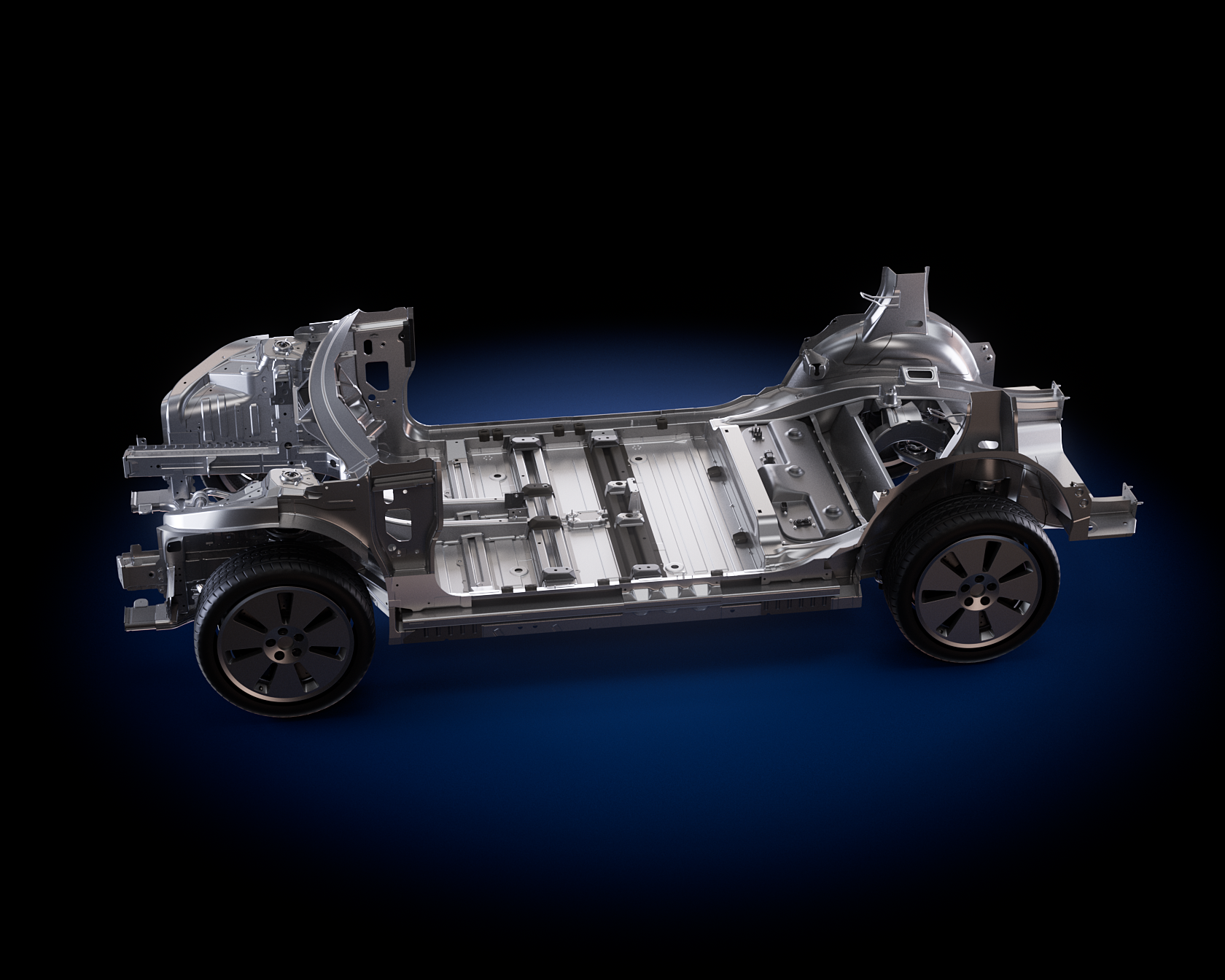


General Motors and Ford are both building next-generation electric vehicle platforms designed to bring EVs to mainstream buyers at lower prices. The strategies share a common ancestor in ideas Tesla and Rivian pioneered years ago. But the two Detroit giants are making sharply different bets on batteries, manufacturing, and which customers to chase first.
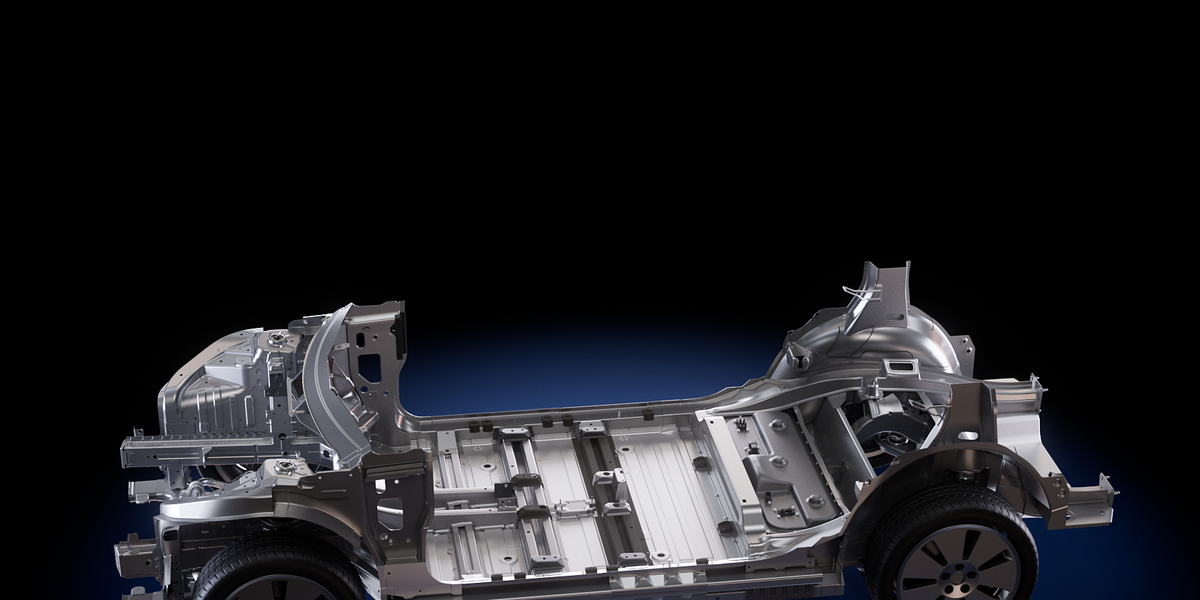
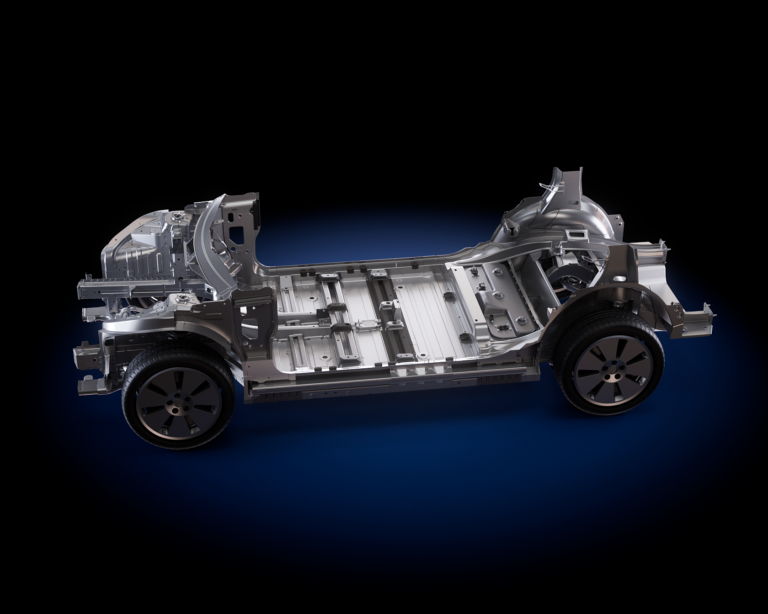
GM president Mark Reuss stood up at a sprawling New York press event Wednesday and declared his company is “not walking away” from EVs. One in four cars sold globally is now electric, he said, and GM intends to be ready when the U.S. market catches up. The pitch centered on Gen 4, a new skateboard architecture powered by lithium manganese rich battery cells that GM developed in-house.
The numbers GM put forward are ambitious. Vehicles on Gen 4 will be 15 percent lighter, with drag coefficients 25 percent lower and drive units carrying 40 percent fewer motor parts. The net result is roughly 20 percent less battery capacity needed for equivalent range. LMR cells, slated for volume production at the Spring Hill, Tennessee plant starting in 2028, are supposed to deliver energy density near today’s premium nickel chemistries at costs approaching cheap lithium iron phosphate packs.
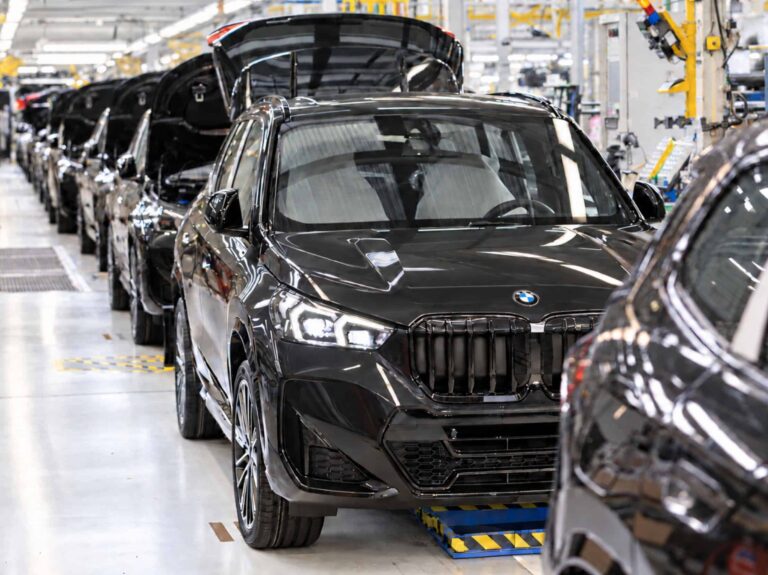
Ford is playing a different hand. Its Universal EV platform, debuting under the 2027 Fathom mid-size pickup, was designed alongside a radically overhauled assembly process. The Louisville, Kentucky plant was gutted and rebuilt around three parallel assembly streams rather than a single moving line.
A rolling chassis with battery and powertrain, a front end, and a rear section come together simultaneously and mate at the finish. Ford says it is faster, simpler, and cheaper.
GM said almost nothing about manufacturing changes, which tells you something. Zach Walker, GM’s director of global EV architecture, acknowledged that the new software-defined electrical system forces changes to the build sequence, but there is no indication GM is reinventing its factories the way Ford is. That gap could matter when both companies try to hit mainstream price points.
The battery strategies diverge just as clearly. GM spent $900 million on two facilities at its Warren Tech Center to prototype and test new cell chemistries in-house. Ford licensed its LFP cell technology from CATL, China’s dominant battery manufacturer, and will build those cells at a new plant in Marshall, Michigan. One company owns its chemistry. The other rents it.
Both are adopting software-defined vehicle architectures, centralized computing, and bidirectional charging, features Tesla has offered for years. GM’s central processor will be 40 times more powerful than its current units and will spread beyond EVs into high-volume gasoline models. Bidirectional vehicle-to-home capability, which lets an EV power your house during an outage, is baked into future products from both automakers.
Ford’s decision to launch its new platform with a mid-size pickup makes strategic sense. The Fathom will be its fourth truck line, slotting alongside the F-Series, Ranger, and Maverick. Trucks are Ford’s fortress.
GM’s current EV pickups are four-ton full-size beasts with massive battery packs and price tags to match. Walker hedged when asked whether Gen 4 could scale down to small, affordable crossovers, calling it “crazy difficult” to build one platform spanning compact SUVs to full-size trucks.
That admission is worth remembering. GM is promising mainstream EVs in mainstream segments but has not named a single model, price, date, or range figure. Ford has a truck with a name, a factory rebuilt to produce it, and a timeline. The vision statements from both companies sound remarkably similar, but the execution paths are splitting apart in ways that will determine which one actually delivers affordable EVs to driveways first.

Share this Story