
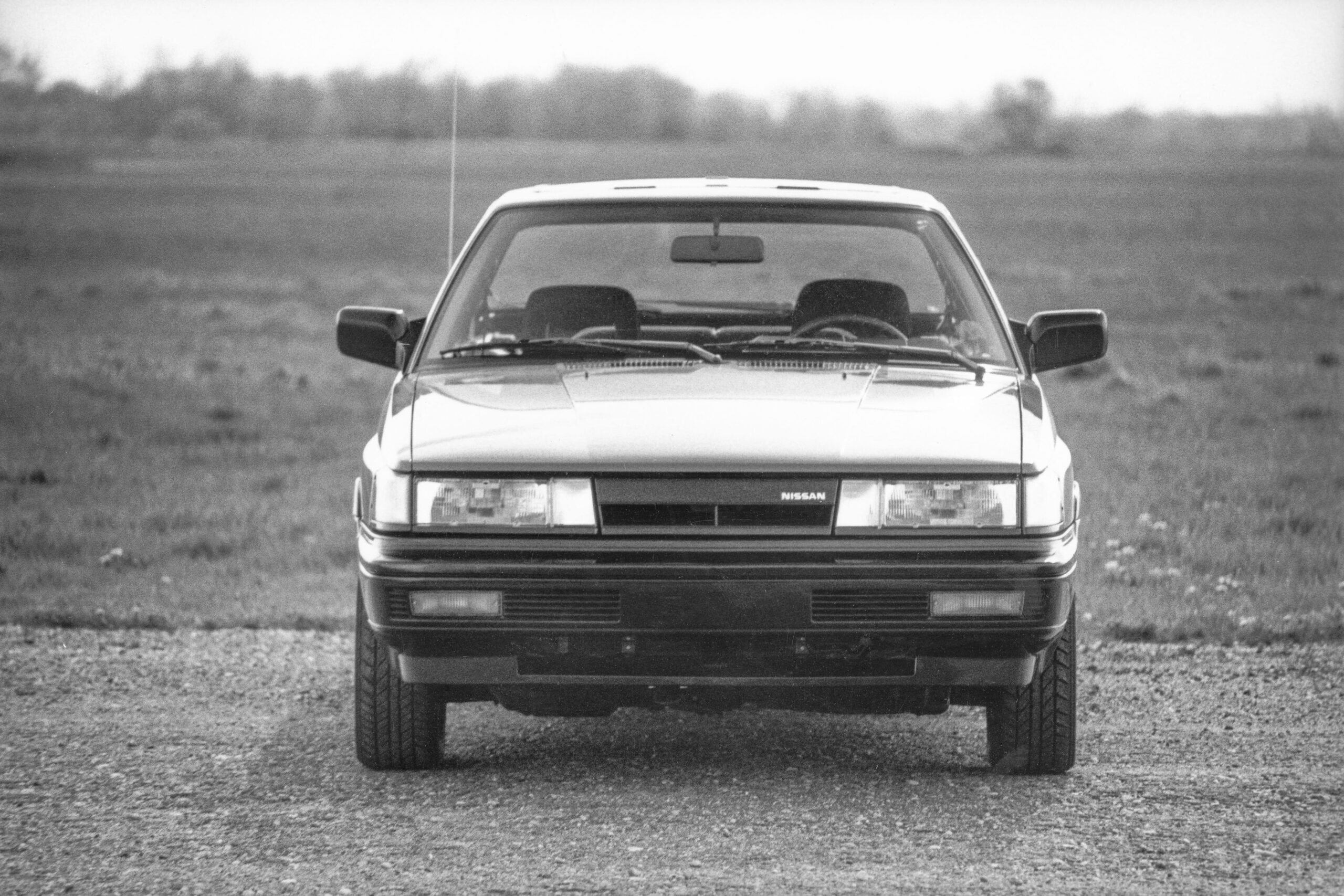


Seventy horsepower. That’s what Nissan handed the performance flagship of its bestselling car line in 1987 and expected buyers to call it a sport coupe. Car and Driver wasn’t buying it then, and the review reads like a masterclass in polite demolition nearly four decades later.
The 1987 Sentra SE arrived during a bloodbath in the small-car segment. Rebates and slashed interest rates, once reserved for slow-selling luxury barges, had trickled down to economy cars. Nissan needed its Sentra line, responsible for more than a third of its U.S. car sales, to fight harder. The answer was a three-door fastback with swoopy sheetmetal, a sporty driver’s seat with adjustable lumbar bolsters, and alloy wheels wrapped in 185/60HR-14 rubber.
Under that rakish skin, the upgrades were modest to the point of comedy. Spring rates went up roughly 25 percent front and rear, shock damping firmed about 20 percent, and the front anti-roll bar grew from 22.0 mm to 25.4 mm. Car and Driver’s Tony Assenza suggested keeping “the hosannas down to a minimum.
The engine told the real story. Nissan swapped the carbureted 1.6-liter four for a throttle-body fuel-injected version, two 35-psi injectors above a single throttle plate. The result was the same 70 horsepower at 5,000 rpm, with torque nudging from 92 to 94 pound-feet. Nissan engineers admitted the injection system existed for drivability and cold starts, not power.
They succeeded, Assenza noted dryly: “The engine doesn’t feel a whit stronger.”
The numbers were brutal. Zero to 60 took 13.4 seconds, the quarter-mile passed at 70 mph, and the skidpad returned 0.76 g. Push beyond 4,000 rpm and the engine produced nothing but noise and vibration all the way to the 6,500-rpm redline. The sport coupe was actually the heaviest Sentra sedan variant, thanks to its massive hatch glass, making it likely the slowest car in its own family.
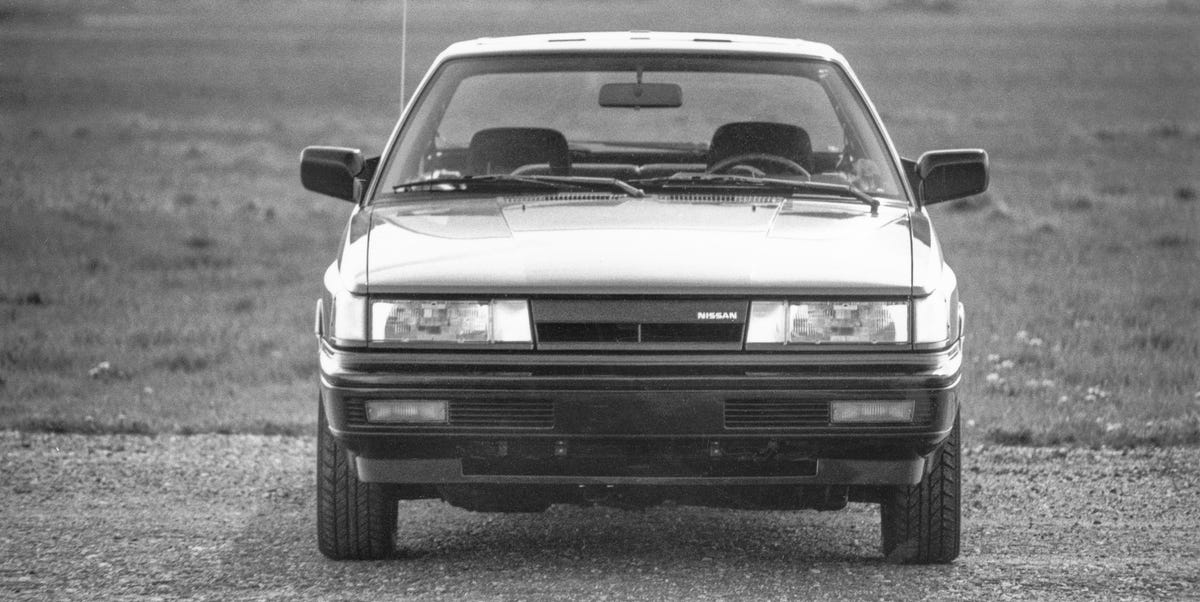
Driving it was, as the review put it, “an exercise in contradiction.” The body and cockpit said go. Everything else said slow.
At half effort on a highway on-ramp, the car felt nimble enough. Driven with any enthusiasm, pronounced understeer and sloppy dynamics reminded you exactly what you were sitting in: an econobox in a costume.
The competitive landscape was merciless. A Volkswagen GTI listed for $9,630, sixty-nine dollars less than the Sentra SE, and delivered genuinely quick, communicative driving. The Toyota Corolla GT-S cost $9,898, and the Mitsubishi Mirage Turbo undercut everyone at $8,209. Every one of them offered more horsepower and sharper handling per dollar spent.
Three staff counterpoints drove the knife deeper. Don Sherman acknowledged the fastback’s good looks but warned that anyone who comparison-shopped would walk away. Arthur St. Antoine called the design “pure blandness” and the value proposition unreasonable next to a GTI.
Rich Ceppos mourned the company that once built the 510 and the 240Z, accusing Nissan of caring more about “the appearance of sportiness than with the nuts and bolts of it.”
The Sentra SE did get some things right. The five-speed shifter was slick and precise, and pedal placement invited heel-toe downshifts. The steering rack was direct and linear. The chassis itself was stiff enough, no cowl shake, no torsional flex, that it was practically begging for a real engine.
Assenza’s prescription was simple: another 40 horsepower and some suspension tuning. Three years later, Nissan delivered exactly that with the Sentra SE-R, a car that became a genuine legend among affordable performance machines. The 1987 SE was the awkward rough draft, all promise, no delivery, dressed up in a sharp suit with nothing underneath to back it up.

Share this Story