
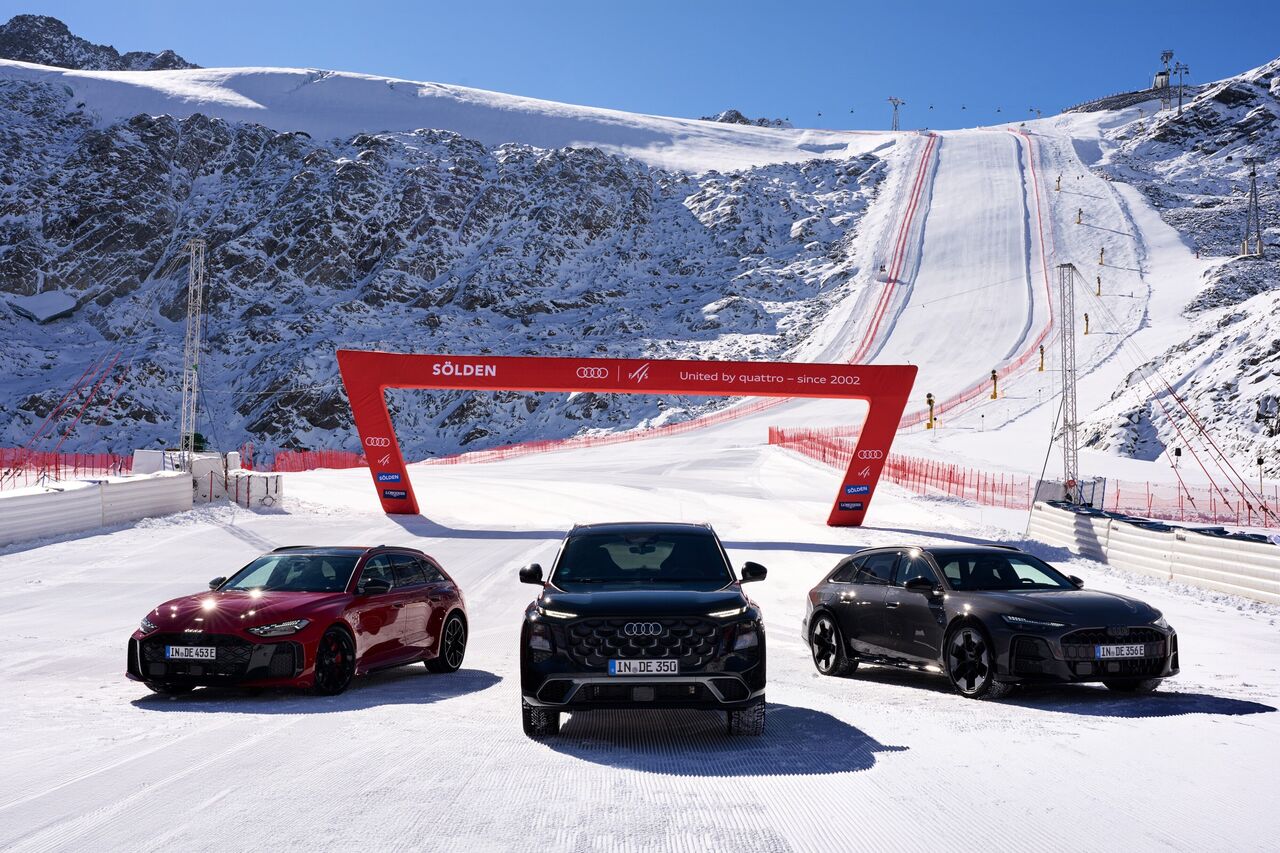


Audi just locked in its FIS Ski World Cup title sponsorship through the 2029/2030 season, extending a relationship that dates back to 2002. That is nearly three decades of quattro logos on alpine courses from Sölden to Kitzbühel, and the automaker shows no sign of pulling back.
The renewed deal keeps Audi as the exclusive automotive partner across both the women’s and men’s alpine World Cup circuits, covering TV broadcasts, social media, and on-site presence at every international venue. It also wraps in the FIS Alpine Ski World Championships in 2027 and 2029.
But the bigger move is what’s happening in Germany.
Audi’s partnership with the German Ski Association, a bond stretching back 41 years to 1984, is expanding into four new disciplines for the 2026/27 season. Biathlon, ski jumping, cross-country skiing, and Nordic combined are all joining the fold. That biathlon addition is a first for Audi, and it is no accident. Biathlon commands massive TV audiences across Central and Northern Europe, regularly outdrawing alpine skiing in Germany and Scandinavia during the winter broadcast season.
The automaker is also renewing cooperation agreements with national ski federations in Italy, Austria, Finland, Norway, Sweden, Slovenia, and France. That is eight national partnerships layered on top of the global FIS deal, creating a sponsorship structure that blankets European winter sports from the grassroots federation level to the pinnacle World Cup events.
Audi continues to supply vehicle fleets for FIS Ski World Cup events, leaning heavily on its quattro all-wheel drive lineup to handle the mountain roads and harsh conditions at race venues. It is functional branding at its most literal. Every shuttle ride to a start house becomes a product demonstration.
The timing is worth watching. The automotive industry is in the middle of an expensive, uncertain transition to electrification. Marketing budgets are under pressure everywhere. Several major automakers have cut or restructured their sports sponsorships in recent years, pulling out of Formula 1, endurance racing, or scaling back event partnerships to redirect funds toward EV development and software.
Audi went the other direction.
While its parent company, the Volkswagen Group, shuttered Audi’s factory Formula 1 program before it ever turned a competitive lap, the brand is clearly placing a different bet with winter sports. Alpine skiing and now biathlon deliver a specific demographic — affluent, European, outdoors-oriented — that maps neatly onto the premium SUV and crossover buyer Audi needs most.
The FIS, for its part, gets stability. Governing bodies in niche sports live and die by their title sponsors, and a commitment through 2030 gives the federation budget certainty through two World Championship cycles.
Whether Audi can squeeze enough brand value out of snow-covered hillsides to justify what is likely a nine-figure commitment over the contract term is a question only their internal analytics can answer. What the outside world can see is a company that just went deeper when others are retreating, spreading across more disciplines and more national federations at a moment when the easy play would have been to hold the line or trim.
The 2026/27 biathlon season starts next November. Audi’s logo will be there, right next to the rifles and the ski wax.

Share this Story