
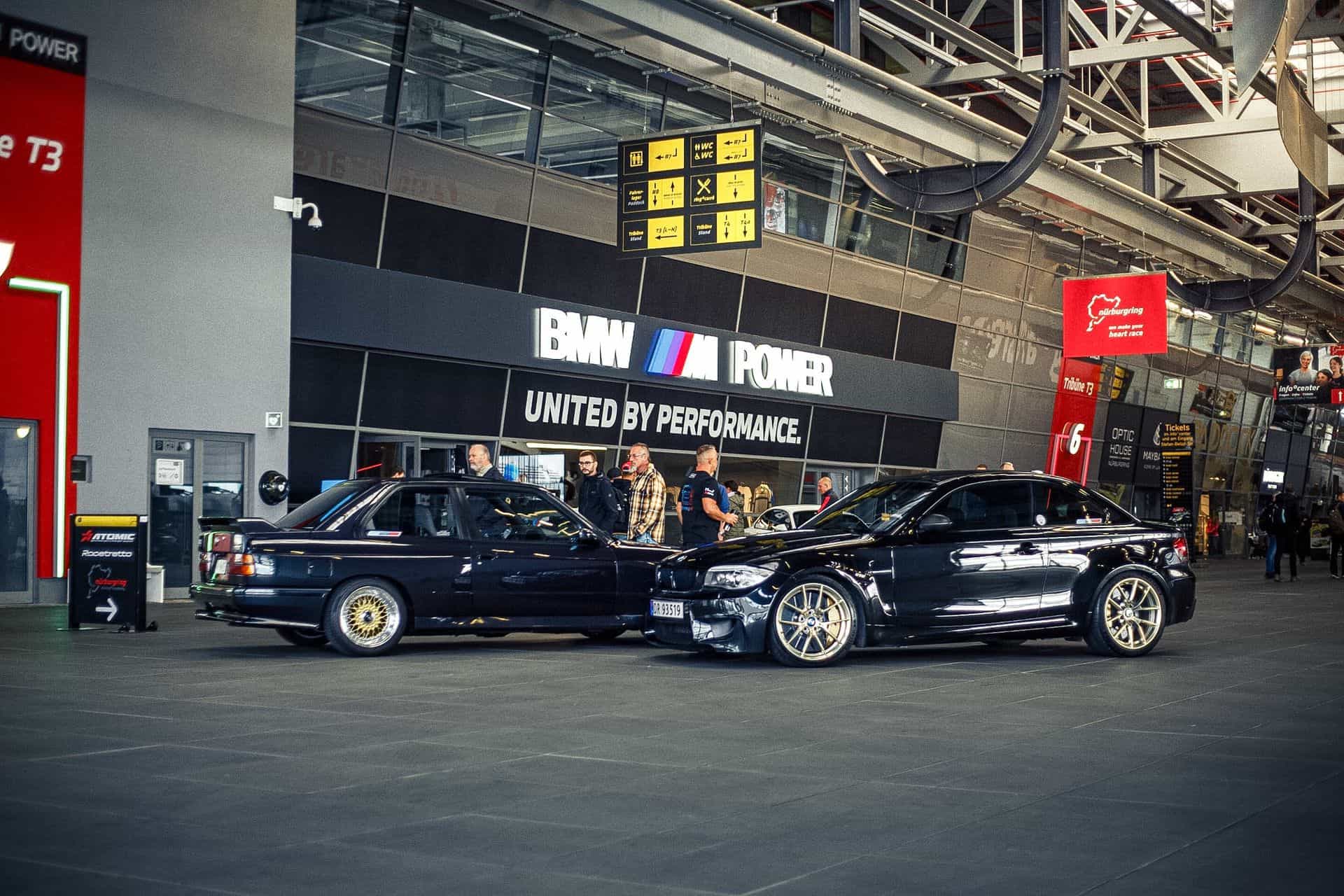


The Ring Boulevard at the Nurburgring filled with 85 BMW 1M Coupes and 50 first-generation E30 M3s last weekend for the fourth annual #1ermregister meet, drawing cars from nine countries. But the one that stole the show wasn’t even a real 1M.
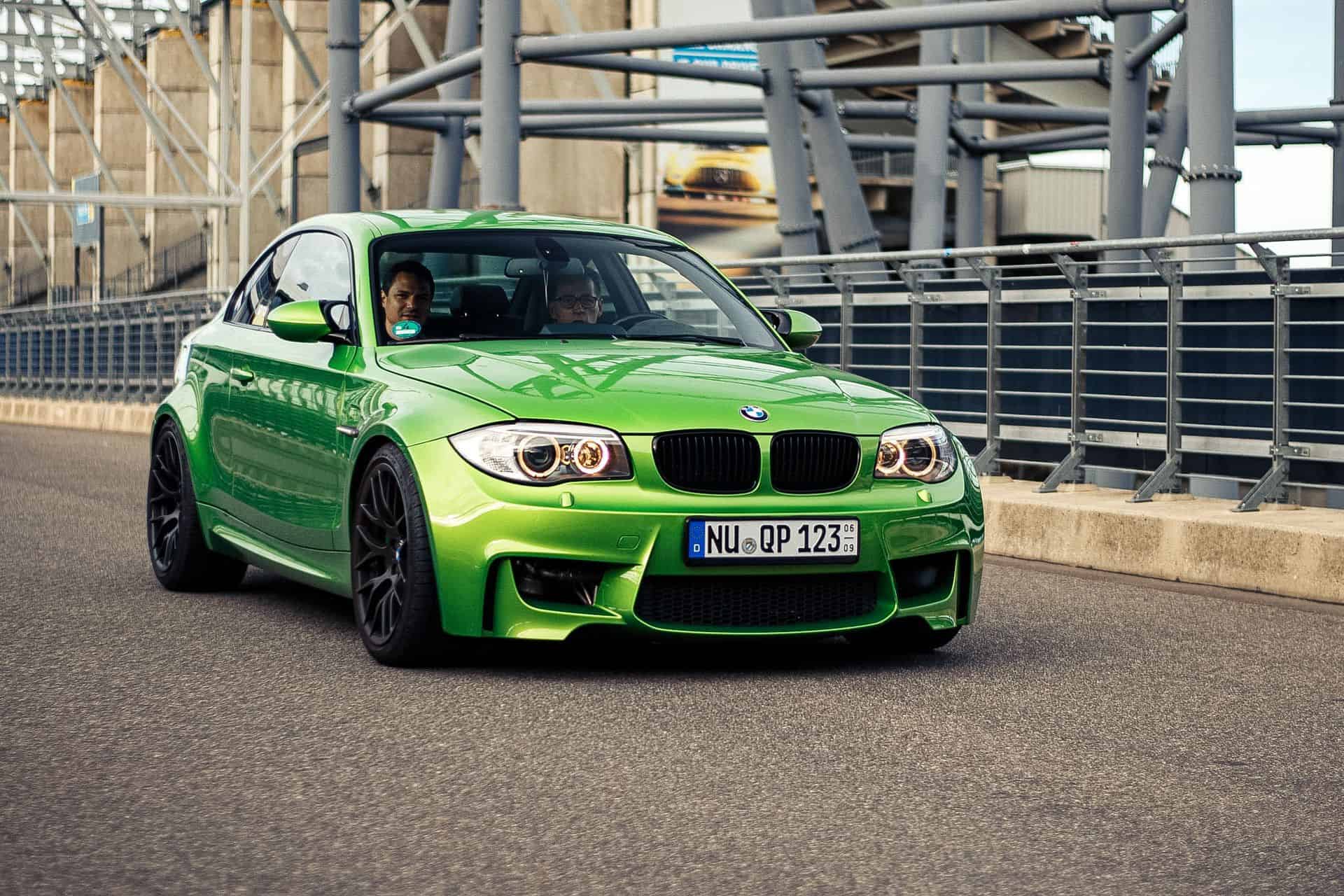
Evolve Automotive rolled in with a Java Green car that started life as a lowly 120d diesel. Under the hood now sits a P65 V8 from the Z4 GT3 race car, a naturally aspirated 4.4-liter unit producing roughly 500 horsepower. The man behind the swap, Imran Arshad, co-founded Evolve and Eventuri and was recently named managing director of AC Schnitzer after Dutch holding company AM Group acquired the tuner from the KOHL Group.
The P65 is the racing derivative of the S65 V8 that powered the E92 M3, and it competed in the Z4 GT3 from 2010 to 2015. Stuffing it into a former economy diesel wearing a factory 1M body kit is either genius or insanity. Probably both.
Java Green itself has an odd connection to this gathering. Last year’s meet hosted the only 1M BMW ever painted in that color at the factory. This year, the shade returned on a car that never left Dingolfing as anything more than a four-cylinder oil burner.
The decision to invite 50 E30 M3s as guests of honor was not random nostalgia. Park the two cars next to each other and they are separated by less than 4 centimeters in length. Both are small, rear-drive, two-door coupes with longitudinally mounted engines. The recipe is identical even if the ingredients changed from a 192-hp four-cylinder to a 335-hp twin-turbo six over the intervening 25 years.
Every generation of 3 Series bloated, and the M3 ballooned with it. By 2011, the E92 M3 had grown into a substantially larger machine. BMW M built the 1M largely from E92 M3 components, yet the result was spiritually closer to the original E30 than its own donor car. Two generations of M2 have followed since, and the current G87 is the 1M’s direct descendant, though it too has packed on the pounds.
BMW produced just 6,309 1M Coupes for customers between 2011 and June 2012, plus 33 development and test cars. Only 740 reached the US, and another 220 went to Canada. The E30 M3, by comparison, hit 17,970 units across all body styles between 1986 and 1991, since BMW needed at least 5,000 road cars to homologate it for Group A touring car racing. The 1M is the rarer machine by a wide margin.
Cars drove in from Norway, Spain, Hungary, Luxembourg, England, Switzerland, Belgium, the Netherlands, and Germany. The 1M count of 85 was actually down from 105 at last year’s edition, but the 50 E30 M3s pushed the total to 135 cars on the boulevard.
The meet is the public face of a larger project. The #1ermregister now tracks about 650 1M Coupes from 58 countries, roughly one in ten of every car BMW built for customers. Organizer Oliver Lindstedt runs it less like a traditional car club and more like a decentralized online community that materializes once a year at the Ring.
The range on display ran from bone-stock survivors to heavily modified builds, which is exactly what happens with a car 14 years after the last one rolled off the line. Some owners preserve them. Others treat them as platforms. And one person apparently looked at a 120d and thought, “What this needs is a GT3 V8.”
If the meet keeps its annual slot, the 2027 edition will land almost exactly 15 years after the final 1M was built. Production numbers are fixed. The community is still growing.

Share this Story