
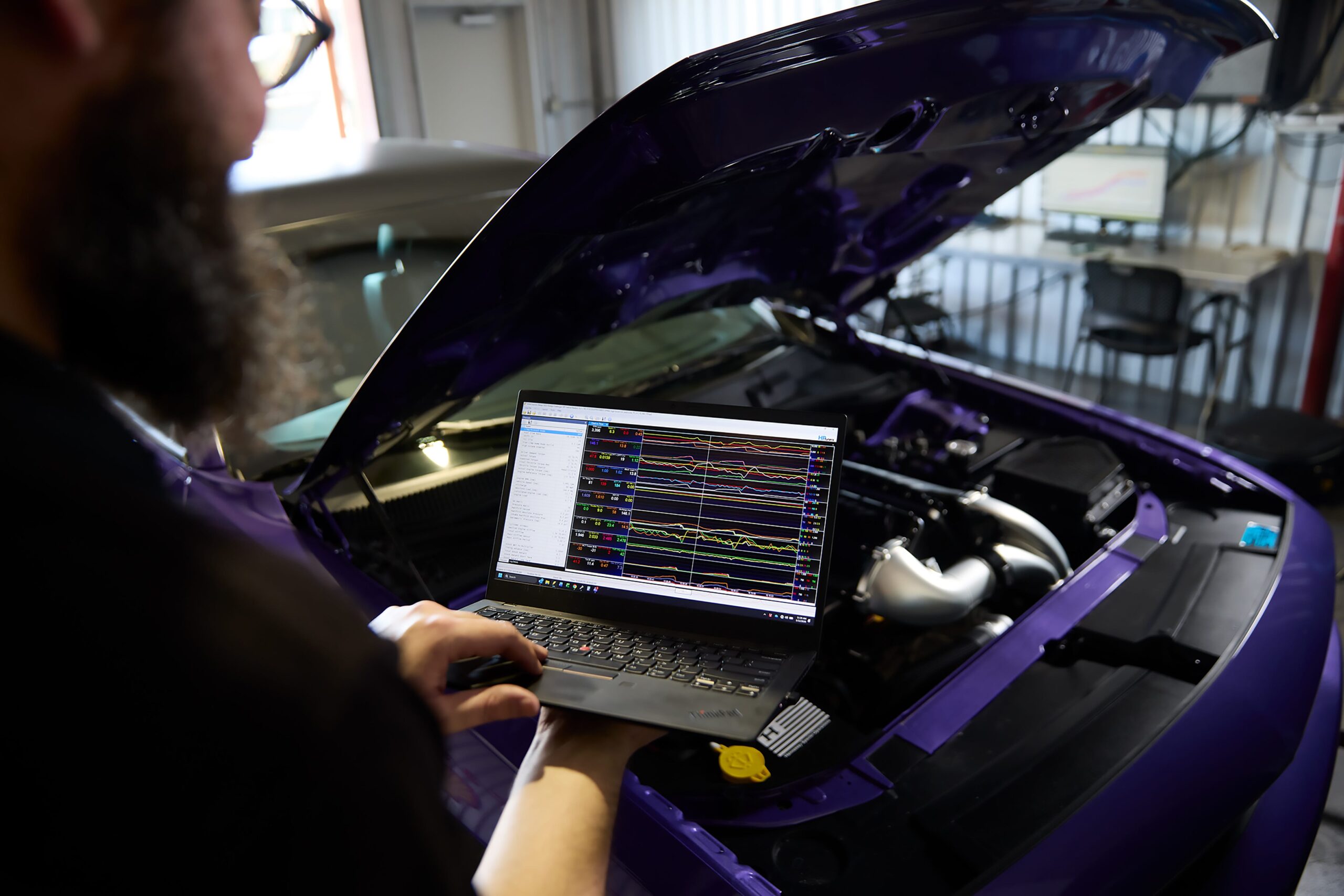


Making more horsepower in 2026 still comes down to the same thing it did in 1966: getting more air through the engine. The physics haven’t changed. But the path to doing it now runs through encrypted software, Eastern European hackers, and a $1000 program called WinOLS that definitely is not Microsoft Excel.
That’s the tension at the heart of modern car tuning. The engines are better than ever, calibrated so precisely from the factory that finding free power on a naturally aspirated motor through software alone is nearly pointless. Marshall Glasgow of Cobb Tuning puts it bluntly: the exceptions are cars like the Porsche Boxster Spyder and Cayman GT4, which Porsche deliberately hobbles. Everything else? You’re fighting for scraps.
Turbocharging changed the math. Turning up boost pressure is the cheapest, easiest way to cram more air into an engine without touching hardware. But getting access to the software that controls boost is where things get complicated, and occasionally shady.
Steve Dinan, who now runs CarBahn after decades synonymous with BMW tuning, says the hackers who crack European engine-management encryption often operate out of Eastern Europe. Whether they defeat 24-bit encryption head-on, find a back door, or obtain codes through bribery is anyone’s guess. Early in a new platform’s life, they’ll require owners to physically remove the engine computer and ship it in. Each unit cracked earns them a fee.
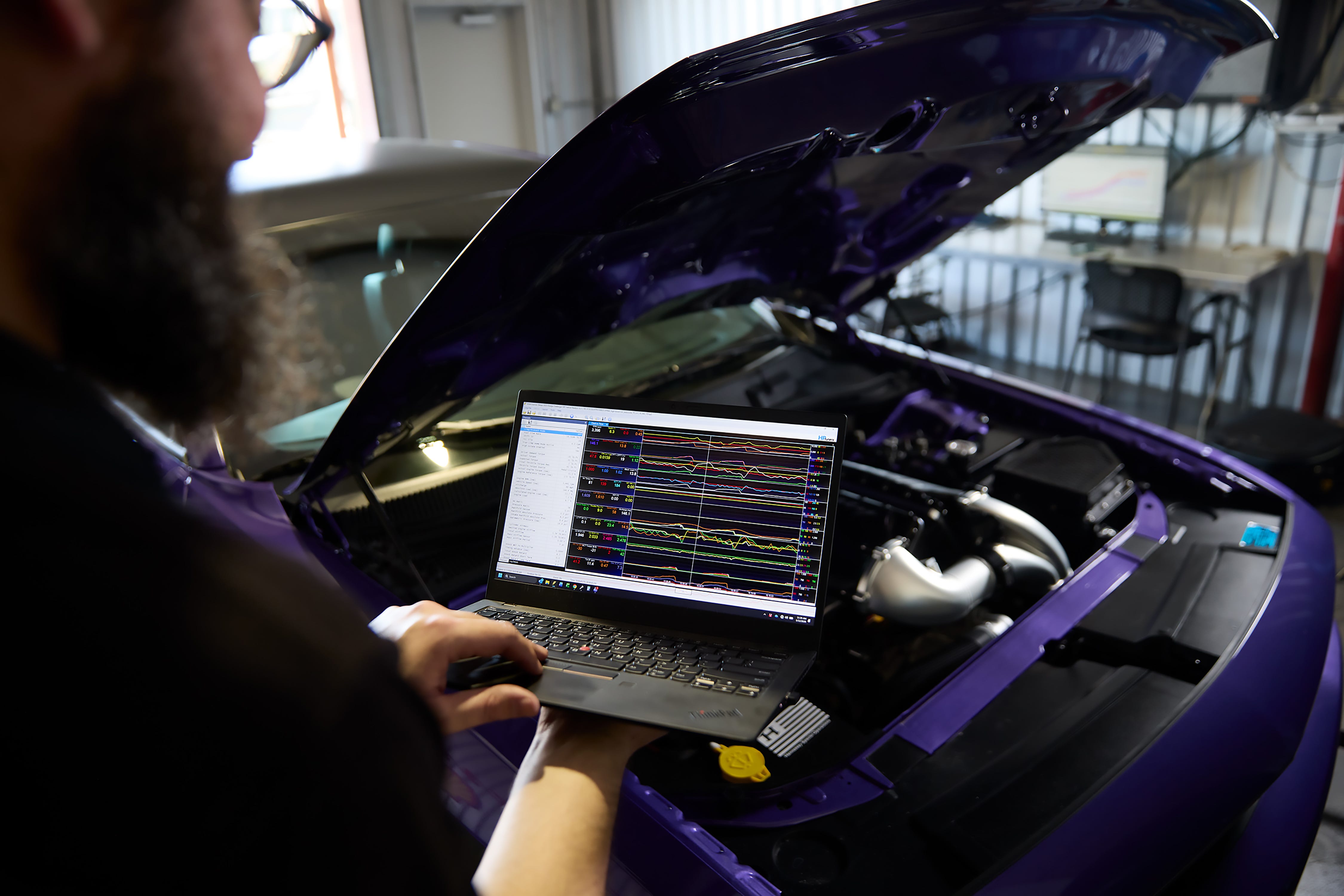
Even after the encryption falls, a tuner faces thousands of lines of hexadecimal code with no roadmap. An A2L file, the software’s table of contents, helps locate control parameters. When it exists. And when the tuner reads German.
Once inside the code, the real work begins. Modern engine-management systems calculate expected power output from manifold pressure and fuel consumption, then cut power if the numbers drift too far from stock. Dinan calls these “derates,” and disabling them without letting temperatures climb high enough to destroy catalytic converters or engine internals is where talent separates itself from YouTube bravado.
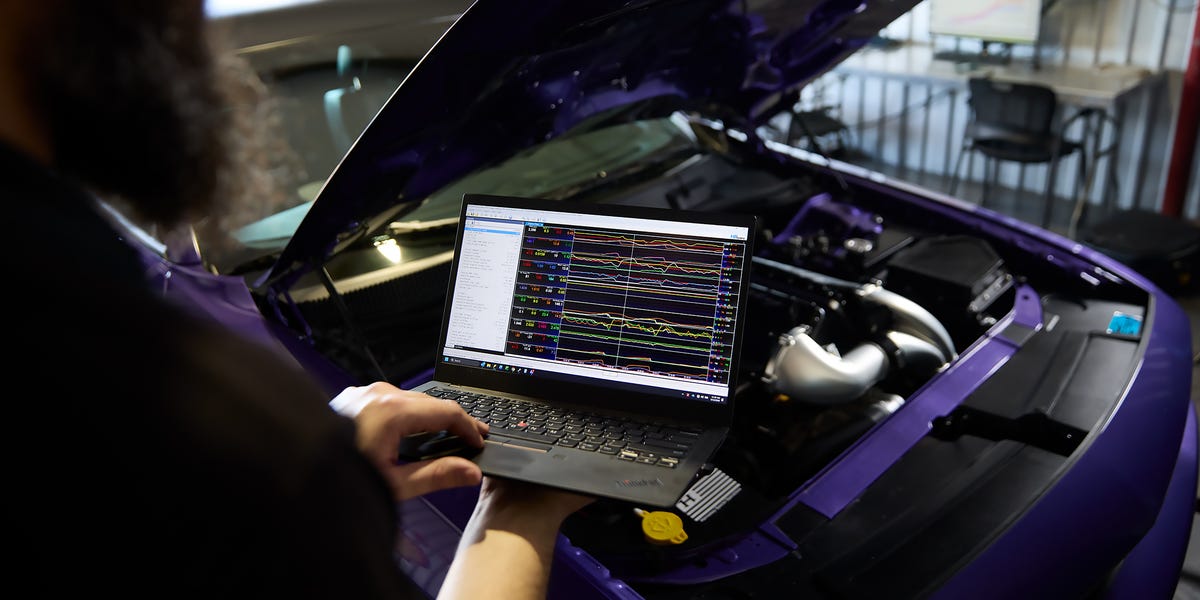
Direct fuel injectors typically have about 20 percent headroom above stock flow rates, according to Glasgow. Beyond that threshold, you’re buying hardware: bigger turbos, larger intercoolers, higher-capacity injectors, upgraded fuel pumps. The 1000-horsepower builds littering Instagram have all of that and then some, often including forged pistons, strengthened connecting rods, and reinforced blocks.
Lingenfelter Performance Engineering has built its reputation on exactly this kind of work with GM V-8s. For the C8 Corvette, the company offers packages ranging from head-and-cam swaps to full supercharger and turbo kits. A twin-turbo package runs $23,495 installed, pushing the LT2 V-8 to 685 horsepower.
Brandon Baker, LPE’s director of business development, notes that GM changes parts constantly, forcing the shop to revalidate component reliability at elevated power levels. Custom Mahle forged pistons are sometimes the answer.
Then there are piggyback tunes, which sidestep the encryption problem entirely by intercepting sensor signals. A piggyback system can tell the engine computer that manifold pressure is 20 psi when it’s actually 24.7, tricking the turbo into delivering extra boost. A CarBahn piggyback tune on a BMW M5 produces 913 horsepower on 100-octane fuel. On E85, Dinan claims another 200 on top.
Hennessey Performance has gone further still, selling complete vehicles through Ford dealerships. His Venom F-150 trucks come with a three-year, 36,000-mile warranty, which tells you something about the maturation of the tuning business, or at least its marketing.
The internet is full of 3500-horsepower GT-Rs running sixes in the quarter. A couple thousand dollars and a mail-order tune will not get you there. What it might get you is a scattered engine block on a public road and a voided warranty.
The best tuners test on engine dynos, chassis dynos, and real tracks. Cobb regularly takes development cars to Circuit of the Americas. Lingenfelter validates on both types of dynamometers before releasing a package.
Extra power has never been easier to buy. Knowing what you’re actually buying has never been harder.


Share this Story