
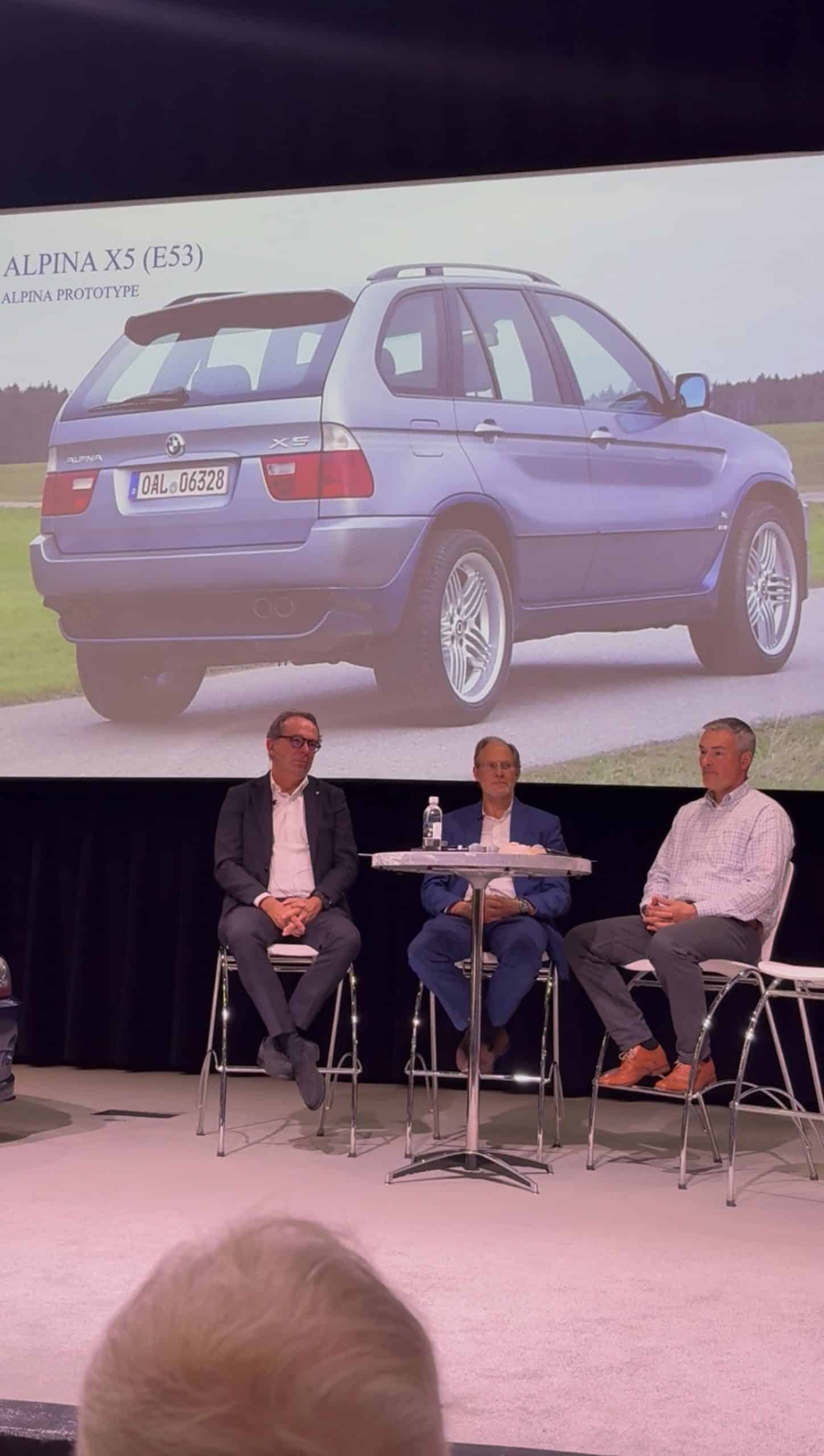


Before the XB7 existed, before ALPINA ever put its badge on an SUV, a single phone call between two old friends nearly rewrote the company’s entire trajectory.
Wolfgang Reitzle, then BMW’s Head of Development, knew the E53 X5 chassis had potential. The standard 4.4-liter V8 didn’t. So Reitzle called ALPINA founder Burkard Bovensiepen and asked a simple question: could Buchloe make it faster?
ALPINA’s answer was blunt and effective. Engineers yanked the V8 from the E39 B10 V8 and dropped it into an X5 body. No committee. No feasibility study lasting six quarters. They just built the thing, almost entirely in-house, creating a fully functional prototype that nobody outside a tight circle at BMW even knew about.
The story, recounted by former ALPINA CEO Andreas Bovensiepen, reveals a collaboration that shaped one of the best-loved E53 variants ever produced.
Reitzle’s original plan was ambitious. He wanted ALPINA to manufacture roughly 3,500 units per year under its own name. That volume would have been staggering for a boutique operation in Buchloe, a facility built for precision runs of sedans and coupes, not mass-market SUV production.
ALPINA couldn’t scale to that level without tearing apart the very thing that made it special.
So BMW offered to absorb the project. Burkard Bovensiepen agreed, partly out of pragmatism and partly because he wasn’t exactly thrilled about slapping an ALPINA crest on a family hauler. The compromise was elegant.
ALPINA supplied the critical engine internals, including the crankcase from its F3/F4 setups, while BMW assembled the motors on the Spartanburg line under the designation M62TUB46.
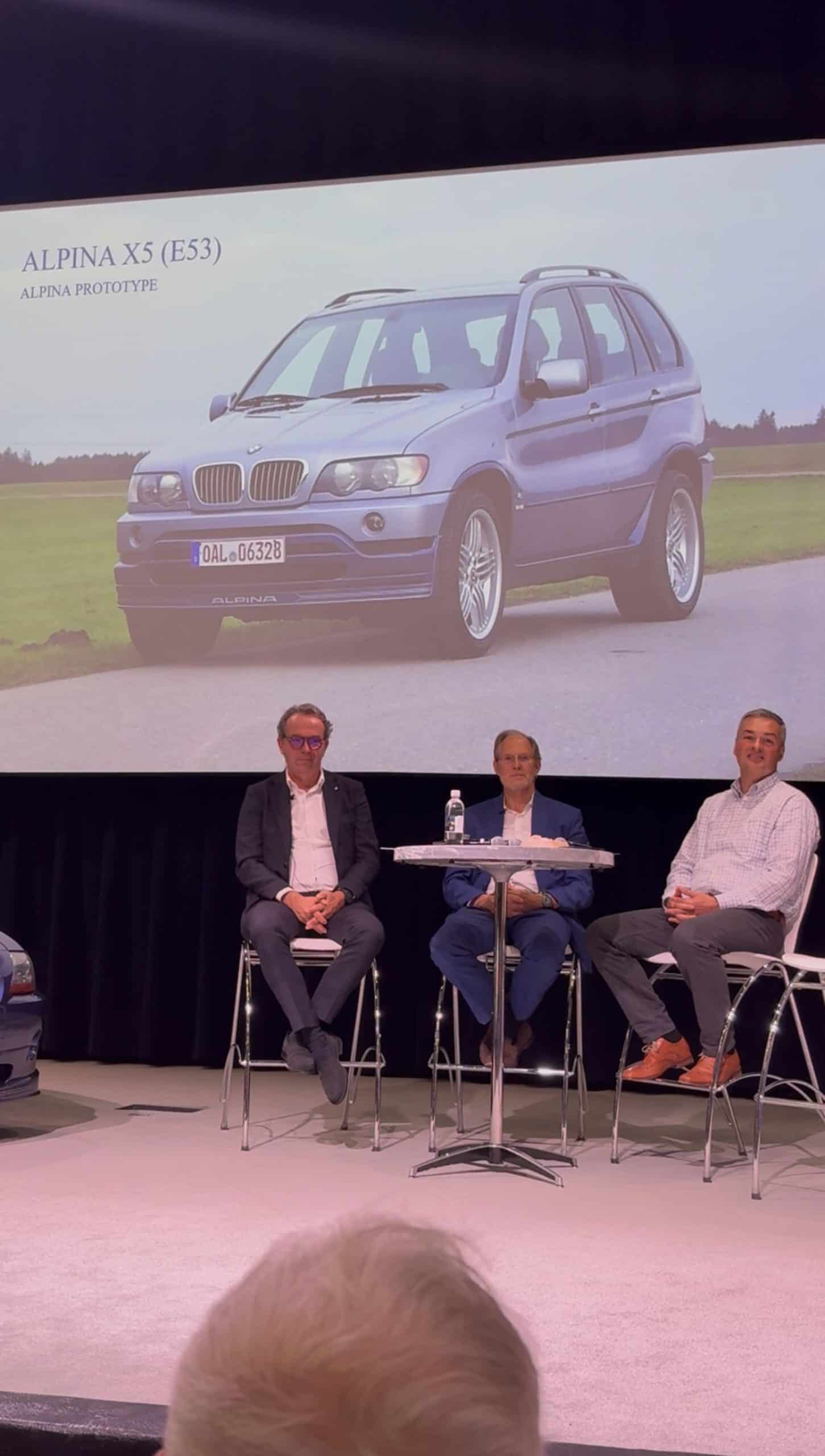
The result was the BMW X5 4.6iS. Not an ALPINA. Not a boutique curiosity. A factory BMW built 10,467 times over, carrying Buchloe DNA in its bones without a single ALPINA badge in sight.
That’s the quiet contradiction at the heart of this story. One of the most desirable first-generation X5 variants owed its existence to a tuner that didn’t want to build SUVs. ALPINA proved the concept, handed over the recipe, and walked away.
Exclusive photos of the original prototype show an interior finished in a striking combination of purple and blue leather across the seats, center console, and door panels. An ALPINA steering wheel completed the cabin. It looked every bit the part of a proper Buchloe product, even if it was never meant to leave the building.
The prototype’s afterlife was less glamorous. BMW Classic pressed the car into service as a utility vehicle, using it for daily parts runs. For a few years, the machine that convinced BMW executives to greenlight a performance SUV was hauling components around like a warehouse mule.
Then they scrapped it. No museum display. No preservation order. No collector rescue. The car that launched 10,467 copies simply ceased to exist.
It took ALPINA another two decades to officially enter the SUV space, first with the diesel XD3 BiTurbo in 2013, then the 612-horsepower XB7 for American buyers in 2021. By then, BMW had already absorbed ALPINA entirely, folding the Buchloe operation into its corporate structure.
The E53 prototype was the first sign that the boundary between the two companies was always more porous than either side let on. ALPINA built the car that proved a fast X5 could work. BMW built the car that proved a fast X5 could sell. Somewhere in a scrapyard, the evidence of that handshake is rusting into nothing.
Share this Story