
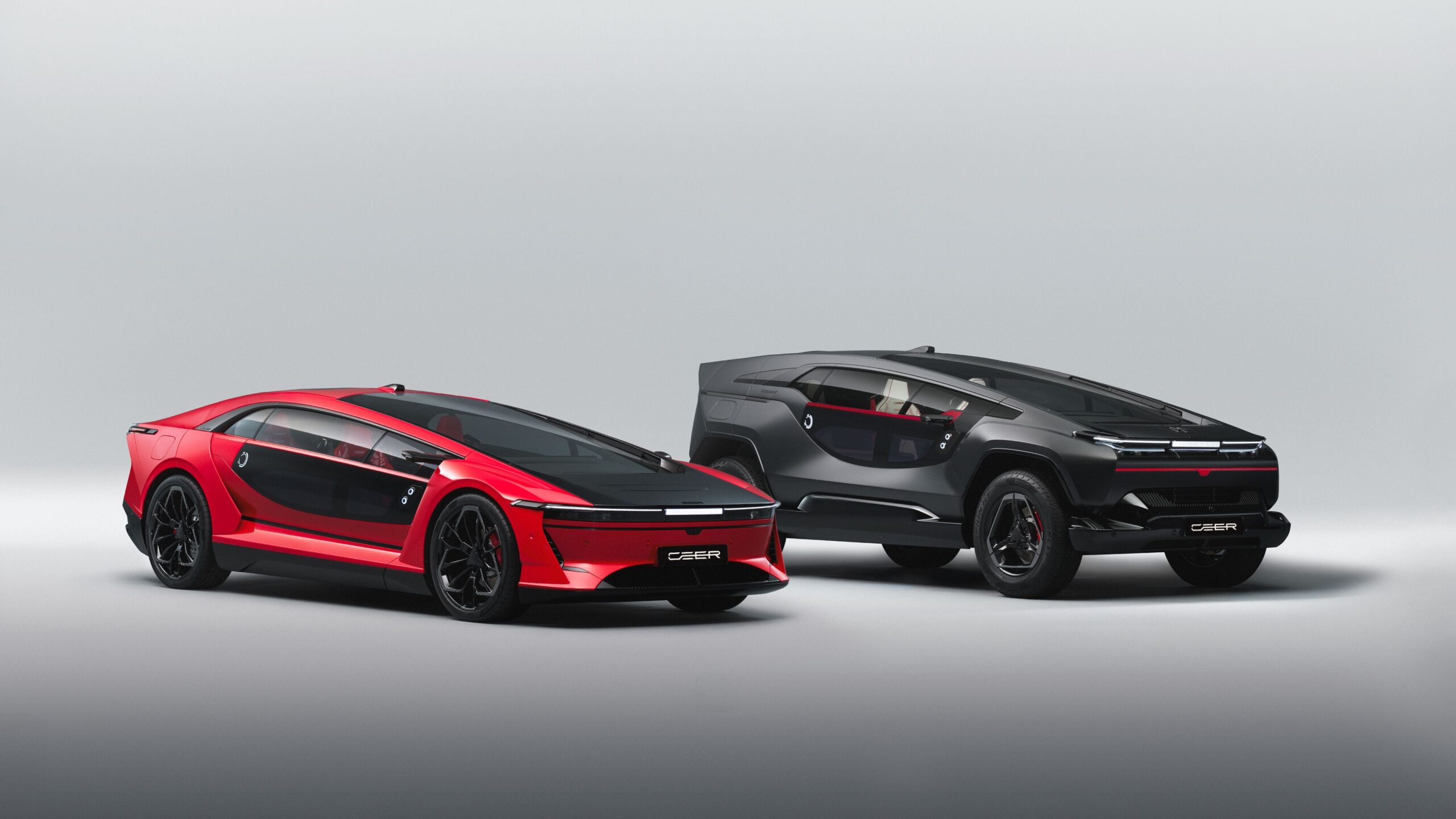


CEER Motors just pulled the covers off two of the strangest looking electric vehicles to emerge from any country in recent memory. The Exobot Sedan and Exobot SUV, born from a joint venture between Saudi Arabia’s sovereign wealth fund and Taiwanese electronics giant Foxconn, pack gullwing doors, a 48-inch dashboard screen, and a tri-motor powertrain rated at 850 horsepower. At least to start.
The company has been talked about for years. Announced with fanfare, then left to simmer in the background while Chinese and American EV startups grabbed headlines. Now, finally, there are actual vehicles to scrutinize, and they look like nothing else on the road or, for that matter, off it.
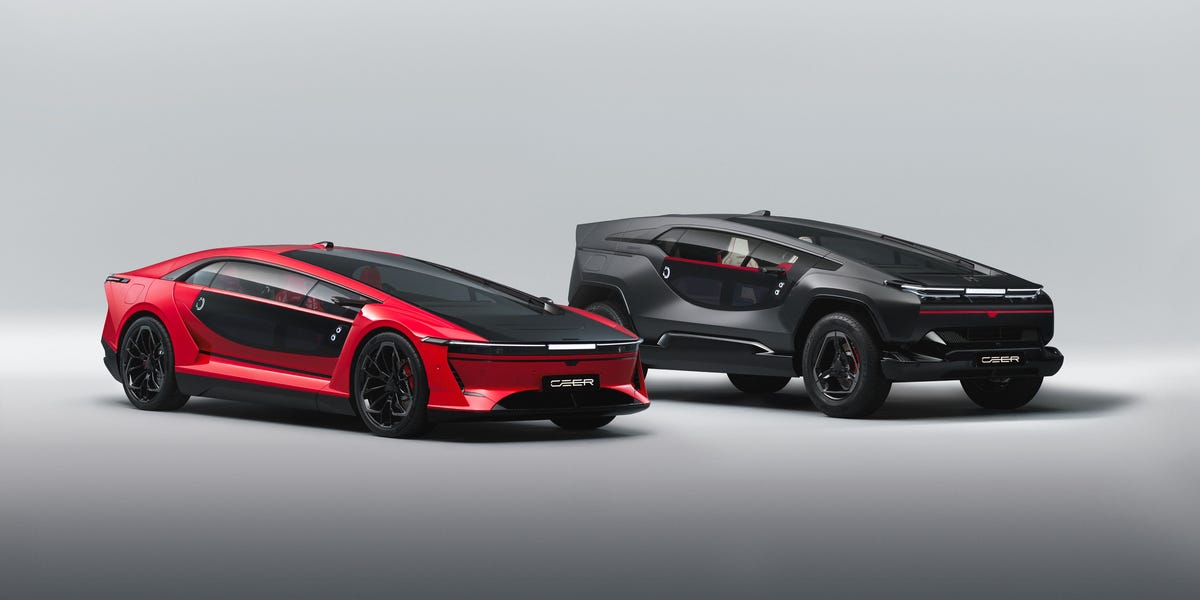
Both models wear aggressive wedge shapes that recall the craziest design-house experiments of the 1980s. The sedan stretches 207 inches long but sits just 56.3 inches tall, wider than an Audi A8 by six inches and two inches lower. The SUV is shorter but 10 inches taller, with trapezoidal wheel arches meant to suggest off-road capability.
The headlights run the full width of the nose, interrupted by 32 vertical LED dashes, a nod to 1932, the year Saudi Arabia was founded as a kingdom. Gullwing doors feature glass panels that toggle between tinted and opaque. The windshield, which CEER claims is the largest ever produced at 94.5 inches, sits at a 15-degree angle for aerodynamic purposes and wears a reflective coating to combat the brutal Middle Eastern sun.
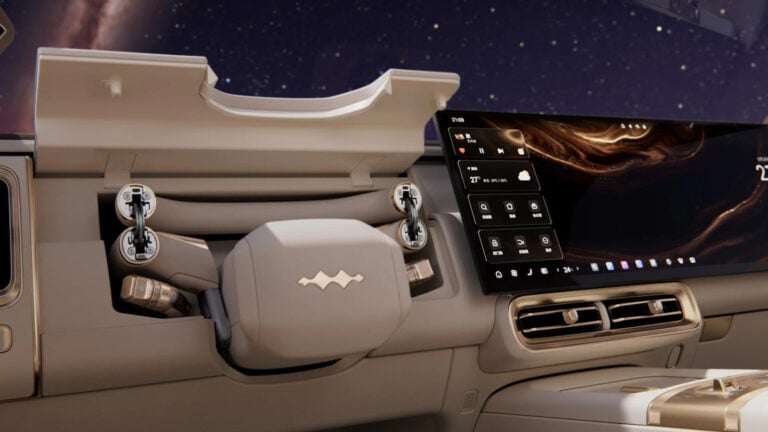
Inside, the 48-inch pillar-to-pillar display dominates everything. A yoke steering wheel controls the steer-by-wire system, which eliminates the traditional steering column entirely. There is also a fragrance system with three scents, because of course there is.
The powertrain numbers tell an interesting story. CEER quotes a maximum output of 1111 horsepower and 1106 pound-feet of torque from the tri-motor setup, enough for a claimed 2.1-second sprint to 62 mph in the sedan. But those numbers won’t be available at launch.
The First Edition models top out at 850 hp and 737 pound-feet, with the sedan hitting 62 in 2.6 seconds and the SUV in 2.9. When the full-power version arrives remains unclear.
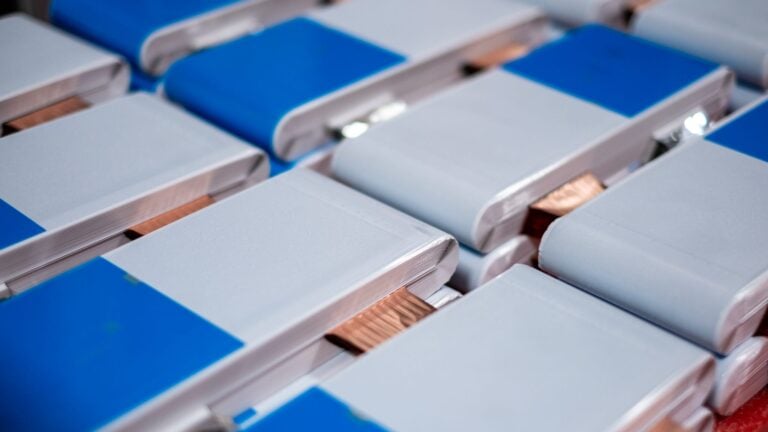
A 112-kWh battery feeds the system. CEER quotes 416 miles of range for the sedan and 347 for the SUV, but those are NEDC figures, a testing standard notorious for its optimism. Translated to EPA methodology, expect something closer to 318 and 265 miles respectively.
The 800-volt architecture supports 250-kW charging, good for 10 to 80 percent in under 30 minutes. Air suspension comes standard on both, and the SUV can raise itself to 11.8 inches of ground clearance. CEER says its engineers specifically designed the climate system to handle extreme desert heat, dropping cabin temperature from 149 degrees to 90 in ten minutes.
Production will happen at a new factory in King Abdullah Economic City. Sales start in Saudi Arabia before expanding to other Middle Eastern markets, with broader global ambitions likely simmering beneath the surface.
CEER plans to grow to seven models by 2030, including compact and mid-size vehicles positioned below these flagship Exobots. Foxconn brings manufacturing expertise from the electronics world, and the Saudi Public Investment Fund brings essentially limitless capital. What neither partner brings is decades of experience building cars people actually buy and live with.
The auto industry is littered with well-funded startups that delivered spectacular prototypes and then stumbled when it came time to build them by the thousands, service them, and keep customers happy. CEER’s designs are bold enough to generate attention. Whether they can generate a sustainable car company is a question that won’t be answered by a press release.

Share this Story