
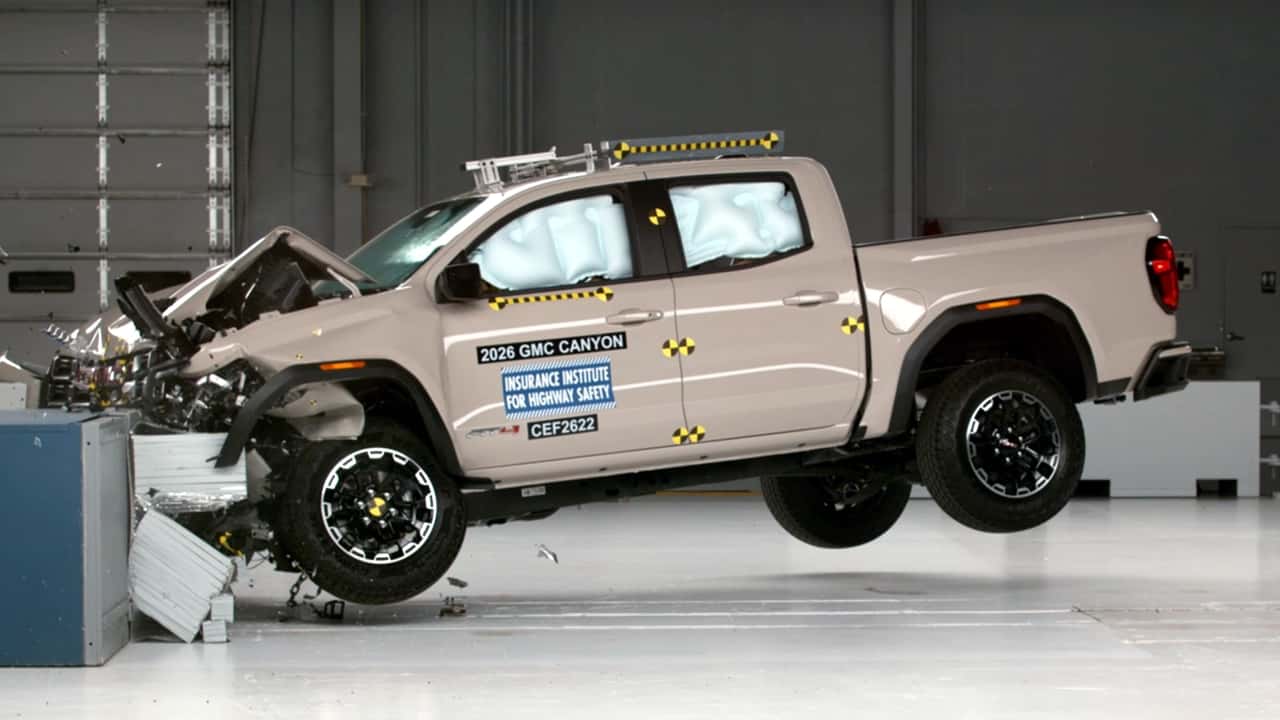


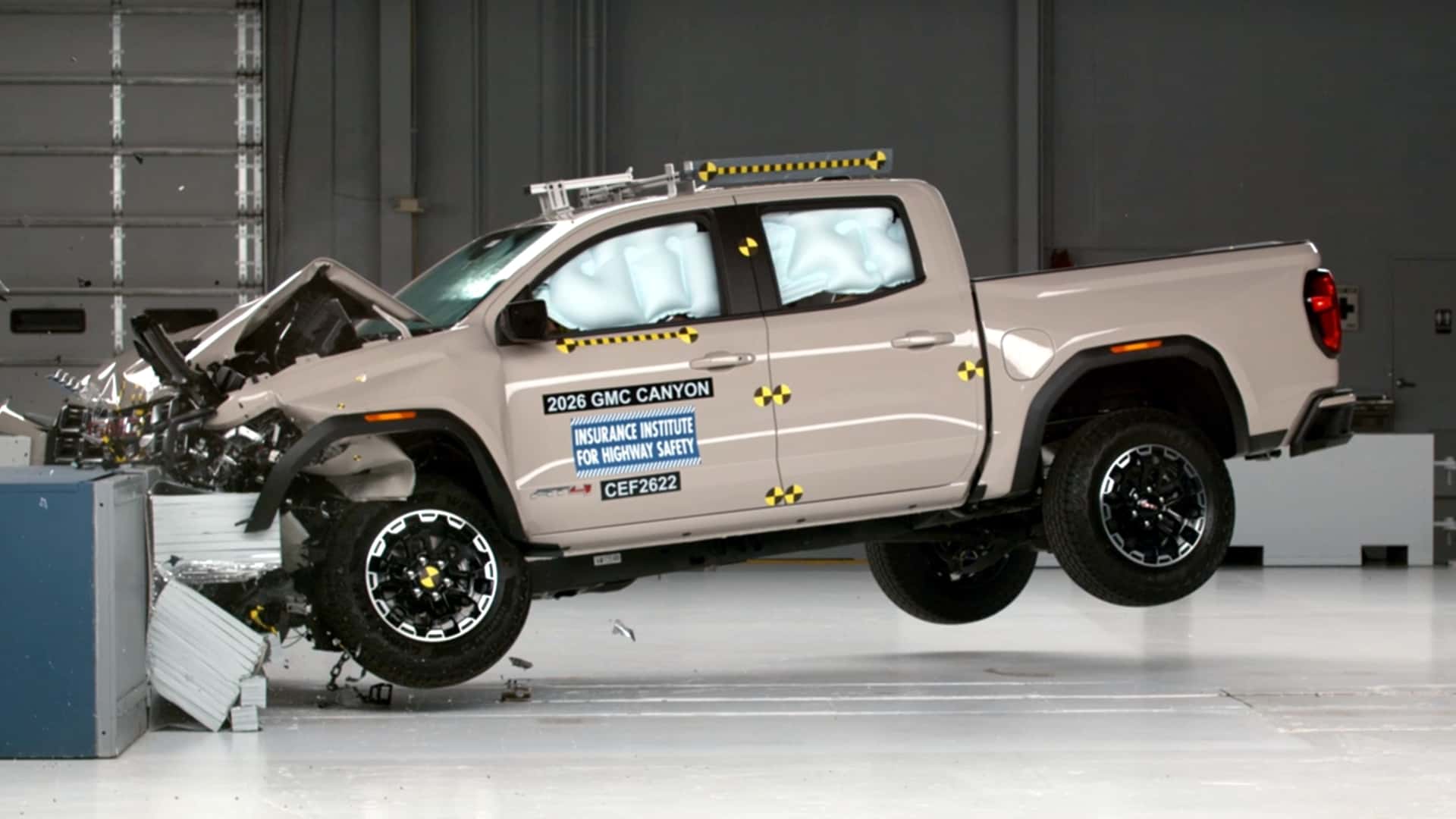
Six standard airbags weren’t enough. The 2026 GMC Canyon crew cab went through the Insurance Institute for Highway Safety’s latest battery of tests and came out empty-handed, failing to earn either Top Safety Pick or Top Safety Pick+ honors in ratings released September 3.
Two problems sank it. Rear-seat occupant protection in the updated moderate overlap front crash test earned only a marginal rating. And vehicle-to-vehicle front crash prevention scored poor, which by itself is a disqualifier.
The moderate overlap front test has evolved. IIHS now zeroes in on what happens to second-row passengers, not just the driver. In the Canyon’s case, rear occupants moved too far forward during the impact, raising the risk of head and chest injuries for anyone sitting behind the front seats. For a crew cab truck that GM markets partly on its ability to carry people, that’s an ugly finding.
The front crash prevention failure is arguably worse. IIHS has expanded its automatic emergency braking evaluations to include scenarios involving motorcycles and large trucks at higher closing speeds. The Canyon’s system couldn’t keep up. A poor score there means the truck’s forward collision tech is lagging behind what the institute now considers baseline competency.
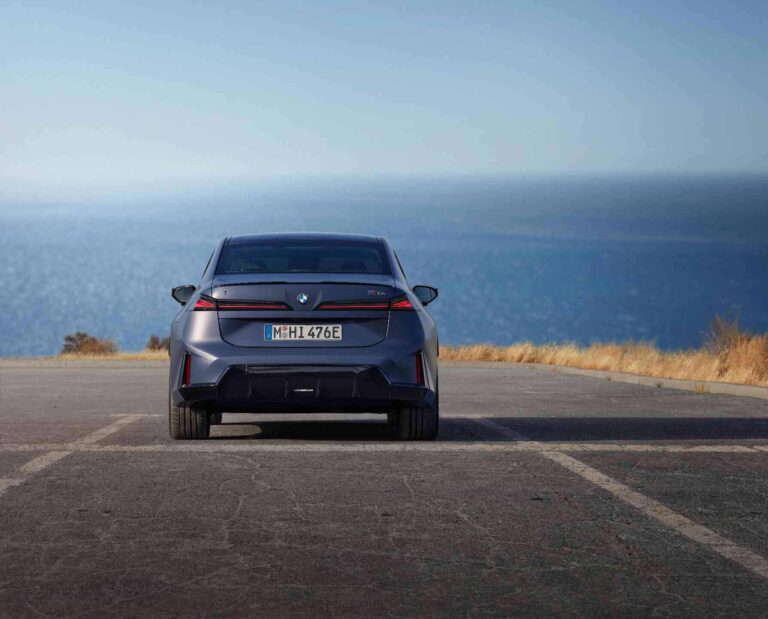
The Canyon wasn’t alone in its struggles. The BMW 3 Series, electric BMW i4, and Lexus IS also walked away without awards in the same round of testing. Only the Tesla Model Y and Kia Telluride managed to clear the bar for Top Safety Pick+, which tells you how steep the new IIHS criteria have become.
But those other vehicles are cars and crossovers. The Canyon is a midsize pickup competing in a segment where buyers increasingly use crew cabs as daily family haulers. A poor crash prevention rating and marginal rear-seat protection hit differently when your marketing pitch includes hauling kids to soccer practice.
GM responded with the kind of boilerplate that PR departments keep in a drawer. The company said its vehicles meet or exceed all federal safety standards and that engineers would review the IIHS data. No timeline for fixes. No acknowledgment of specific shortcomings.
NHTSA has not yet posted an overall crash rating for the 2026 Canyon, so there’s no second opinion to lean on.
The IIHS to-do list for GMC is short but expensive. Better rear-seat restraint systems require hardware changes, not software patches. Upgrading the automatic emergency braking system to handle the institute’s tougher vehicle-to-vehicle scenarios likely means new sensors, new calibrations, or both. None of that happens with an over-the-air update.
The midsize truck market is tight. The Toyota Tacoma, Ford Ranger, and Chevrolet Colorado, which shares its platform with the Canyon, are all fighting for the same buyers. Safety scores matter in that fight, especially as fleet managers and insurance companies pay closer attention to IIHS ratings when making purchase decisions.
GMC will need to trigger a retest to get back in contention. That means demonstrating to IIHS that meaningful changes have been made, submitting new vehicles for evaluation, and hoping the numbers come back clean. Until then, the Canyon crew cab sits on dealer lots with a safety resume that reads like a warning label.
Share this Story