
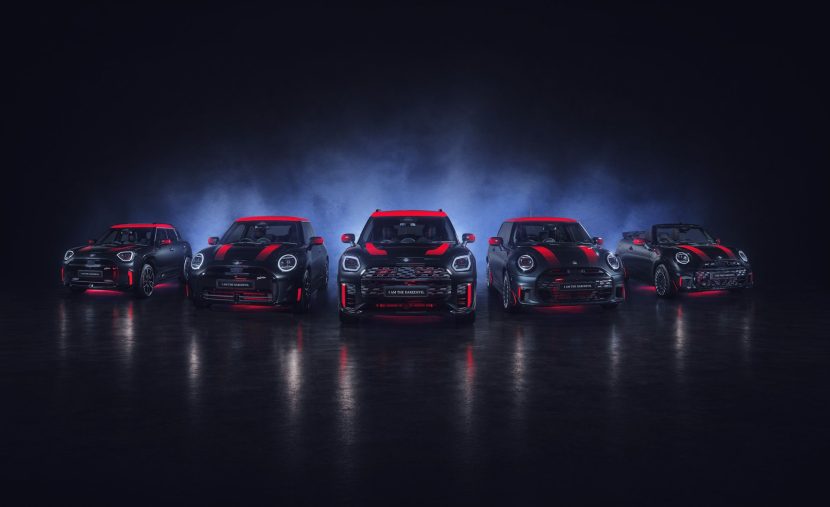


MINI just built its first battery-electric John Cooper Works models, and it buried them inside a 44-unit special edition exclusive to South Africa. The Daredevil Edition spans five vehicles, three with combustion engines and two with electric motors, and every one wears Midnight Black paint with red stripes and checkered mirror caps. The cosmetics are standard special edition fare. The powertrain split is not.
The two EVs, the three-door JCW Electric and the JCW Aceman, share a 190 kW, 350 Nm drive system and DC fast charging up to 95 kW. The JCW Electric hits 100 km/h in 5.9 seconds with roughly 400 km of range. The Aceman manages 6.4 seconds and 380 km.
Both are quicker to triple digits than the combustion JCW Hatch and Convertible sitting right next to them in the same limited run. That quiet little detail says more about where MINI is headed than any press release could.
MINI South Africa is allocating just eight units of the JCW Electric at R994,200 (about $61,900) and eight Aceman units at R1,098,700 ($68,400). The combustion JCW Hatch starts at R907,074 ($56,500), the Convertible at R976,309 ($60,800), and the Countryman at R1,126,267 ($70,100). The electric cars slot right into the middle of the pricing ladder, not positioned as aspirational flagships but as equals.
The combustion trio still has its talking points. The JCW Hatch runs a 2.0-liter TwinPower Turbo four-cylinder making 170 kW and 380 Nm through the front wheels, with an AC Schnitzer exhaust and rear diffuser thrown in for the Daredevil treatment. The Convertible uses the same engine but gives up a few tenths to its heavier soft-top body.
The Countryman is the real bruiser of the group: all-wheel drive, 233 kW, 400 Nm, four-piston monoblock front brakes, and a 5.4-second sprint to 100 km/h. It is the quickest and most expensive car in the lineup.
But the Countryman also makes the EVs look even more interesting by comparison. The JCW Electric nearly matches its acceleration for roughly $8,000 less, without the complexity of an all-wheel-drive system or the running costs of premium fuel.
Whether the electric JCW badge carries the same visceral appeal as its combustion counterpart is a fair question. The noise, the overrun pops, the mechanical urgency of a turbocharged four-cylinder pulling to redline, none of that translates to an electric motor. MINI knows this.
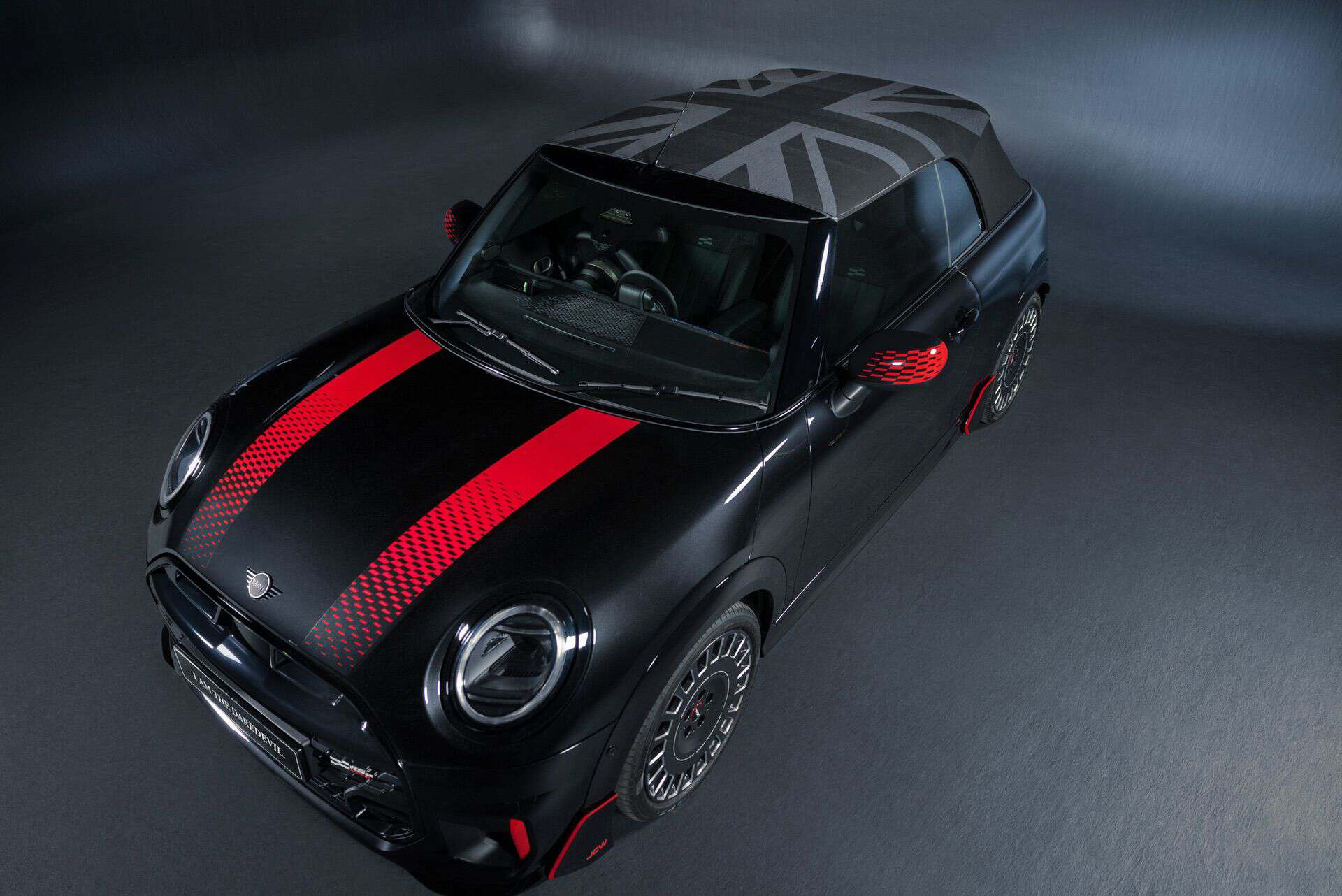
The brand dressed both EVs in an exclusive red-and-black multitone roof that the combustion models do not get. It is a small but deliberate visual distinction that separates the two camps within the same family.
South Africa is an unusual proving ground for a debut like this. The country’s charging infrastructure remains spotty outside major metro areas, and EV adoption trails far behind Europe and China. Launching MINI’s first electric performance cars here, in a run of just 16 units combined, feels less like a market push and more like a controlled experiment.
MINI confirmed the Daredevil Edition will not be sold outside South Africa, though the individual options it draws from remain available to configure in other markets. Cars start arriving in July. Once the 44 are spoken for, that is it.
The question hanging over all of this is whether the electric JCW models stay regional curiosities or signal a broader rollout. MINI has not said. The fact that they exist at all, sharing a stage with combustion cars they can outrun, suggests the answer is already taking shape.
Share this Story