
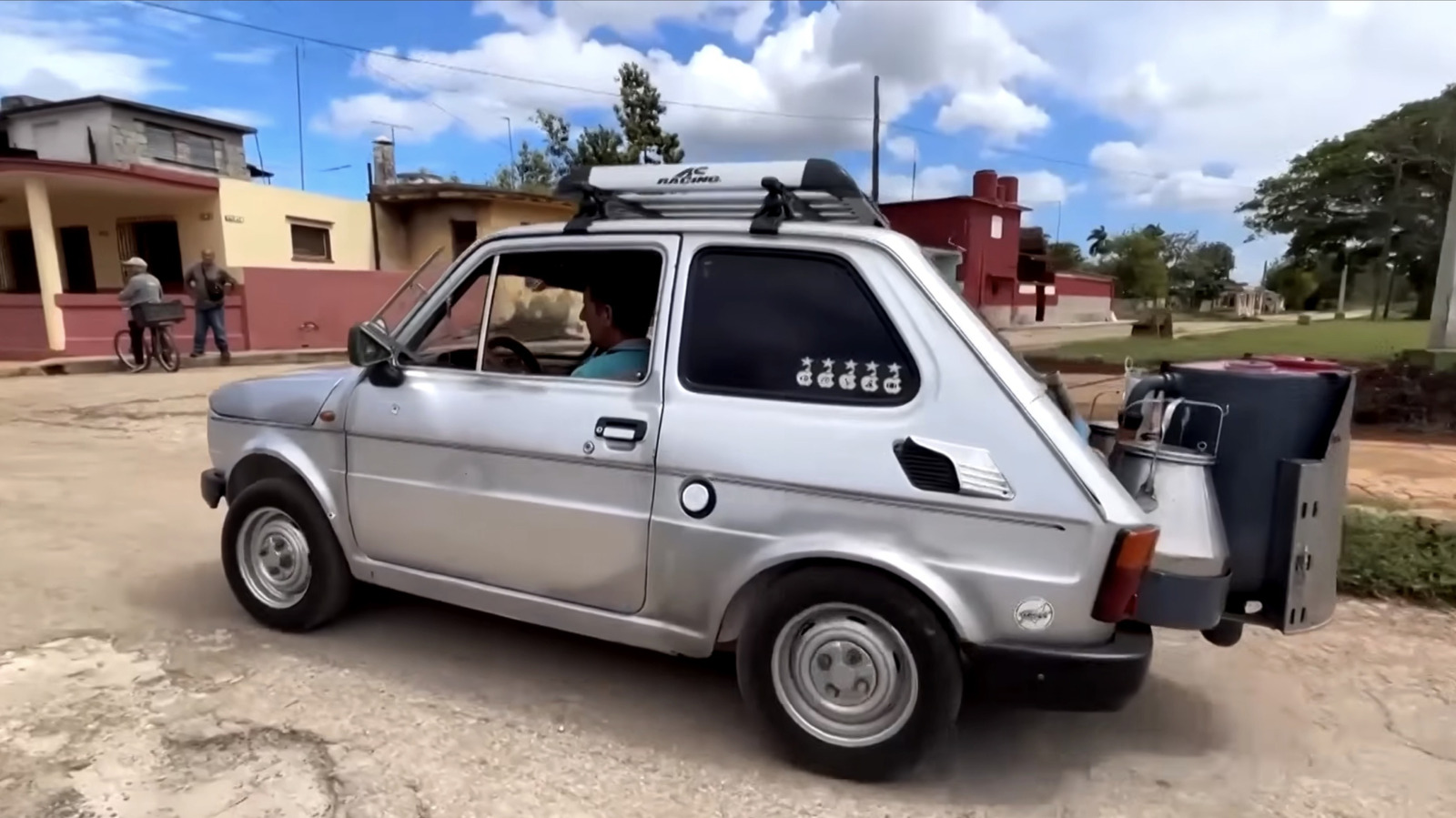


Juan Carlos Pino has an eighth-grade education, a workshop full of scrap metal, and a 1980 Polski Fiat that runs on charcoal. In a country where gasoline now costs $30 a gallon on the black market, that makes him the most resourceful man in Aguacate.
Since the U.S. cut off oil shipments to Cuba in January — and threatened tariffs on any country that dares resupply the island — power blackouts have become routine and fuel rationing has strangled daily life. The ouster of Venezuelan President Nicolás Maduro severed Cuba’s last reliable petroleum lifeline. Pino’s answer was to rip the engine lid off his tiny Polish-built Fiat and bolt on a contraption that turns charcoal into combustible gas.
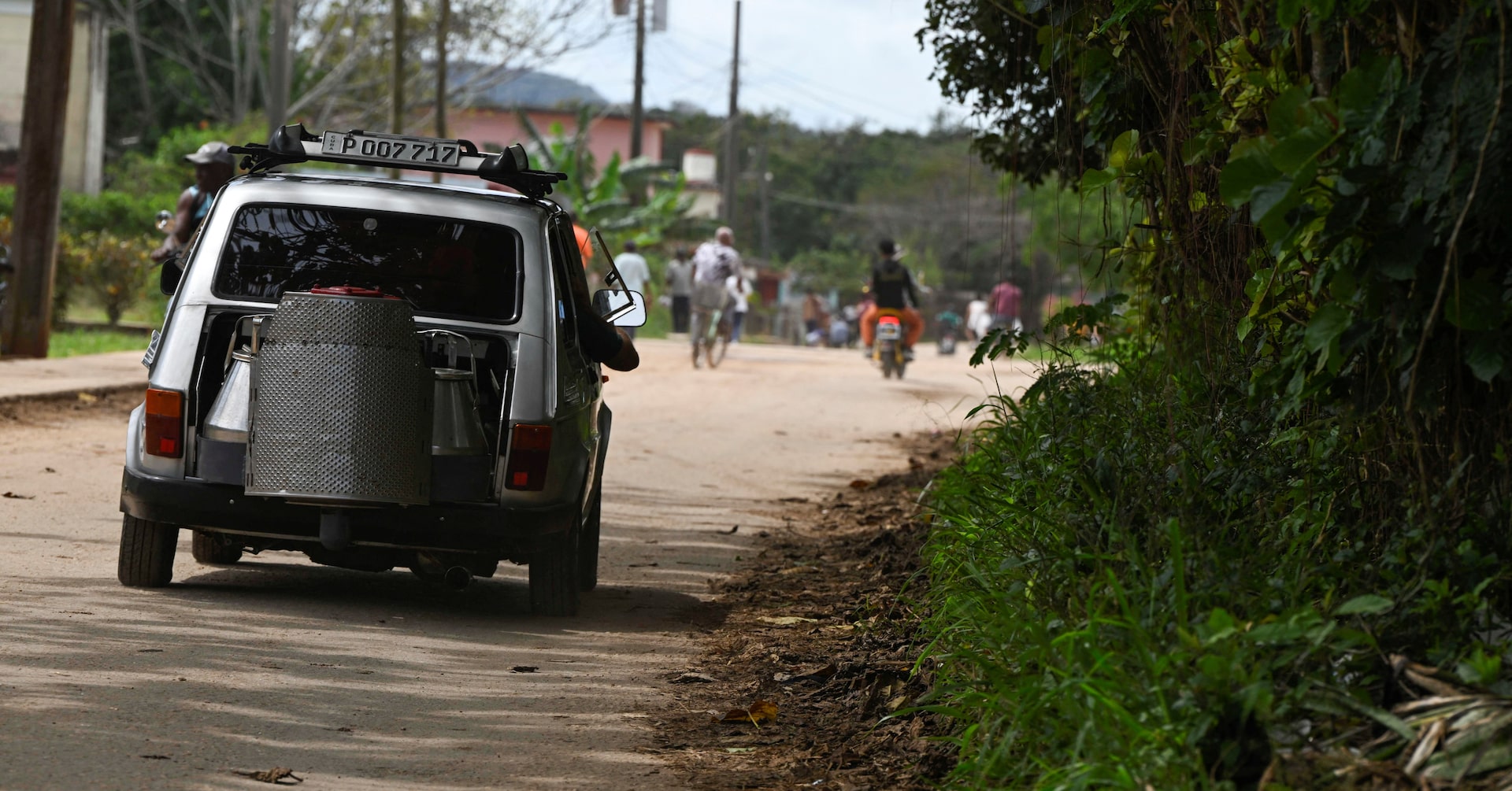
The device is pure Cuban improvisation. A converted propane tank serves as the combustion chamber, sealed with the lid from a power transformer. The filter is a stainless steel milk jug stuffed with old clothes.
A blower pushes carbon monoxide gas through a cooling system and into the carburetor, where it mixes with air just like gasoline vapor would. Once the engine catches, it sustains its own suction and the blower shuts off.
On March 4, Pino rolled the thing out onto Aguacate’s potholed streets. An early test run covered 85 kilometers at a top speed of 70 kph — roughly 53 miles at 43 mph. Not highway material, but in a country where the alternative is walking to work with a hand saw over your shoulder, it qualifies as liberation.
Pino credits his late uncle and an open-source website called DriveOnWaste.com, run by Argentine innovator Edmundo Ramos. The technology itself is ancient. Nature published an article about charcoal-powered vehicles in 1934, noting their wartime utility.
Wood-gas cars were common across Europe during World War II. What’s new is the desperation that makes a 90-year-old concept relevant again.
Ramos says other Cubans have been calling him for help — an ice maker who can’t make ice, an ice cream vendor, a shop owner. One caller is reportedly powering an entire neighborhood with a charcoal-fed 50-kilowatt generator. The blockade is breeding a decentralized energy insurgency built from garbage and ingenuity.
Pino is now a local celebrity. Townspeople line up for selfies. A 27-year-old motorcyclist named Yurisbel Fonseca pulled over just to stare.
Narvis Cruz, 53, called it “the invention of the year,” which carries weight coming from a man who drives a 1953 Pontiac powered by a 1940s Perkins diesel engine, a Mercedes transmission, Czech steering, and an East German differential. “That’s Cuba,” Cruz said. “A salad made of everything.”
The charcoal system is not safe. The gas flowing through Pino’s milk-jug filter is carbon monoxide — colorless, odorless, and lethal if the plumbing leaks. But safety is a luxury that requires stability, and stability left Cuba a long time ago.
Pino’s next project is a tractor. “We need mobility, we need to be able to plant crops,” he told Reuters. That sentence contains more strategic clarity than most policy papers.
When an island’s fuel supply is weaponized, food production collapses next. Pino isn’t just keeping a car running. He’s trying to keep a town fed.
Cuba has always been a museum of mechanical survival — classic American iron held together with Soviet parts and sheer willpower. The charcoal Polski fits right in. It is absurd and brilliant and heartbreaking all at once, a two-cylinder rebuke to the idea that cutting off a country’s oil will make its people surrender. It usually just makes them more stubborn.




Share this Story