
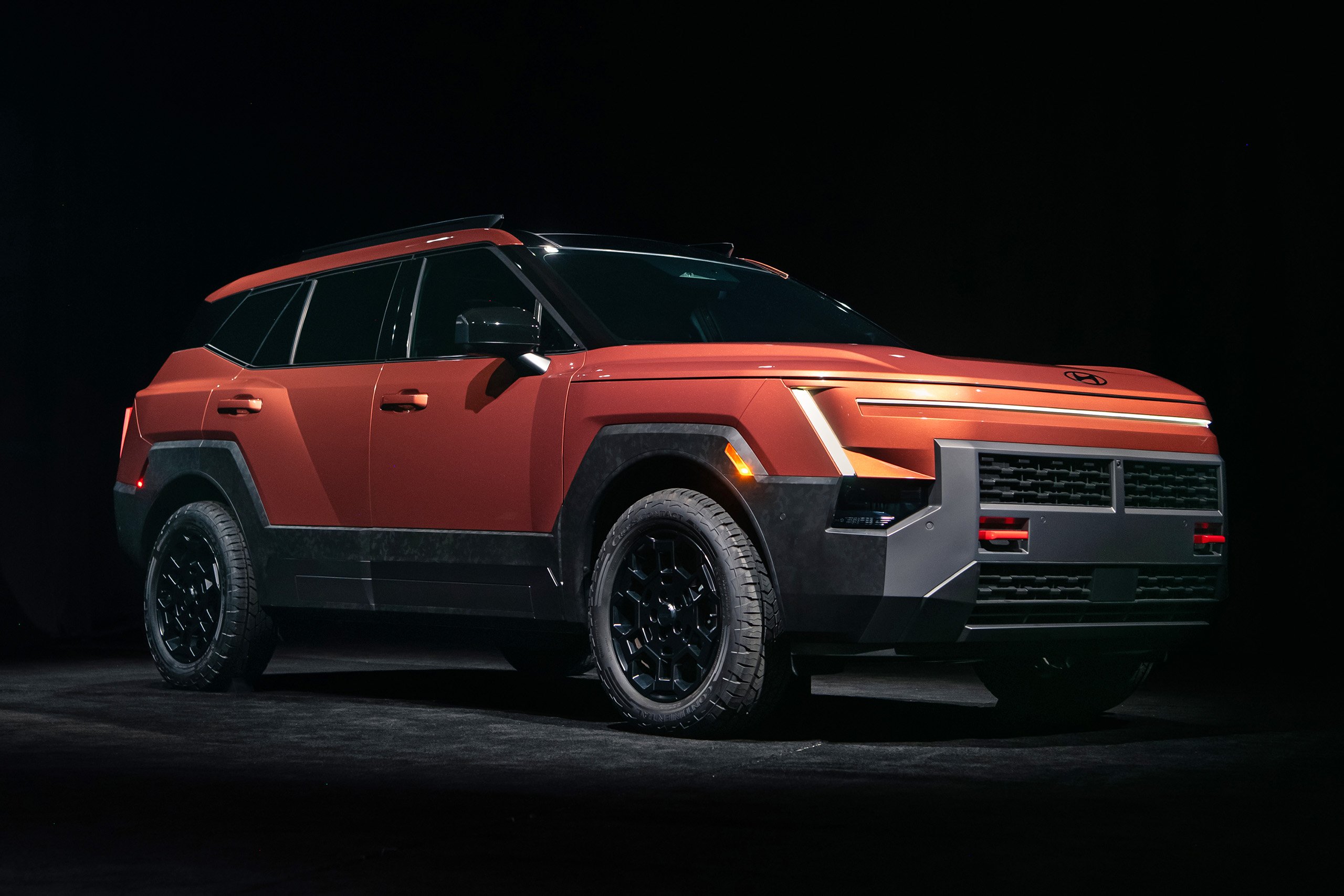


Hyundai sold just under 235,000 Tucsons in the U.S. last year, making it one of the best-selling compact crossovers on the road. The reward for all that loyalty? A fifth-generation redesign that looks like it teleported in from 2035.
The 2027 Tucson is 2.4 inches longer than its predecessor, with 1.2 of those inches added between the wheels. Two powertrains are on offer: a turbocharged 1.6-liter four-cylinder making 184 horsepower and a hybrid version of the same engine producing a combined 233 hp. The plug-in hybrid is gone, killed off by what Hyundai calls a lack of consumer interest.
That PHEV deletion is a quiet concession in a market where nearly every competitor is rushing to electrify their crossover lineups. Hyundai looked at the sales data and decided the juice, literally, wasn’t worth the squeeze. The base turbo returns 28 mpg in front-drive form and 26 with all-wheel drive.
The hybrid should land around 40 mpg. For a volume crossover buyer, that math apparently works well enough without a charging cord.
The exterior is where Hyundai flexes hardest. Vertical and horizontal LED runners merge into what amounts to a giant illuminated H at both the front and rear. Beneath ridged bodywork at each end, a wide LED bar creates indirect ambient light, a trick that echoes what Tesla did with its latest Model Y refresh.
Three-dimensional prism-shaped brake lights jut from the rear sheetmetal like a designer’s fever dream of tail fins. None of it is subtle. But Hyundai hasn’t played subtle since the current Santa Fe arrived looking like a refrigerator on wheels.
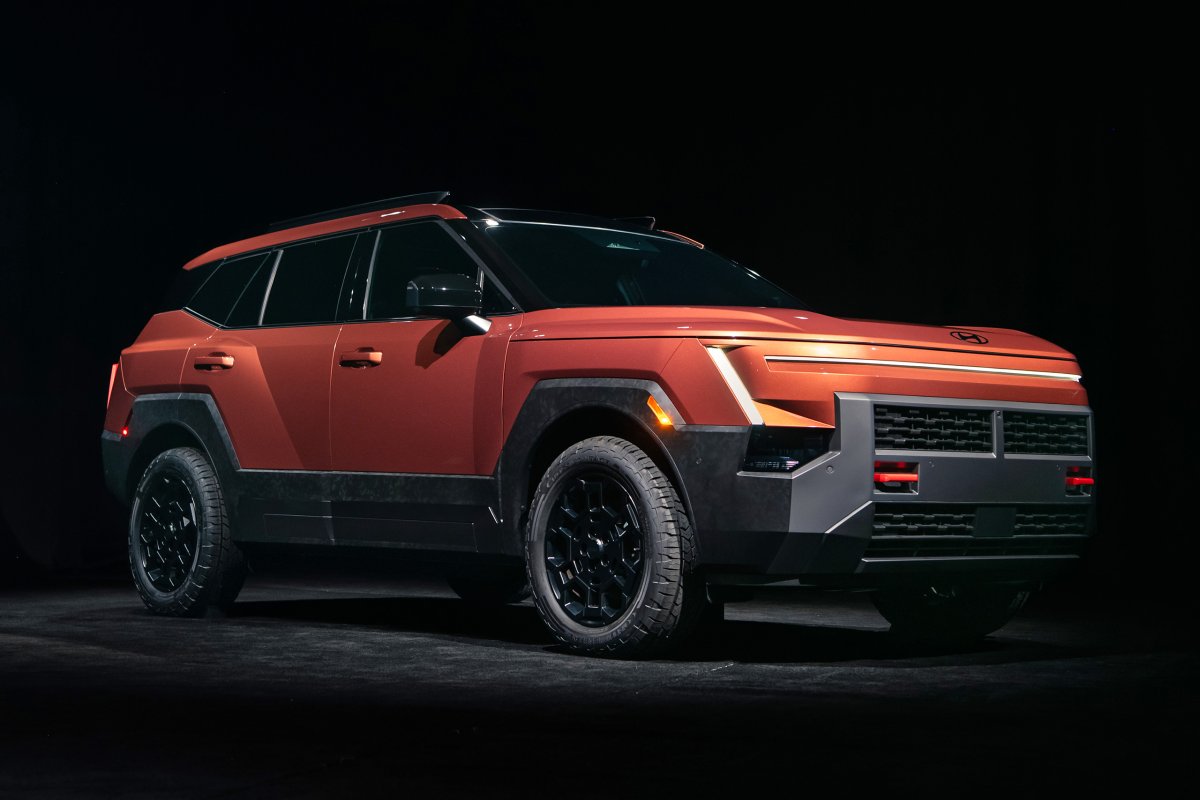
Somehow, despite the blockier proportions, the new Tucson’s drag coefficient actually dropped from 0.33 to 0.30. Every door now opens an additional 10 degrees, a small detail that parents wrestling car seats will appreciate more than any LED sculpture.
Inside, the philosophy shifts from angular to curved, anchored by either a 12.9-inch or 17-inch touchscreen depending on trim. Hyundai’s previous dual-screen dashboard layout is gone, replaced by a massive center display running a new interface called Pleos Connect. It can show two apps side by side with a dedicated pane for vehicle alerts.
A slim digital gauge cluster sits high and far right on the dash. There is also an AI assistant named Gleo, because apparently every car now needs a chatbot with a name.
The saving grace is that Hyundai didn’t strip out all the physical controls. Volume knobs, temperature rockers, seat heater toggles, and actual tactile steering wheel buttons survived the transition. One USB-C port delivers 100 watts of power, enough to fast-charge a laptop, which is unusual in a non-EV at this price point.
Then there is the XRT Pro, the trail-ready Tucson sold exclusively as a hybrid in the U.S. It adds 1.2 inches of ground clearance for a total of 8.3 inches, all-terrain tires, functional front recovery hooks, and aggressive bumpers wrapped in a faux forged-carbon pattern. The Red Rock Orange Metallic launch color looks like it was born to sit in a trailhead parking lot next to Subarus.
Hyundai’s design playbook for the past six years has been simple: make every new generation look nothing like the last one. The outgoing Tucson was all creases and hidden lighting. This one is punched-out fenders and geometric LED bars.
The next one will probably look like something else entirely. It is a strategy that keeps showroom traffic moving, even if it gives loyalists whiplash. Whether the 235,000 buyers who picked a Tucson last year will follow Hyundai into this particular future remains the only question that matters.
Share this Story