
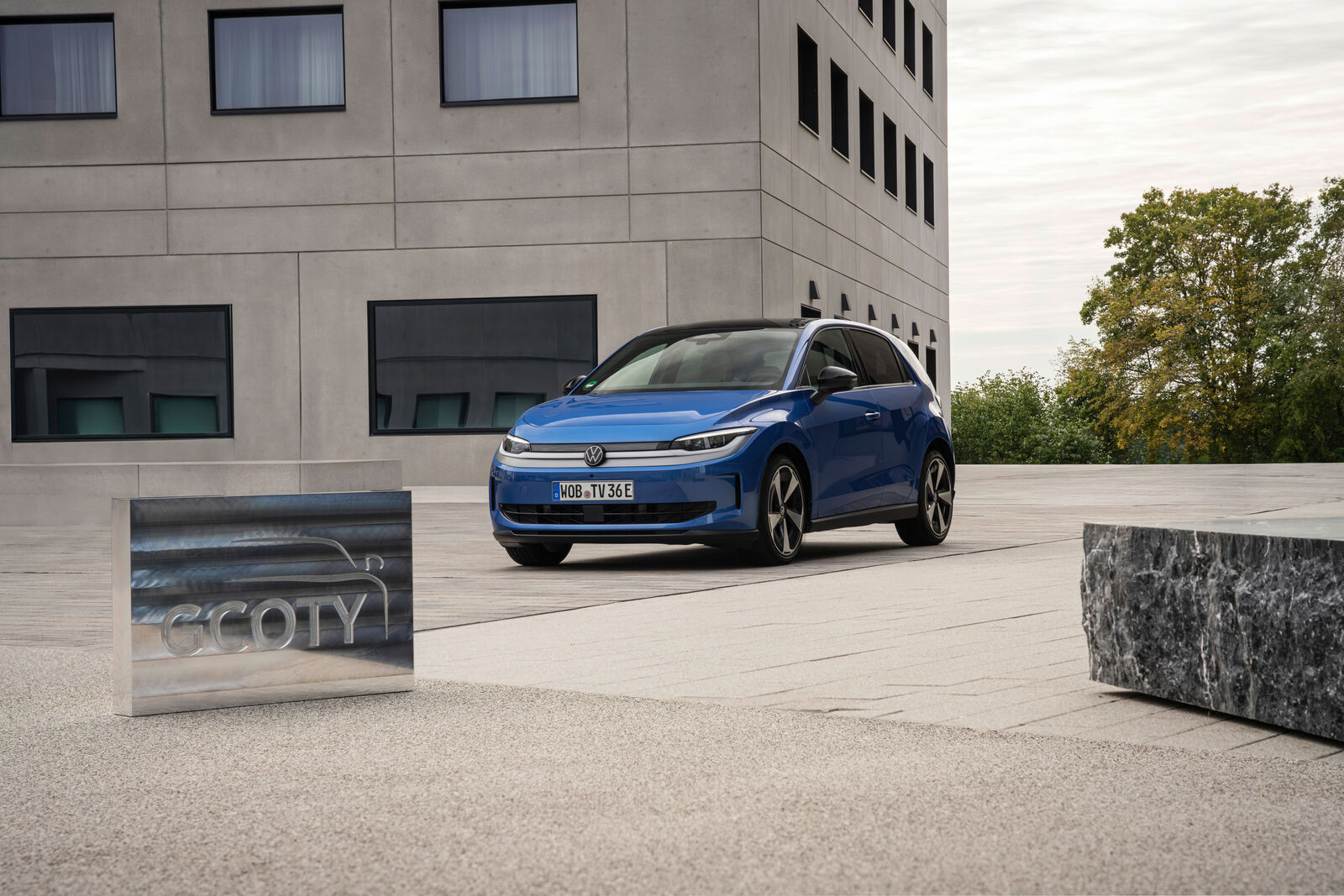


Starting at 24,995 euros, the Volkswagen ID. Polo just beat seven rivals to claim the Budget category at the German Car of the Year awards. The all-electric small car edged out both the Renault Twingo and Renault Clio, a pair of French competitors that have owned the affordable end of the European market for decades.
The 47-member international jury gave the ID. Polo top marks in four of five evaluation categories. Design and Driving Pleasure scored highest at 85.8 percent of the maximum rating. Safety and Environment hit 84.2 percent, while Significance and Innovation landed at 83.8 and Comfort and Practicality trailed slightly at 82.0.
Those aren’t the numbers of a car that squeaked by. GCOTY co-founder Jens Meiners called it “an undisputed class victory.”
The ID. Polo also turned heads in the cross-category design awards, finishing second overall for Best Interior Design and third for Best Exterior Design. For a budget-class entry, that kind of showing against vehicles from every price bracket says something about what Volkswagen’s design team has been doing in Wolfsburg.
This is VW trying to repeat the trick the original Polo pulled off starting in 1975: put a competent, well-built car in front of the largest possible buying audience. More than 20 million Polos have sold since then. The ID. Polo is supposed to carry that legacy into the battery-electric era, and at a price that doesn’t require a second mortgage.
The car rides on front-wheel drive, packs a 155 kW electric motor, and sips between 13.4 and 14.7 kWh per 100 km. Zero tailpipe CO2 emissions earn it the top A classification in Europe’s new labeling scheme.
Kai Grünitz, VW’s board member for development, called the ID. Polo “a strong signal for our goal to make electric mobility accessible and desirable for significantly more people.” He pointed to technologies borrowed from higher segments, intuitive controls, and generous interior space for the class.
That language matters because Volkswagen has spent the past several years catching criticism for pricing its electric lineup out of reach for the customers who made the brand what it is. The original ID.3 launched at prices that pushed toward premium territory. The ID.4 and ID.7 climbed further. For a company whose name literally translates to “people’s car,” the gap between promise and price tag was uncomfortable.
The ID. Polo is VW’s answer to that tension, and the GCOTY jury’s verdict suggests the execution matches the ambition. A sub-25,000 euro electric car from a volume manufacturer, with jury scores above 80 percent in every category, changes the arithmetic for European buyers weighing their next purchase.
Renault clearly had the same idea. The new Twingo and refreshed Clio both landed in the Budget finalists, signaling that the fight for affordable European EVs is picking up fast. Stellantis has its own entries in the pipeline. The Chinese brands keep circling.
VW took the first round. The ceremony happened at the Nationales Automuseum, home of the Loh Collection, surrounded by automotive history. Whether the ID. Polo earns its own place in that story depends on how many Europeans actually walk into a dealership and sign on the dotted line. Awards are nice. Sales volumes are the real scoreboard, and VW knows it better than anyone.
Share this Story