
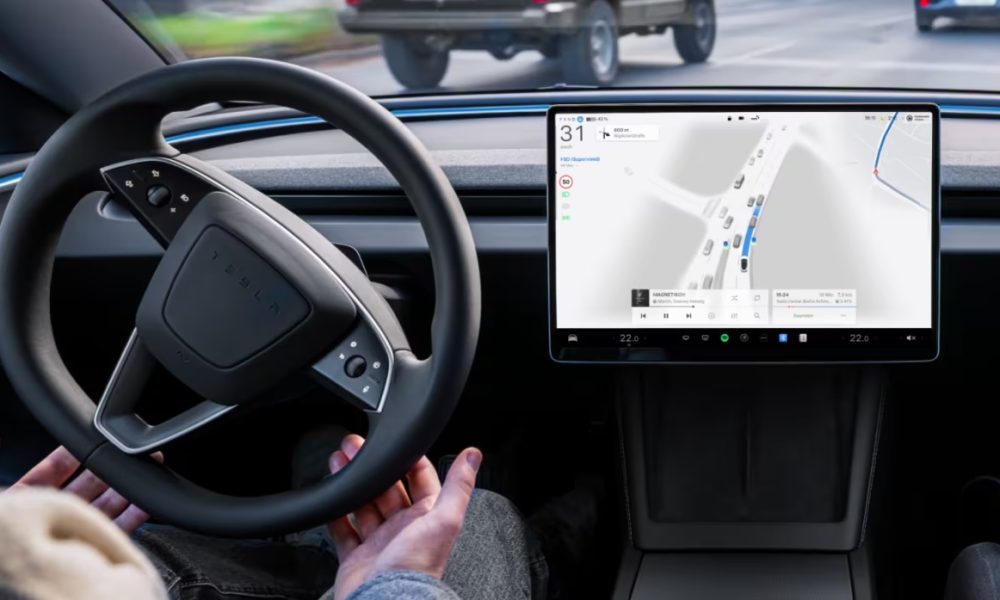


Tesla gutted its referral program on October 29 and rebuilt it around a single product: Full Self-Driving subscriptions.
Gone is the $250 Tesla Credit that referrers earned when someone bought a vehicle using their link. In its place, a system that rewards referrers with one free month of FSD (Supervised) each time a Tesla owner on a trial uses their code to subscribe. Each referral code can be used up to 12 times per calendar year, resetting on January 1.
Get 12 friends to subscribe and you ride with FSD for a full year without paying a dime.
Tesla framed the old program as difficult, and they’re not wrong. Convincing someone to buy a car is a heavy lift. Convincing them to try a software subscription they can cancel after a month is not.
The barrier to entry dropped from tens of thousands of dollars to $99 a month, which is FSD’s current subscription price. That widens the funnel dramatically.
But the shift also strips out something tangible. The old $250 credit worked anywhere in Tesla’s ecosystem: Supercharging, service appointments, merchandise. The new reward only matters if you actually want FSD, and only if you don’t already pay for it.
The timing tells the real story. Tesla disclosed during its third quarter earnings call that 75 percent of deliveries in Q3 came with an FSD subscription attached. That number was a fraction of that just a year earlier.
Tesla is clearly chasing the inflection point where FSD subscriptions become a recurring revenue engine rather than an occasional upsell.
Every mile driven on FSD feeds data back into the neural network. More subscribers means more data, and more data means faster improvement. A referral program that seeds FSD trials and converts them into paid subscriptions is not a customer perk. It is a data acquisition strategy wearing a loyalty program’s clothes.
Tesla’s broader FSD push has accelerated on multiple fronts at once. The company is running driverless Model Y rides in Dallas and Houston, offering free first trips to new riders, and preparing to launch Cybercab service in Dallas next month. A quiet mode for robotaxi passengers, letting them black out the screen and doze off, rolled out to Model Y robotaxis last week without any formal release notes.
The company is treating unsupervised autonomy as an inevitability and working backward from that assumption. Elon Musk told investors in April 2025 that the “acid test” was whether a passenger could fall asleep and wake up at their destination. He said he was confident it would happen in many U.S. cities by year’s end, but driverless rides are now live in only two Texas cities.
Turning the referral program into an FSD distribution channel fits the pattern. Tesla does not want owners evangelizing the hardware anymore. It wants them evangelizing the software.
The car is the platform. FSD is the product.
Whether owners see this as a better deal depends entirely on how much they value Full Self-Driving versus how much they valued a free backpack from the Tesla Shop. For the company, the calculus is simpler. Each new FSD subscriber generates monthly revenue and training data at the same time.
Tesla has not said whether the old $250 credit option will return in any form.
Share this Story