
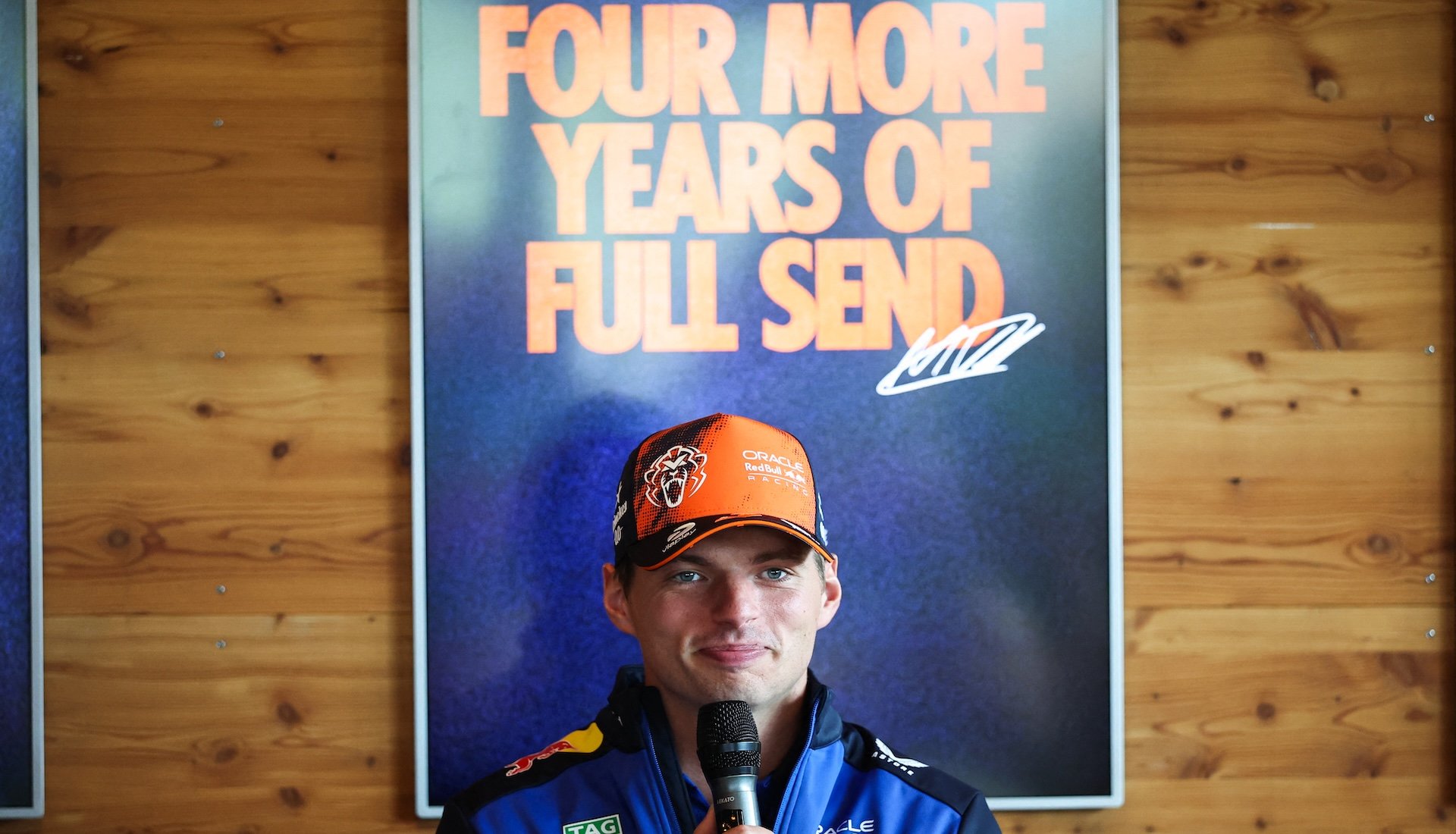


Max Verstappen signed a four-year contract extension with Red Bull Racing on Thursday morning, committing to the team through 2030. He posed for cameras beneath a banner reading “Four More Years of Full Send,” a message that felt equal parts confidence and defiance given where Red Bull sits right now.
The four-time world champion made the announcement on social media, calling the team “a second family” and expressing his desire to “get back to the top again.” That last phrase is doing a lot of heavy lifting. Red Bull is not at the top.
It has spent much of 2025 bouncing between occasional podium runs and painful midfield finishes, with Verstappen’s frustration spilling out in blistering team radio exchanges that have become a recurring subplot of the season.
So why stay?
Start with the money. Neither side disclosed the financial terms, but paddock sources estimate Verstappen’s new deal could exceed $100 million per year. That figure would make him the highest-paid driver in Formula 1 history on an annual basis, surpassing Lewis Hamilton’s Ferrari salary and dwarfing what Fernando Alonso earns at Aston Martin.
Then consider the leverage. Verstappen’s manager, Raymond Vermeulen, is not the type to hand his client over without an escape hatch. Multiple insiders believe the contract almost certainly contains performance clauses, giving Verstappen the ability to walk if Red Bull cannot deliver a competitive car.
That changes the entire dynamic. Verstappen isn’t betting on Red Bull’s future. He’s insuring against it while collecting a fortune in the meantime.
The move also slams the door on what had become the most active driver market speculation in years. Mercedes, Ferrari, and McLaren had all been linked to Verstappen in various stages of rumor and negotiation. Those conversations are now dead, and the team principals involved can stop pretending otherwise.
For Red Bull, this is both a massive win and a ticking clock. Locking down the best driver in the world signals stability and ambition. But the performance clauses, if they exist as expected, mean the team is on probation with its own star.
Deliver a championship-caliber car, or watch him leave anyway.
Verstappen framed the decision in emotional terms. “To continue this journey with the same team that I have been with my whole career is really special and something I have always wanted to do,” he said. He has been with the Red Bull program since he was a teenager, winning all four of his titles with the senior team. There is genuine loyalty there.
But loyalty at this level of motorsport always has a price tag attached. Verstappen got his, and it’s a record-setter.
Red Bull now faces a season where it must prove it can build its way back to the front while paying the most expensive driver contract the sport has ever seen. The pressure doesn’t ease with this signing. It intensifies.
Every disappointing qualifying session, every botched strategy call, every angry radio message will carry a new subtext: how long before the clauses kick in?
Verstappen says he wants to stay. The contract says he will. The fine print might say something else entirely.


Share this Story