
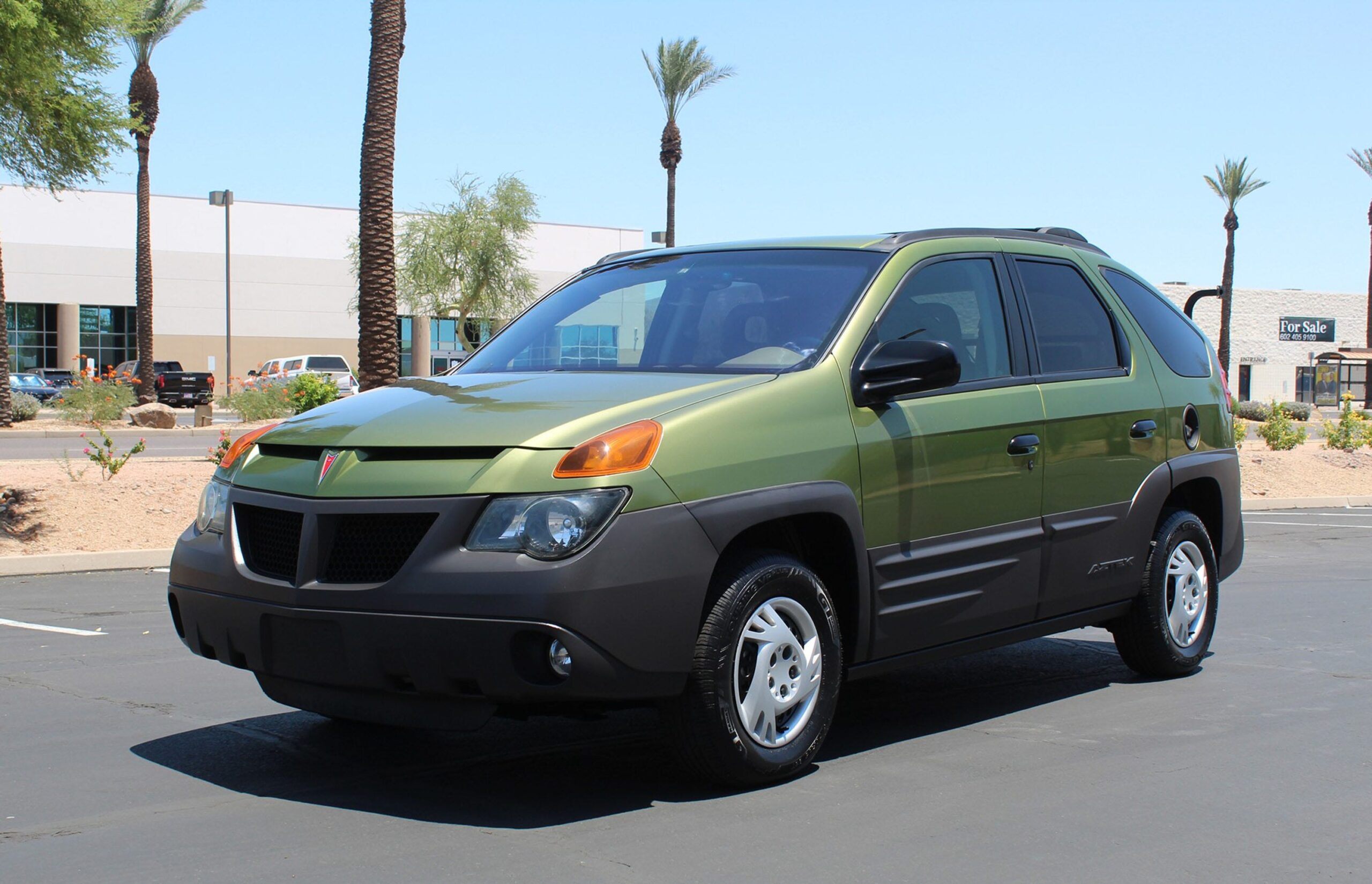


A 2001 Pontiac Aztek with 78,000 miles just surfaced on Bring a Trailer, and it might be the cleanest example left on Earth. It comes with the factory tent. It comes with the pop-out cooler. It comes loaded with the kind of audacity only a quarter-century of aging can bestow.
The auction ends July 1, and the listing forces a question nobody saw coming when this thing cratered Pontiac’s reputation in 2001: Is the Aztek finally having its moment?
When GM launched the Aztek, it was building something the market didn’t yet understand. Take a minivan platform, ditch the sliding doors, bolt on plastic cladding that looked like it lost a fight with a parts bin, and call it an “active lifestyle vehicle.” The concept was sound, because crossovers now dominate every driveway in America. The execution, though, was a catastrophe of committee-designed styling that became shorthand for corporate dysfunction.
Bob Lutz, who arrived at GM shortly after the Aztek launched, has spoken publicly about how the design got ground down through endless internal approvals until it bore almost no resemblance to the sharp concept that preceded it. The vehicle became a case study in business schools — literally — for how not to bring a product to market.
But time does strange things to cars that were hated in their era. The AMC Pacer went from punchline to cult object. The Citroën Ami 6 went from ugly duckling to design-museum piece. The Aztek is now walking that same path, helped enormously by one detail GM never could have predicted: Walter White drove one.
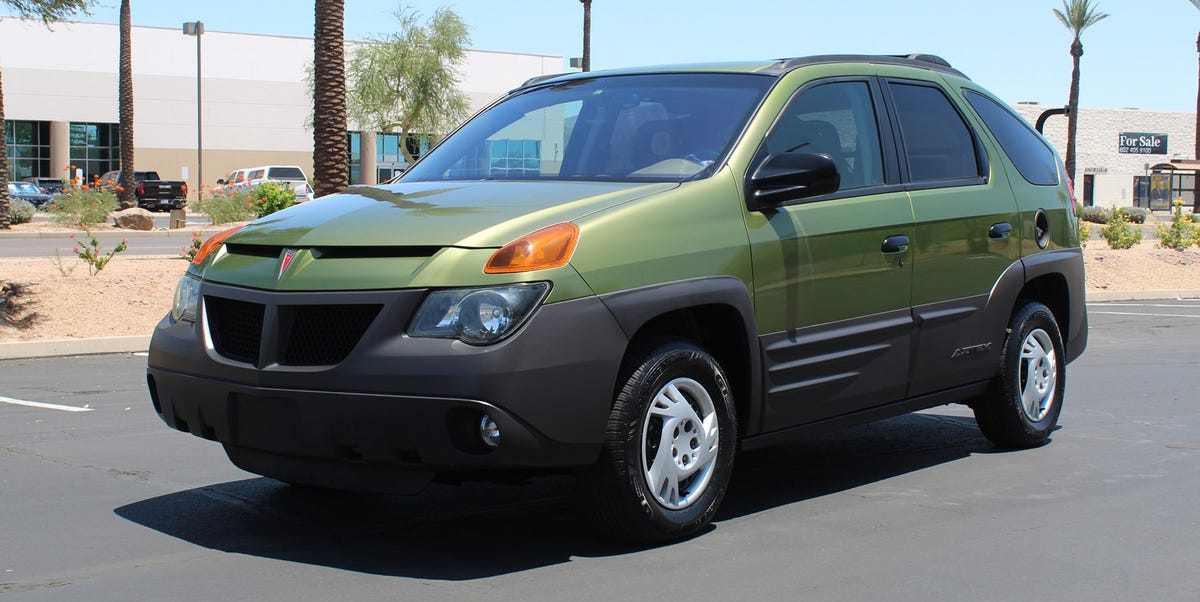
Breaking Bad turned the Aztek into a symbol — the car of a man whose life was quietly falling apart before it spectacularly exploded. The faded green Aztek parked in front of that Albuquerque ranch house became iconic television imagery. This Bring a Trailer example sits in New Mexico, which is either coincidence or someone’s idea of perfect marketing.
Under the hood is GM’s 3.4-liter pushrod V-6 making 185 horsepower through a four-speed automatic. Nothing about the drivetrain will thrill you. Everything about it will probably keep running. The engine and transmission were shared across a wide swath of GM products — Ventures, Rendezvous, Silhouettes — so parts remain cheap and plentiful.
The real draw here is condition and completeness. Finding an Aztek with both the tent and the integrated cooler is like finding a DeLorean with the full stainless package intact. These accessories were the whole pitch — why Pontiac thought young, active buyers would flock to showrooms.
They didn’t, of course, and most Azteks that survived ended up as beaters whose accessory kits vanished into garage sales years ago.
There’s no pretending this is a serious collector car in the way a numbers-matching GTO commands a room. It’s a 25-year-old crossover built on minivan bones with the styling grace of a melted Tupperware container. Nobody is going to retire on the proceeds of an Aztek flip.
But rarity isn’t always about speed or beauty. Sometimes it’s about cultural weight. The Aztek changed the trajectory of an entire brand — Pontiac never recovered, and was dead by 2010.
It reshaped how GM managed design approvals. It became the most famous car on one of the most watched television series ever made.
Seventy-eight thousand miles. Factory tent. Factory cooler. The car that was once the worst thing on four wheels is now the most interesting thing in the room, and that might be worth more than horsepower ever was.



Share this Story