
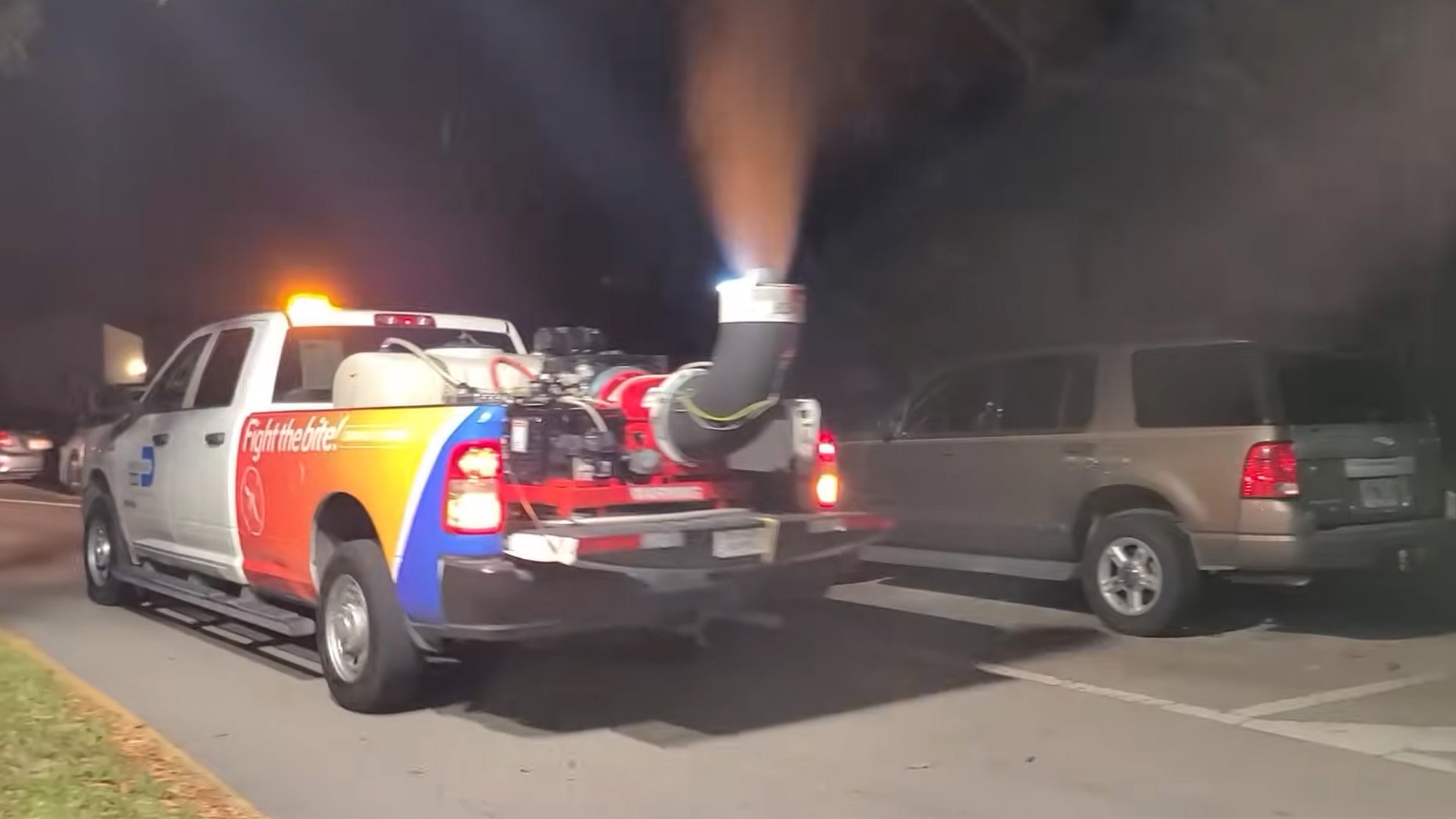


Every night across coastal America, ordinary pickup trucks roll through empty streets trailing massive white clouds behind them. No flashy liveries. No specialized chassis. Just a half-ton with a tank of pesticide and an automated fogger bolted into the bed, doing one of the least glamorous but most essential jobs in municipal government: killing mosquitoes.
Miami-Dade County has been running these rigs since 1935, making its mosquito abatement program nearly as old as the modern pickup truck itself. The Bristol County Mosquito Control Project in Massachusetts dates to 1959. These aren’t new operations but generational commitments that have quietly kept disease-carrying insect populations from overwhelming some of the most densely populated corridors in the country.
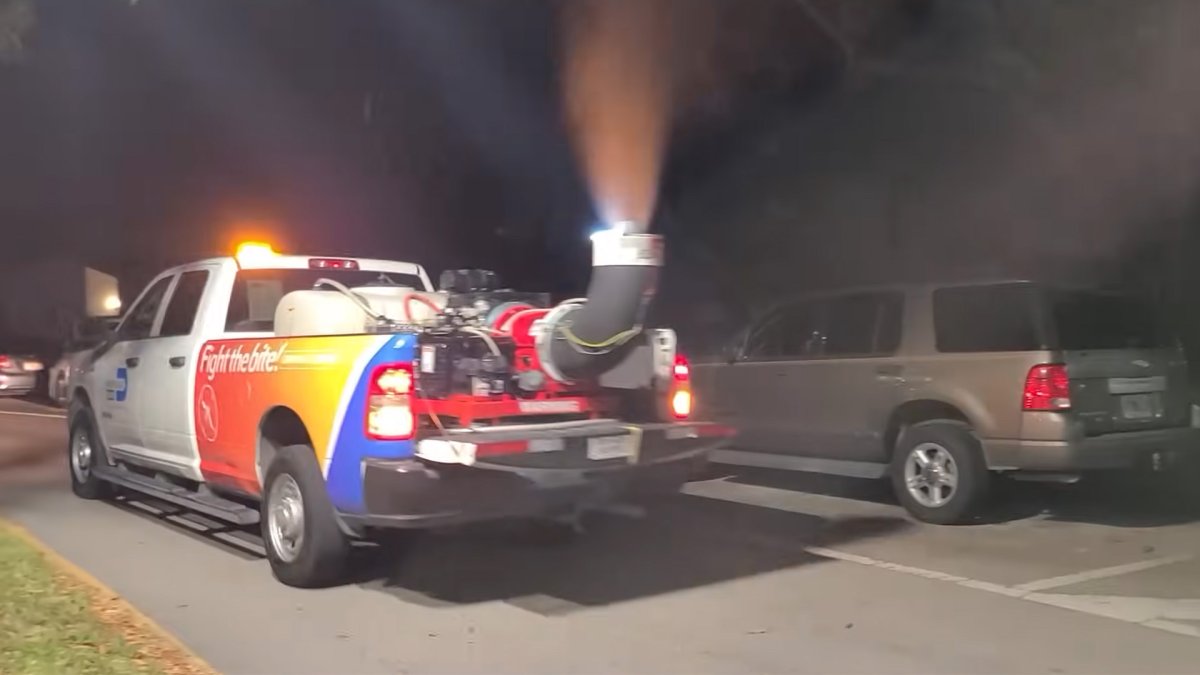
The trucks themselves are deliberately unremarkable. Standard pickups, Ford and Chevy and Ram, fitted with large chemical tanks and spray nozzles that atomize pesticide into a fine fog. Drivers creep through neighborhoods at low speed, letting the mist settle into every yard and drainage ditch where mosquitoes breed and feed.
Timing is everything. Escambia County, Florida, sends its trucks out between dusk and 10 p.m., targeting peak mosquito activity hours. New Bedford, Massachusetts, runs its sprayers from 2 a.m. to 10 a.m. The work happens when most people are asleep, which is the point. Fewer humans on the street means fewer interactions with the chemical cloud, even though local authorities say the spray is nontoxic to mammals.
Weather kills a run faster than anything. Escambia County scrubs operations if wind drops below 2 mph, since the fog just hangs in place, or exceeds 10 mph, when it disperses too quickly to work. Temperatures below 60 degrees Fahrenheit also cancel a deployment because mosquitoes aren’t active enough to encounter the pesticide.
Deciding when and where to spray isn’t arbitrary. Miami-Dade County encourages residents to call 311 to request treatment, and both Florida and Massachusetts counties rely on data from mosquito traps placed throughout their territories. Those traps do double duty. They track population density, and individual insects pulled from them get tested for diseases like West Nile virus and Eastern equine encephalitis. A population spike or a positive disease test can trigger a spraying campaign within days.
Both states also offer opt-out programs. Beekeepers, organic farmers, and anyone else who might suffer collateral damage from broad pesticide application can request their property be skipped. It’s a small but telling detail about how these programs have evolved. Decades ago, trucks just sprayed everything. Now there’s a layer of data and community input governing every run.
There’s something refreshingly honest about the whole operation. No autonomous driving tech. No electric drivetrain press release. No billion-dollar R&D budget. A truck, a tank, a driver who knows the route, and a chemical that kills bugs without killing everything else. The job hasn’t fundamentally changed since the Eisenhower administration.
Miami-Dade alone covers 2,431 square miles of territory, much of it warm, wet, and perfect mosquito habitat year-round. As climate patterns push warmer temperatures and heavier rainfall further north, Massachusetts and other traditionally cooler states are seeing longer mosquito seasons and new species moving in. The trucks keep rolling.





Share this Story