
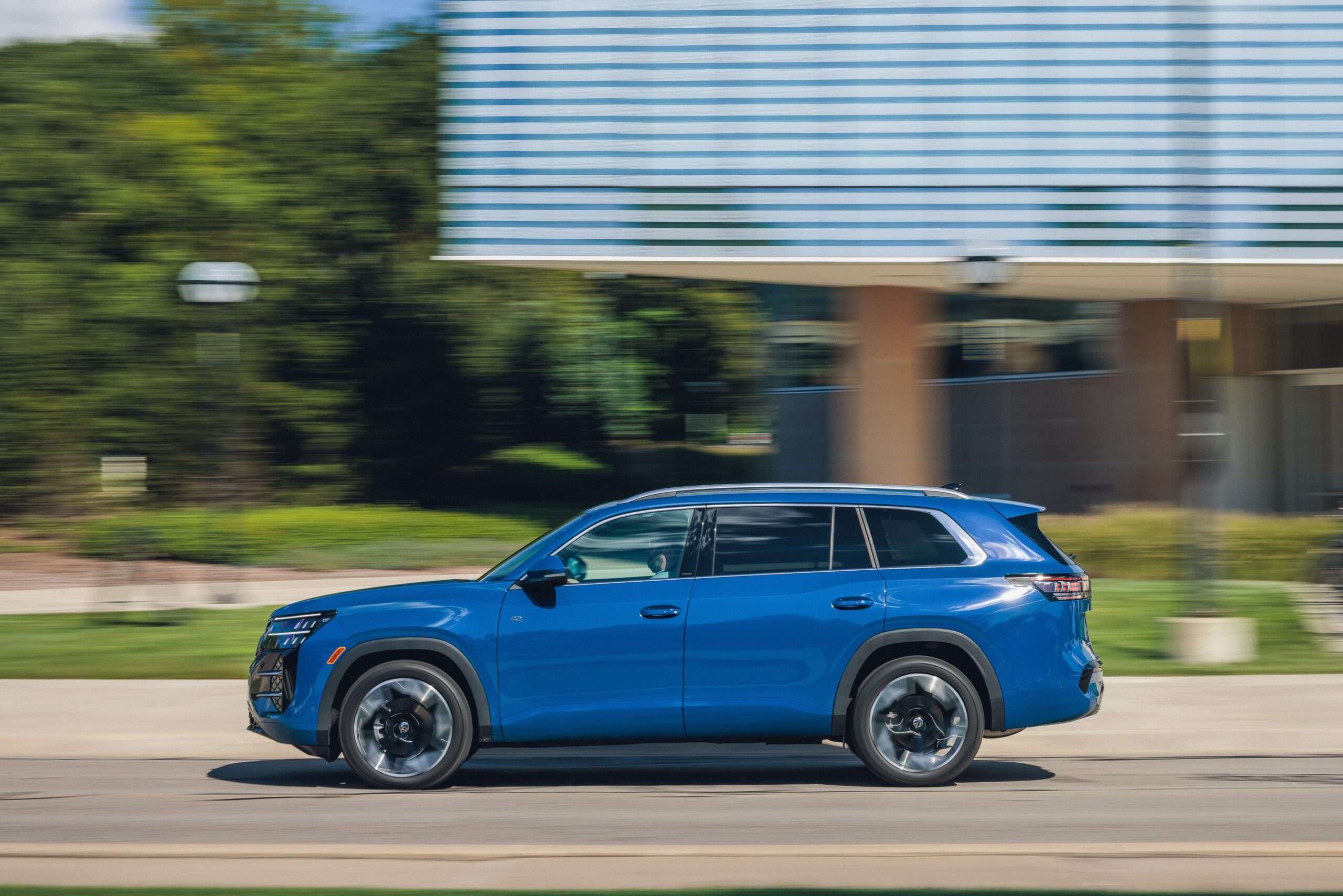


Nine years. That’s how long Volkswagen milked the first-generation Atlas before finally replacing it. The 2027 model arrives on the MQB Evo platform with a redesigned interior, a revised turbocharged four-cylinder, and an ambient lighting fetish that borders on obsessive. What it doesn’t arrive with is a hybrid powertrain, and that omission looms larger than any LED strip.
The bones haven’t changed much. Same 117.3-inch wheelbase, same width, virtually the same height. The body stretches 2.4 inches longer with additional overhang front and rear, but the seating positions are identical, preserving the Atlas’s best trick: genuinely usable third-row space with easy access.
Outside, double-stacked headlights and an illuminated front bar replace chrome as the design currency. Inside, VW went upmarket with a dashboard that loops unbroken across the cockpit, anchored by either a 12.9- or 15.0-inch touchscreen depending on trim.
The interior’s star turn is the Driver Experience Dial, a big physical knob on the console that defaults to volume control but toggles to drive mode selection and ambient lighting themes with successive presses. It’s a clever piece of interface design that quietly acknowledges what everyone already knew: touchscreen-only controls were a mistake. The column-mounted shifter clears console real estate for dual wireless Qi2 chargers held in place by magnets.
Under the hood, the EA888 Evo5 engine picks up a variable-geometry turbo, higher-pressure direct injection, and an integrated intercooler. Horsepower climbs 13 to 282, but torque drops 15 pound-feet to 258. The net result on the test track is actually slower.
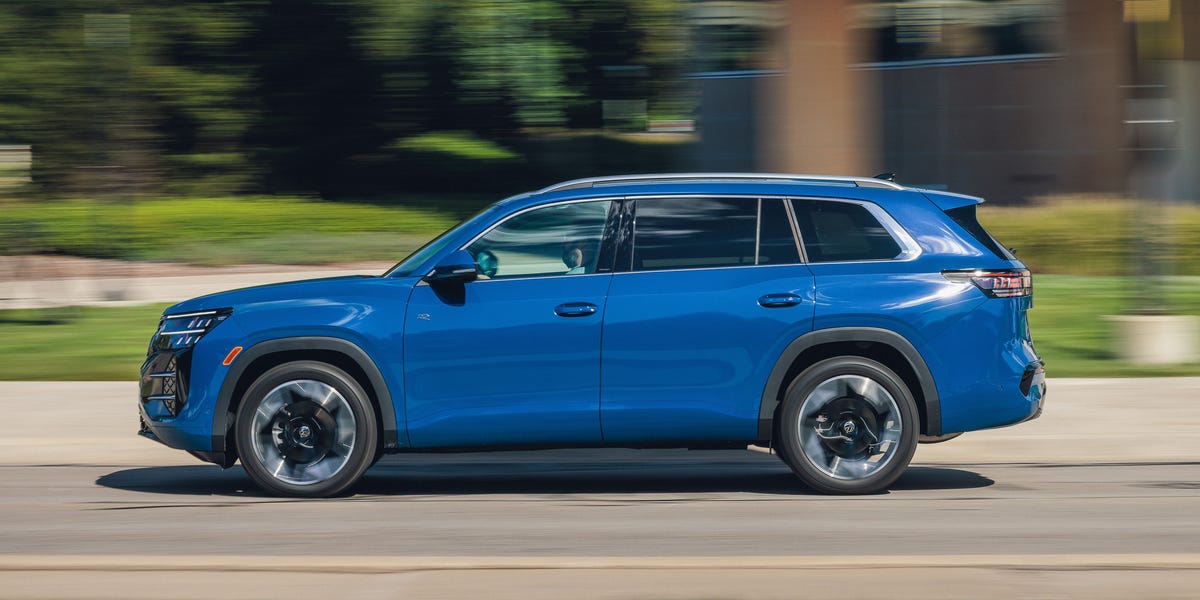
Car and Driver clocked the SEL Premium R-Line 4Motion at 7.6 seconds to 60 mph, four-tenths behind the outgoing 2026 model. Fuel economy improves by a couple of mpg on the EPA combined number, and the Atlas managed 30 mpg at a 75-mph highway cruise, beating its federal rating by three. That 550-mile highway range is worth noting.
But context matters. The Hyundai Palisade and Kia Telluride both offer hybrid variants that hit 60 in the mid-sixes while sipping less fuel. Volkswagen says a hybrid Atlas is coming, then immediately deflates that promise by pegging it to the mid-cycle refresh. If the first generation’s timeline is any guide, “mid-cycle” could mean 2030 or later.
The chassis work is genuinely improved. Ride quality sheds the floaty, boatlike character of the old car, and grip rises to 0.84 g on the skidpad. Braking from 70 mph now takes 165 feet, a seven-foot improvement, likely aided by new Hankook Dynapro HPX rubber.
The steering tracks accurately but communicates through a slight filter. On 21-inch wheels, there’s a hollow quality over rough surfaces that suggests the 20-inch setup might be the sweeter ride.
Pricing starts at $43,135 for the base SE, a $2,350 bump that VW justifies with a long list of newly standard equipment. The loaded SEL Premium R-Line 4Motion tests at $59,126 with captain’s chairs, massaging front seats, heated and ventilated rears, nappa leather, and a 14-speaker Harman/Kardon system. That puts it squarely in Palisade Calligraphy territory, where the Korean competitor already offers electrified options.
The Atlas has always sold on space and practicality. This generation adds polish, better materials, and a more composed driving experience. It also adds a glaring gap in the powertrain lineup at the exact moment its closest rivals are filling theirs. VW says the hybrid is coming, but the question is whether buyers in this segment will wait around for it.
Share this Story