
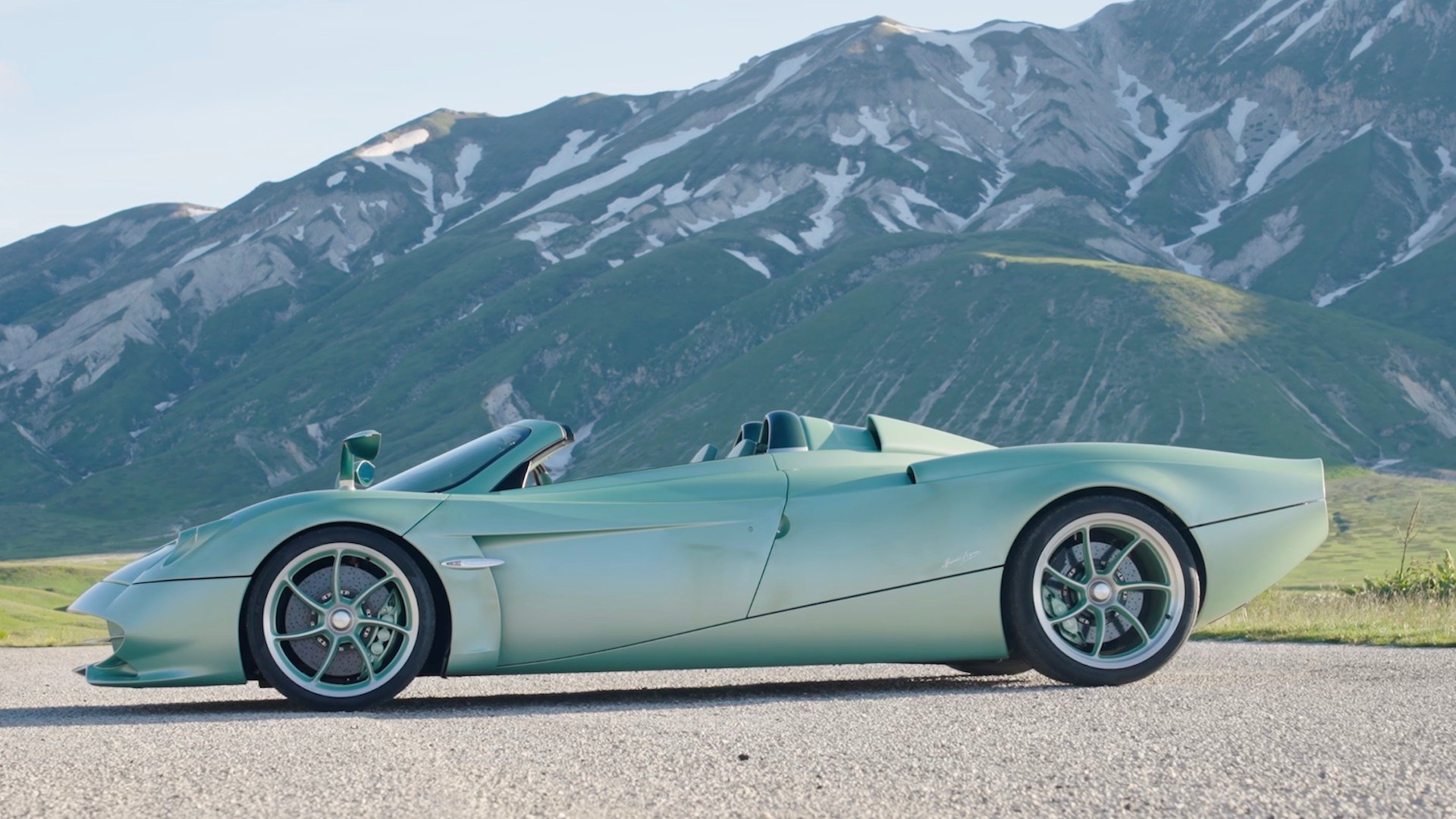


Only ten Pagani Huayra Codalunga Speedsters exist. Each one costs roughly $14.5 million. And if you think that sounds absurd, you probably haven’t stood next to one.
That’s the takeaway from a recent Top Gear film and a firsthand account from The Drive’s Jerry Perez, who encountered a Codalunga tucked into a corner of Pagani’s Modena factory earlier this summer. Perez, who had previously been lukewarm on the car’s looks, admits seeing it in person completely changed his mind. The camera, it turns out, cannot capture what Horacio Pagani builds.
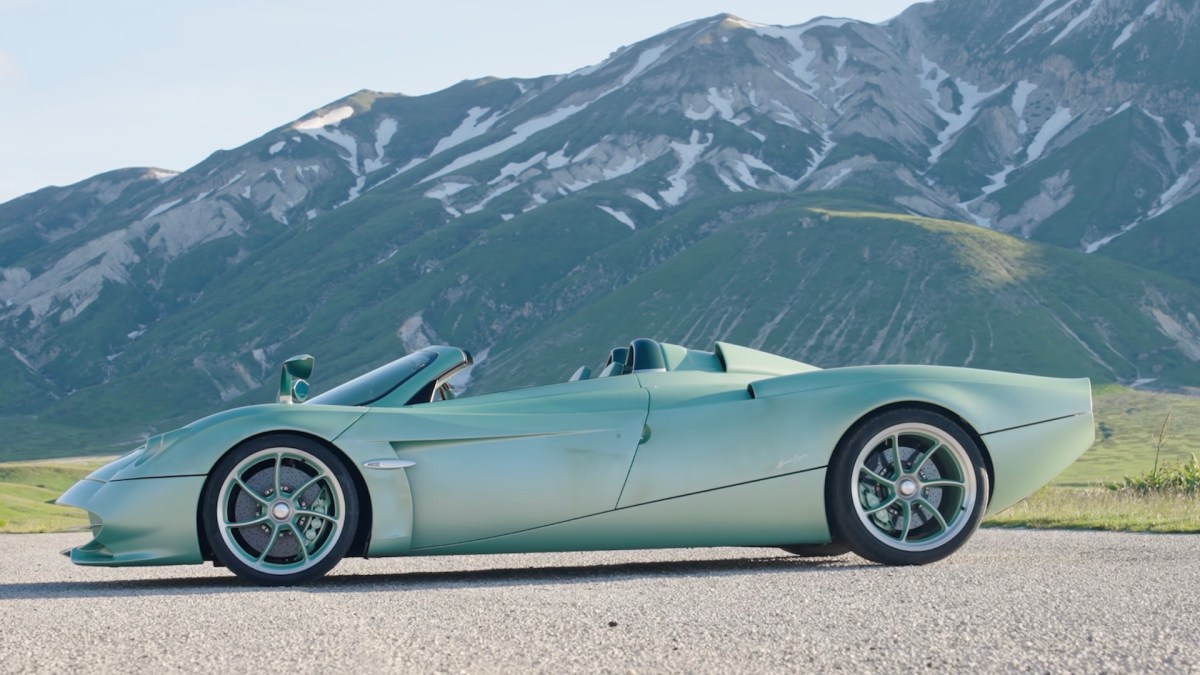
The Codalunga, Italian for “long tail,” stretches the Huayra’s rear bodywork into an elongated form that eliminates the rear grille entirely. Exposed exhaust tips jut into open air. Every surface exists for a reason, either aerodynamic or aesthetic, and usually both.
Top Gear’s Ollie Kew got behind the wheel, and his 16-minute film wrestles with the same contradiction Perez felt at the factory. How does something this precious, this expensive, this sculpted, drive with such raw ferocity? The twin-turbocharged Mercedes-AMG V12 doesn’t politely announce itself. It roars, breathes, and bites.
The steering, by all accounts, communicates with a directness that modern hypercars have largely engineered away in favor of electronic filters and drive modes.
Pagani has always occupied a strange space in the hypercar world. Ferrari, McLaren, and Lamborghini sell brand mythology backed by racing programs and global dealer networks. Pagani sells obsessive craftsmanship from a small building outside Modena, one car at a time.
The Codalunga Speedster is the logical extreme of that philosophy, a car so bespoke that the production run wouldn’t fill a parking lot at a regional cars-and-coffee event.
The question of value is the obvious one. Fourteen and a half million dollars for a car. Kew frames it neatly: anyone who owns a Codalunga already has a garage full of LaFerraris, Lexus LFAs, Aventador SVs, and likely a McLaren F1 or two.
The Codalunga isn’t competing with those cars. It sits in a different category altogether. Perez pushes the point further, arguing that Codalunga owners are the kind of people who collect Picassos and da Vincis. They aren’t buying transportation or even performance. They are patronizing art.
That framing matters because Pagani is increasingly surrounded by competitors trying to occupy the ultra-exclusive space. Bugatti pushes toward $4 million with the Tourbillon. Gordon Murray’s T.50 trades on engineering purity at $3.6 million. Rolls-Royce will happily build you a coachbuilt one-off north of $30 million.
None of them quite thread the needle Pagani does, where mechanical savagery meets handcrafted beauty at a scale so small it barely qualifies as production.
Whether the car is “worth” $14.5 million depends entirely on what you think a car is supposed to be. If it’s a machine that moves you from place to place, the number is lunacy. If it’s a sculpture that also happens to terrify you at full throttle, the math starts to shift.
All ten Codalunga Speedsters are spoken for. They were sold before most people knew the car existed. Pagani doesn’t chase customers. The customers chase Pagani, checkbooks open, waiting for whatever Horacio dreams up next.

Share this Story