
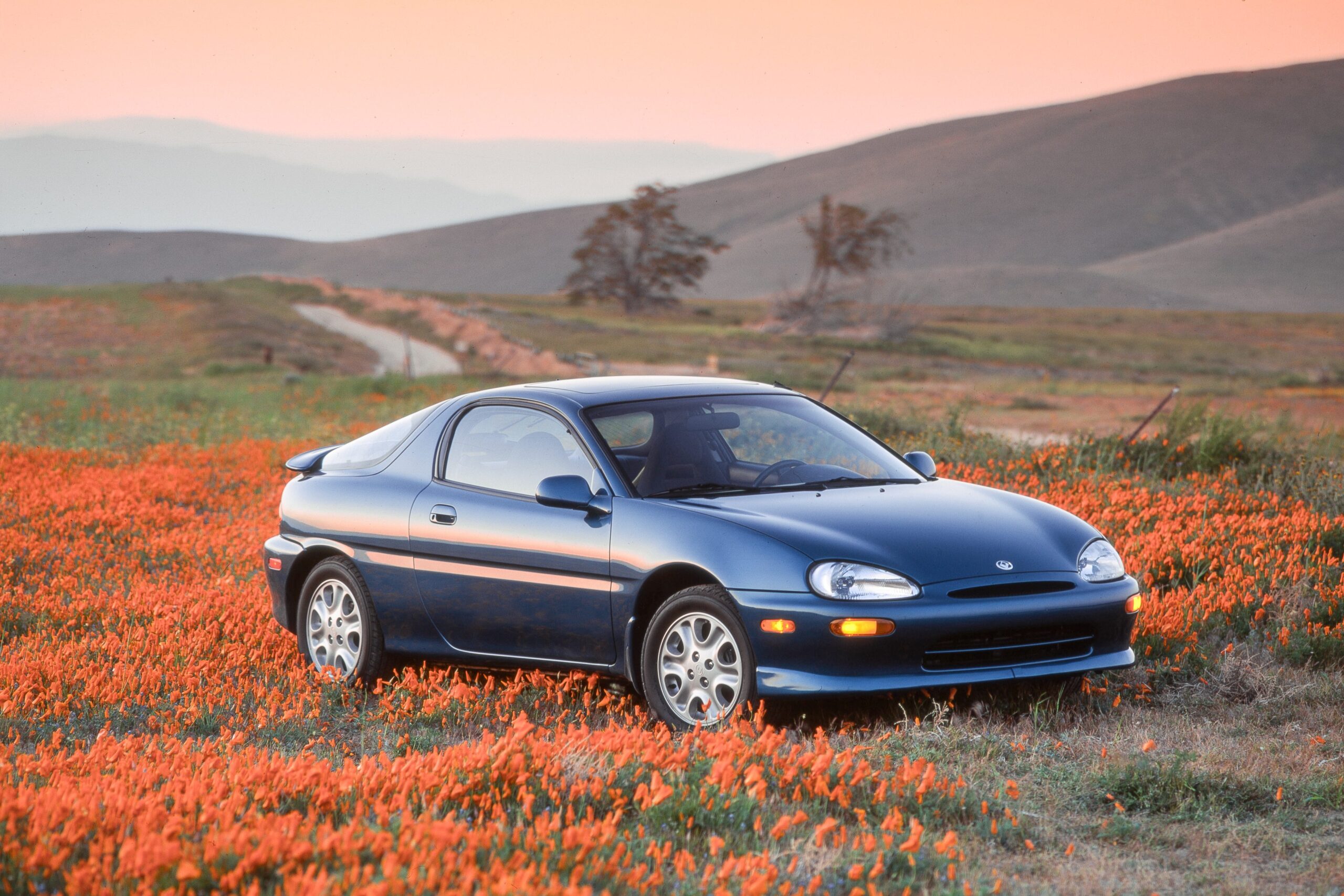


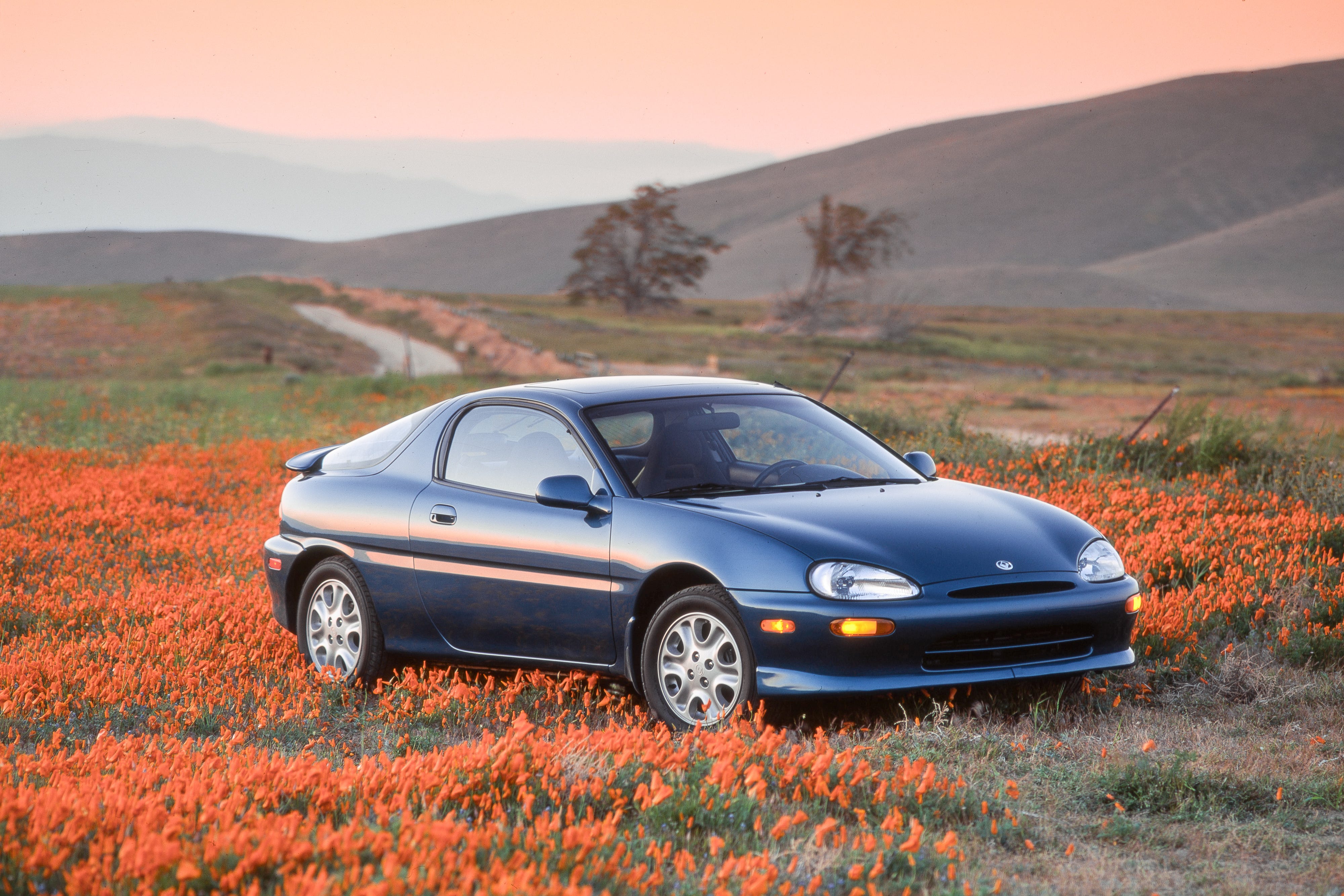
An 1845 cc V-6. Four cams, 24 valves, 130 horsepower, and a redline at 7000 rpm. In 1991, Mazda stuffed the world’s smallest production V-6 into a sub-compact coupe and dared buyers to care about cylinder count in a segment where four-bangers ruled unchallenged.
The MX-3 GS arrived into a class that was practically tripping over itself. Toyota had the Paseo. Nissan brought the NX. Honda’s CRX was the established favorite. Isuzu and Geo were splitting duties on the Impulse and Storm. Every one of them ran inline fours because that’s what made sense in a small, light, affordable coupe. Mazda looked at all that common sense and decided to go a different direction.
The K8-DE engine is a strange and beautiful piece of engineering. Aluminum block, aluminum heads, 60-degree vee, twin cams per bank, variable intake runners controlled by solenoid-operated butterfly valves. All of it crammed transversely under a hood that barely conceals the outbreak of cam covers and intake plumbing. One look at the engine bay explains exactly why nobody else bothered.
And here’s the thing about that tiny six: it sounds better than it pulls. Around 3000 rpm, the exhaust note conjures memories of a Jaguar E-Type’s 3.8-liter straight six. Gorgeous, throaty, resonant.
But there’s almost nothing behind it at those revs. Real thrust doesn’t arrive until 4500 rpm, and serious acceleration lives between 5000 and the redline. The MX-3 demands commitment. You have to wring its neck to go anywhere, which feels theatrical in traffic but deeply satisfying on a back road.
The five-speed manual’s first-to-second shift exposes the gap. Hit 7000 rpm in first at 33 mph and second gear drops you to 3900 rpm, below where the torque lives. You’re constantly rowing through the gearbox, constantly chasing revs. Mazda offered a four-speed automatic, but pairing a slushbox with an engine this short on low-end torque would be an act of self-sabotage.
Underneath, the chassis punches above its weight. A 96.3-inch wheelbase and tracks of 57.5 and 57.7 inches give the MX-3 a footprint that embarrasses cars a class above. Strut suspension front and rear, derived from the Protege platform, delivers sharp turn-in with decent highway composure.
Four-wheel disc brakes on the GS. Engine-speed-sensitive power steering that stays communicative. Mazda coined the word “stagility” to describe the blend of stability and agility they were after, and the MX-3 actually delivers on the concept even if the marketing term deserves to be buried.
The cabin is wider and more accommodating than you’d expect up front. The rear seat exists, technically. Mazda insisted it offered “reasonable posture” for average-size adults, but that requires occupants to place their heads, knees, and feet in precisely the spots the engineers designated. Getting back there is an athletic event. Staying there should be brief.
At an estimated base price of $14,000, the GS undercut sports car territory while offering something no competitor could match: a six-cylinder soundtrack in a package weighing just 2,550 pounds. Car and Driver estimated 0-60 in 8.5 seconds and a quarter mile in 16.0 flat. Not fast. Not slow. Just busy enough to feel alive.
The base MX-3 with its 88-horsepower 1.6-liter four was forgettable by design. The GS was the point. It joined the RX-7, the Miata, and the MPV in Mazda’s lineup of vehicles that existed because someone at the company believed cars should have personality, not just specifications.
Chairman Kenichi Yamamoto said Mazda would make cars that wink at you. The MX-3 GS didn’t just wink. It grabbed your sleeve and hauled you toward something no spreadsheet would have approved.
Share this Story