
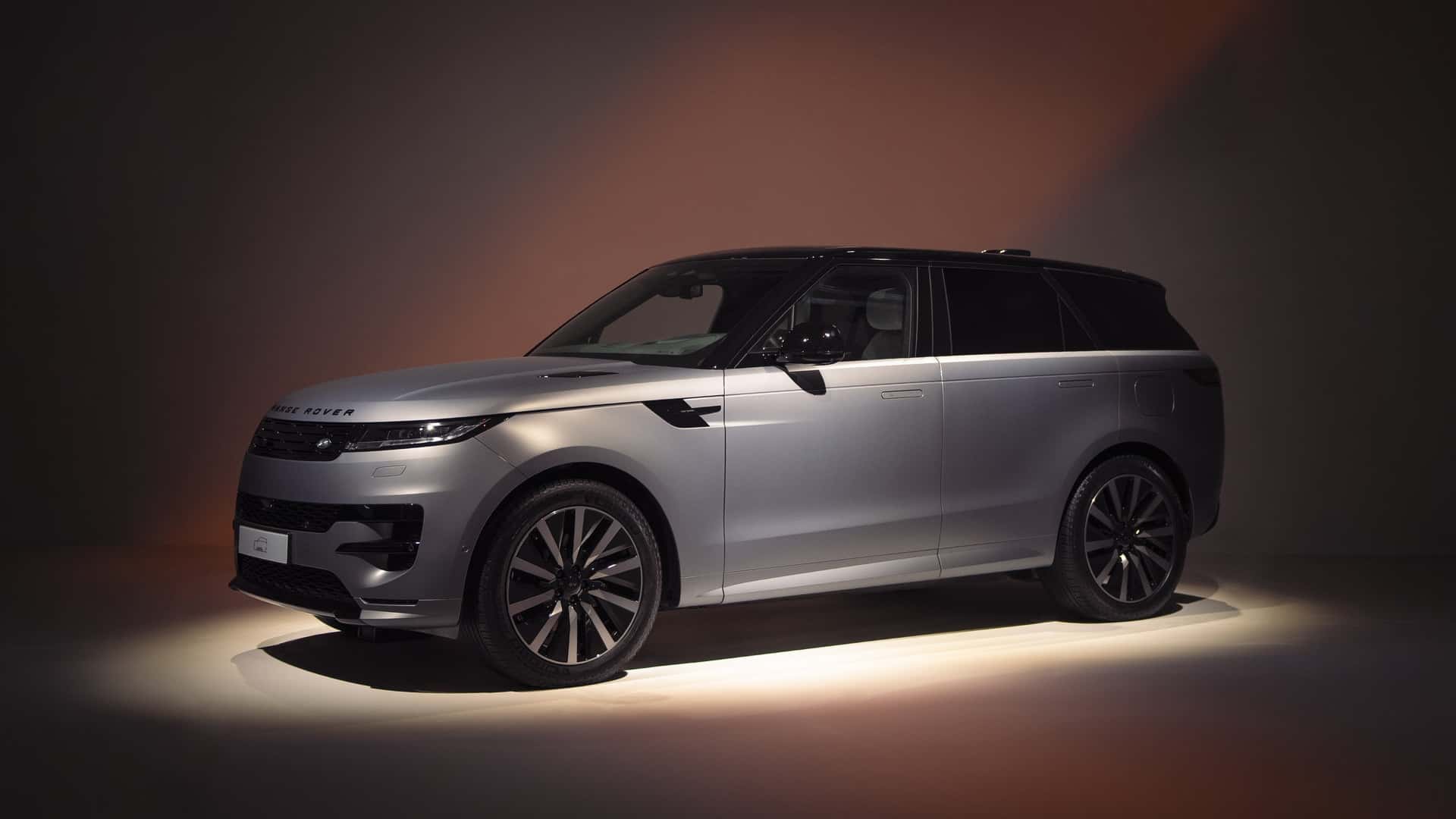


Land Rover just pulled the wraps off the Range Rover Sport Electric, and Americans will have to wait. A company representative confirmed the electric SUV will skip the 2027 model year in the United States, with a possible 2028 arrival at best.
That delay hands Lucid a wide-open runway. The Gravity, already on sale, delivers 450 miles of range from a 123-kWh battery and charges at up to 400 kilowatts. It seats seven.
The new Range Rover Sport EV manages 378 miles on the European WLTP cycle, charges at a maximum 350 kW, and fits five. On paper, Lucid wins the spec war before Land Rover even enters the ring.
The Sport Electric rides on the same MLA architecture as the full-size Range Rover Electric that debuted earlier this year. It shares the same 118.5-kWh battery, the same 800-volt electrical architecture, and the same 118-inch wheelbase. Two electric motors combine for 542 horsepower and 627 pound-feet of torque, pushing the SUV to 62 mph in 4.3 seconds.
That is two-tenths quicker than the larger Range Rover Electric and a half-second faster than the V-8 powered Sport SV.
A 10-to-80 percent DC fast charge takes 22 minutes. AC charging tops out at 22 kW. Those are competitive numbers, if not class-leading.
Where Land Rover expects to separate itself is off the pavement. Decades of mud, rocks, and river crossings have given the brand credibility that no Silicon Valley startup can replicate with software updates. Whether buyers of $130,000-plus luxury SUVs actually leave the tarmac is another question entirely, but the capability is there.
Visually, Land Rover played it safe. The Sport Electric is virtually indistinguishable from its gas-powered twin, inside and out. That is a deliberate contrast to Jaguar, its corporate sibling under JLR, which torched its entire design language for its forthcoming EV.
Land Rover is betting that continuity sells. Jaguar is betting the opposite. Both are expensive gambles.
A lower-output variant with 444 horsepower will follow, but the launch strategy mirrors Porsche: lead with the expensive, fully loaded model, then work down. Pricing has not been announced, though it will slot below the $140,450 Range Rover Electric.
The Sport has long been the volume play in the Range Rover lineup. It offers roughly 90 percent of the big car’s presence at a lower price, and it has consistently outsold its larger stablemate. Electrifying it is not optional for JLR’s future. It is essential.
But timing matters enormously. By the time the Sport Electric reaches American showrooms, Lucid will have had at least two full years of Gravity sales under its belt. The Mercedes G 580 EV is already here. The Porsche Cayenne EV is coming.
The luxury electric SUV segment is filling fast, and every month of delay costs Land Rover consideration among early adopters who are not inclined to wait.
JLR has said repeatedly that electrification is central to its strategy. The products, on paper, look strong. The execution timeline tells a different story.
European and other global markets get the Sport Electric first, while the brand’s largest luxury market sits on the sideline. Land Rover dealers in the U.S. are still moving gas and plug-in hybrid Sport models with healthy margins. That cushion will not last forever.
Share this Story