
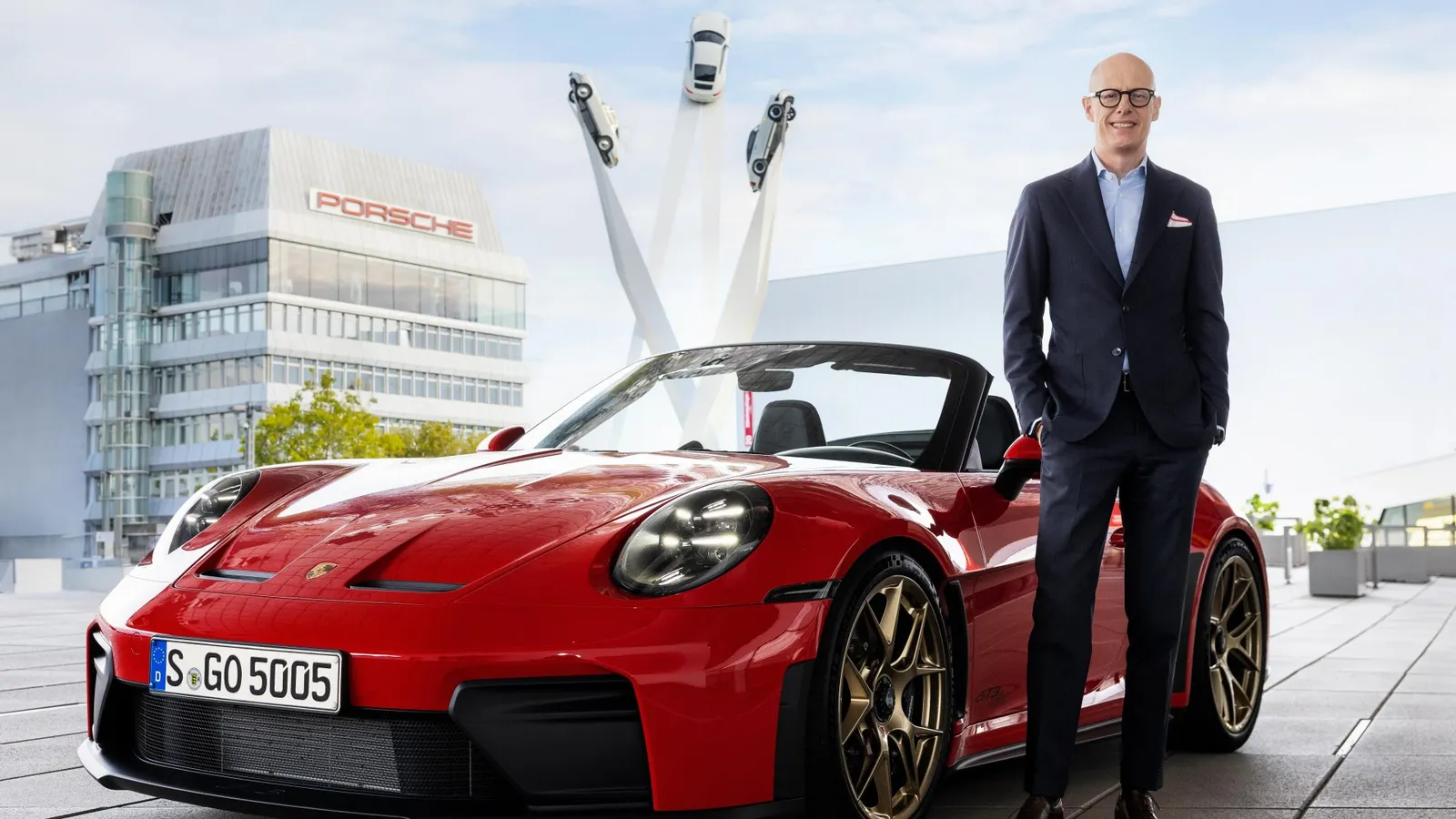


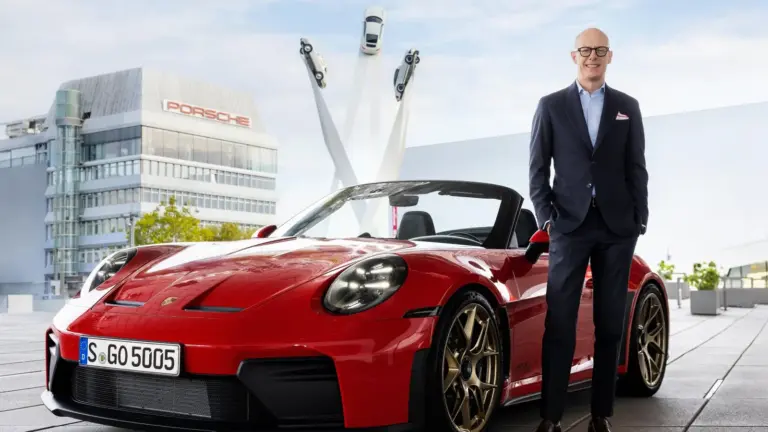
Four years ago, Porsche told the world that 80% of its sales would be electric by 2030. On Wednesday, CEO Michael Leiters stood at the brand’s development center in Weissach and effectively torched that plan.
The new strategy, branded Sportwagenschmiede ’35, steers Porsche back toward combustion engines and plug-in hybrids across nearly every model line through 2035. Internal combustion, plug-in hybrid, and battery-electric drivetrains will coexist for at least another decade. The EV-only future Porsche once promised is off the table.
The most telling reversal involves the Macan. In 2022, Porsche discontinued the gasoline Macan and bet its bestseller’s future entirely on an electric replacement. That move backfired as EV demand softened worldwide, leaving dealers without their volume anchor at the worst possible moment.
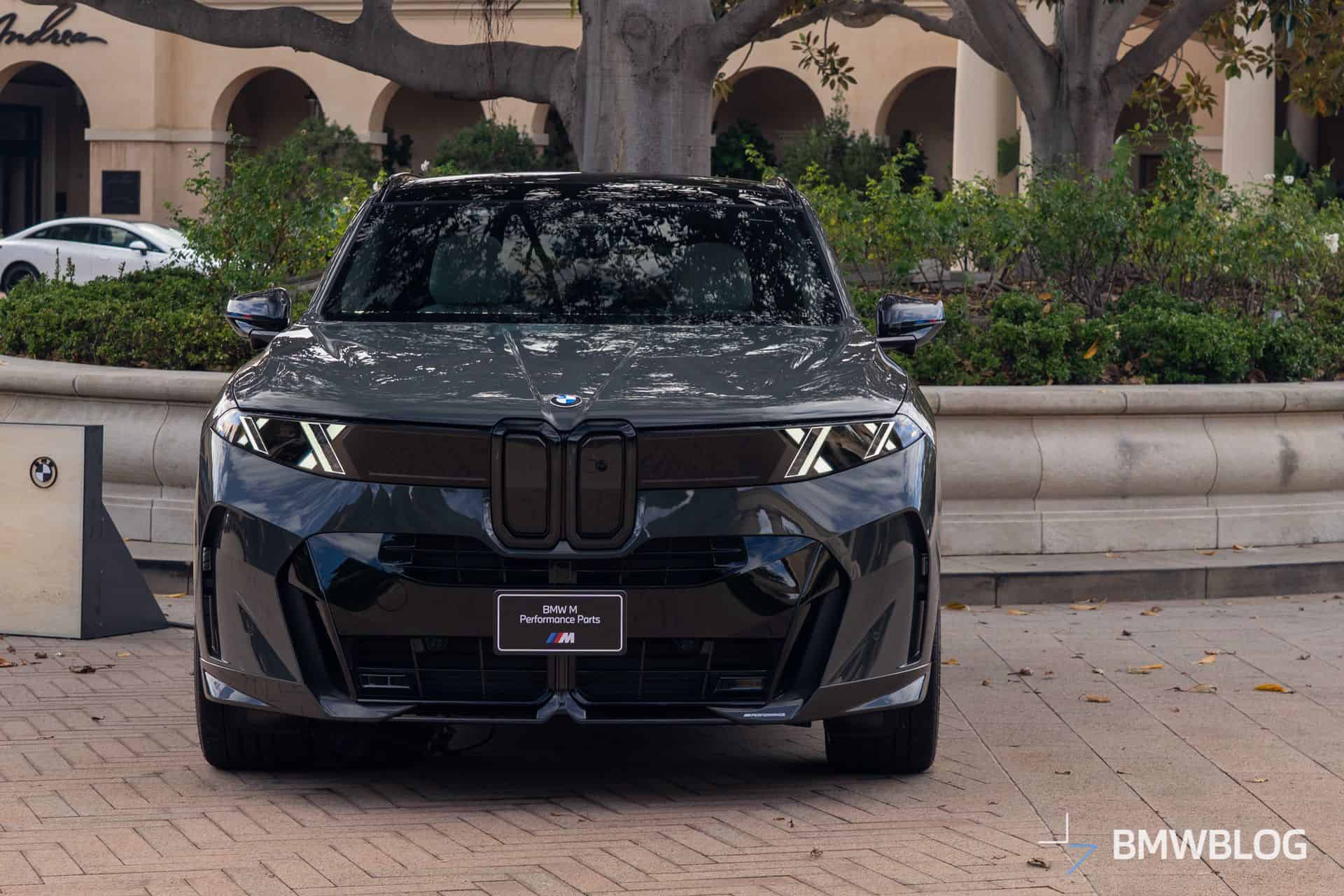
Now Porsche is building a new gas-powered SUV slotted beneath the Cayenne, aimed squarely at the segment the old Macan once owned. It will offer gasoline and plug-in hybrid drivetrains and sell alongside the electric Macan. Expect it in 2028, with what the company calls a “significant contribution to sales and profitability” by 2029.
That is corporate language for admitting the electric Macan cannot carry the load alone. In the U.S., where the gas Macan was Porsche’s top seller for years, the hole in the lineup has been painfully visible.
At the top of the range, Porsche confirmed a new mid-engine supercar positioned above the 911, set to be revealed on Oct. 15. Whether it will be a limited-run halo car like the 918 Spyder or a permanent fixture remains unclear. Leiters also floated an additional SUV above the Cayenne and more 911 derivatives, with at least one major launch per year through 2030.
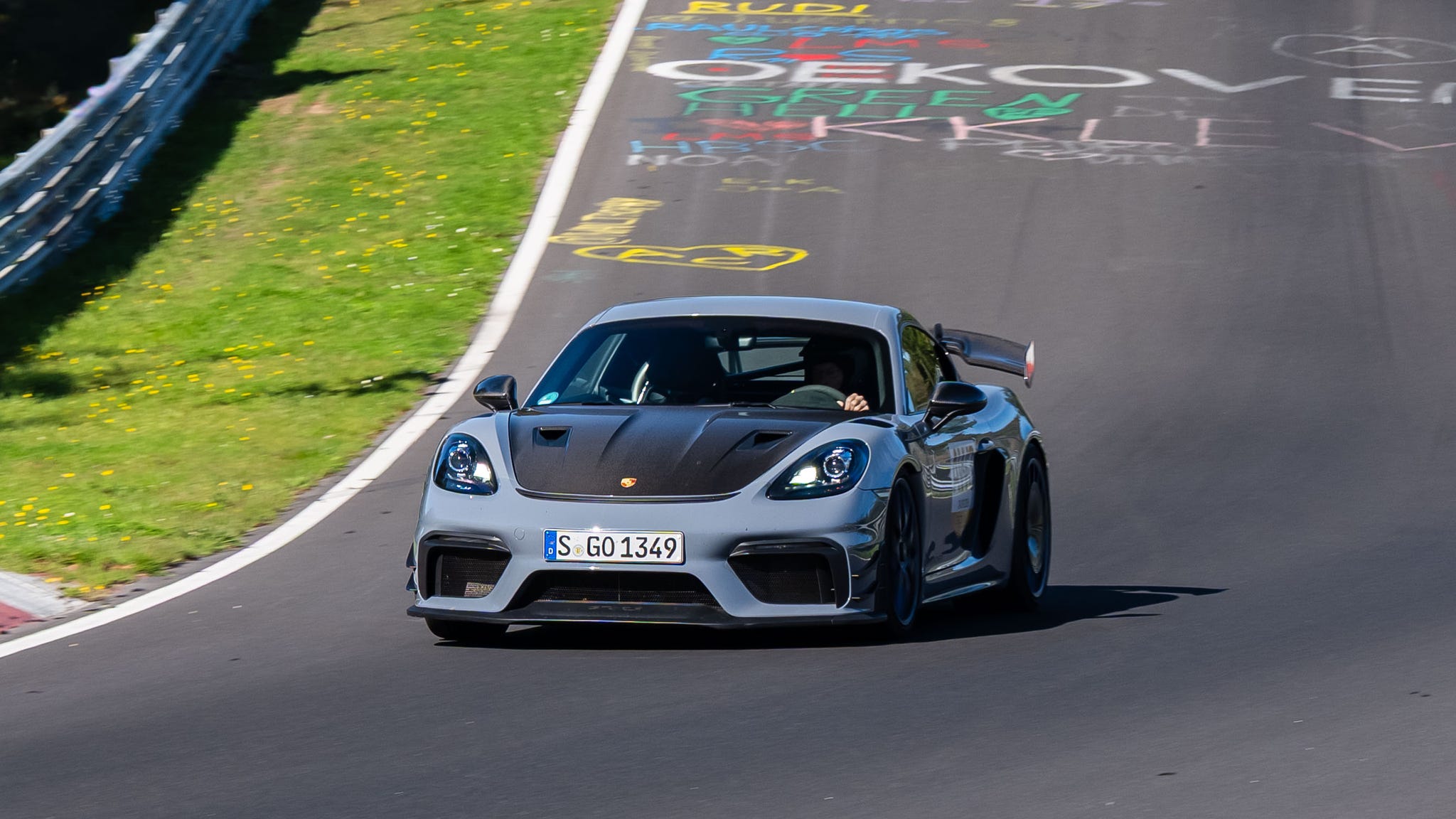
The electric 718 Boxster and Cayman survive the strategy reset. They have been delayed repeatedly and are not expected to reach full production until 2027, with meaningful sales in 2028.
Behind all the product shuffling sits a financial reckoning. Porsche poured billions into electrification, sales fell, China weakened, and the share price cratered. The company that once reliably printed double-digit margins watched its profitability erode quarter after quarter.
Leiters wants to lower the break-even point below 200,000 cars annually. Porsche delivered about 279,000 in 2025, so there is cushion, but the message is clear: the brand is not chasing volume anymore. It wants roughly 20% fewer model variants and expects each remaining derivative to sell about 30% more units.
Average transaction prices on top-tier models are targeted to rise 20%. Revenue from the Sonderwunsch bespoke customization program is supposed to grow sixfold. Development costs should drop 20%, production headcount costs down 30%, and management positions slashed 40%.
Porsche is also deepening platform sharing with Audi inside the Volkswagen Group. That is a pragmatic concession for a brand that has long traded on engineering independence.
The operating margin target sits at 10% to 15% in the medium term, rising to 15% long-term. Those are healthy numbers for any automaker but a far cry from the roughly 18% Porsche posted before its electrification spending ramped up.
What Leiters laid out in Weissach is not just a product plan. It is an admission that the previous strategy misjudged how fast the market would move, how much it would cost, and how much Porsche’s own customers actually wanted EVs. Whether this correction arrives in time to reverse the financial slide depends on execution, and Porsche has at least two years of empty shelf space to fill before the new gas SUV shows up.

Share this Story