


Sim racing on four wheels has matured into a serious hobby with serious hardware. Two-wheeled sim riding has been stuck in novelty territory for years, somewhere between a toy and an afterthought. Moza wants to change that.
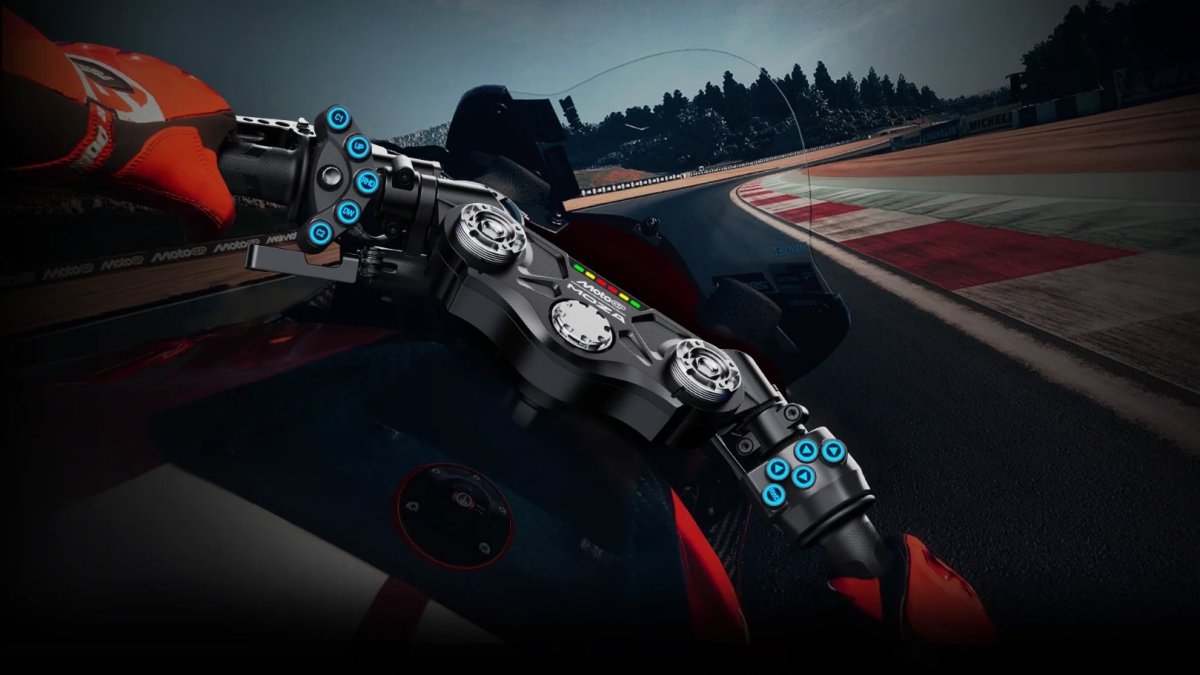
At Gamescom 2026 this week, the sim gear maker unveiled an officially licensed MotoGP handlebar controller. It is not a plastic gimmick in the vein of the Tony Hawk: Ride skateboard or the Guitar Hero axe. Moza is pitching this as a legitimate sim peripheral, one that mirrors the proportions and control layout of a real MotoGP machine’s cockpit.
The company says the bars were ergonomically developed with input from professional riders. The brake lever and grips can reportedly be swapped out for actual motorcycle parts, which is the kind of detail that separates a simulator tool from a branded accessory. The main structure is magnesium alloy, not injection-molded plastic.
Width and angle are adjustable. The clutch and brake levers pivot for personalized ergonomics. Ten programmable buttons split across both grips, a five-way switch on the left, and a D-pad in the center round out the controls.
Brakes and clutch run on Hall-effect sensors, which means no potentiometers to wear out and develop dead zones over time. Force feedback is native in MotoGP 26 and a handful of other compatible titles. The bars can be configured for either leaning or steering input, a distinction that matters enormously depending on the sim platform and the rider’s preference.
They also pair with Moza’s CM2 digital dashboard or third-party DIY displays. That flexibility is a good sign for the tinkerers who tend to populate this hobby.
Here is where reality sets in. To get the full motorcycle sim experience, you need a dedicated rig that lets you lean and shift your body weight. Moza’s teaser video shows exactly that kind of setup, though the company hasn’t detailed what a complete rig package would cost.
Given that Moza charges $399 for a Lamborghini Revuelto sim wheel and $1,299 for the Essenza SCV12 version, expect the MotoGP handlebar to land somewhere that makes casual buyers wince.
The motorcycle sim space has been starved for quality hardware. Car sim rigs benefit from decades of iterative development across multiple manufacturers. Fanatec, Logitech, Thrustmaster, and Moza itself have pushed each other to build better, more realistic equipment.
Two-wheel sim riders have had almost nothing comparable. A few niche outfits have tried, but none with the brand recognition or distribution muscle of Moza, and none with an official MotoGP license attached.
That license matters. It signals that Dorna, MotoGP’s commercial rights holder, sees enough potential in the sim market to put its name on specialized hardware rather than just game software. Whether that translates to a sustained ecosystem of compatible rigs, accessories, and supported titles is another question entirely.
Moza has not announced pricing or a release date. The hardware exists, the demos are running at Gamescom, and the spec sheet reads like something built by people who actually ride. Whether enough sim enthusiasts will pay premium prices for a peripheral tied to a niche within a niche remains the open bet.
Share this Story