
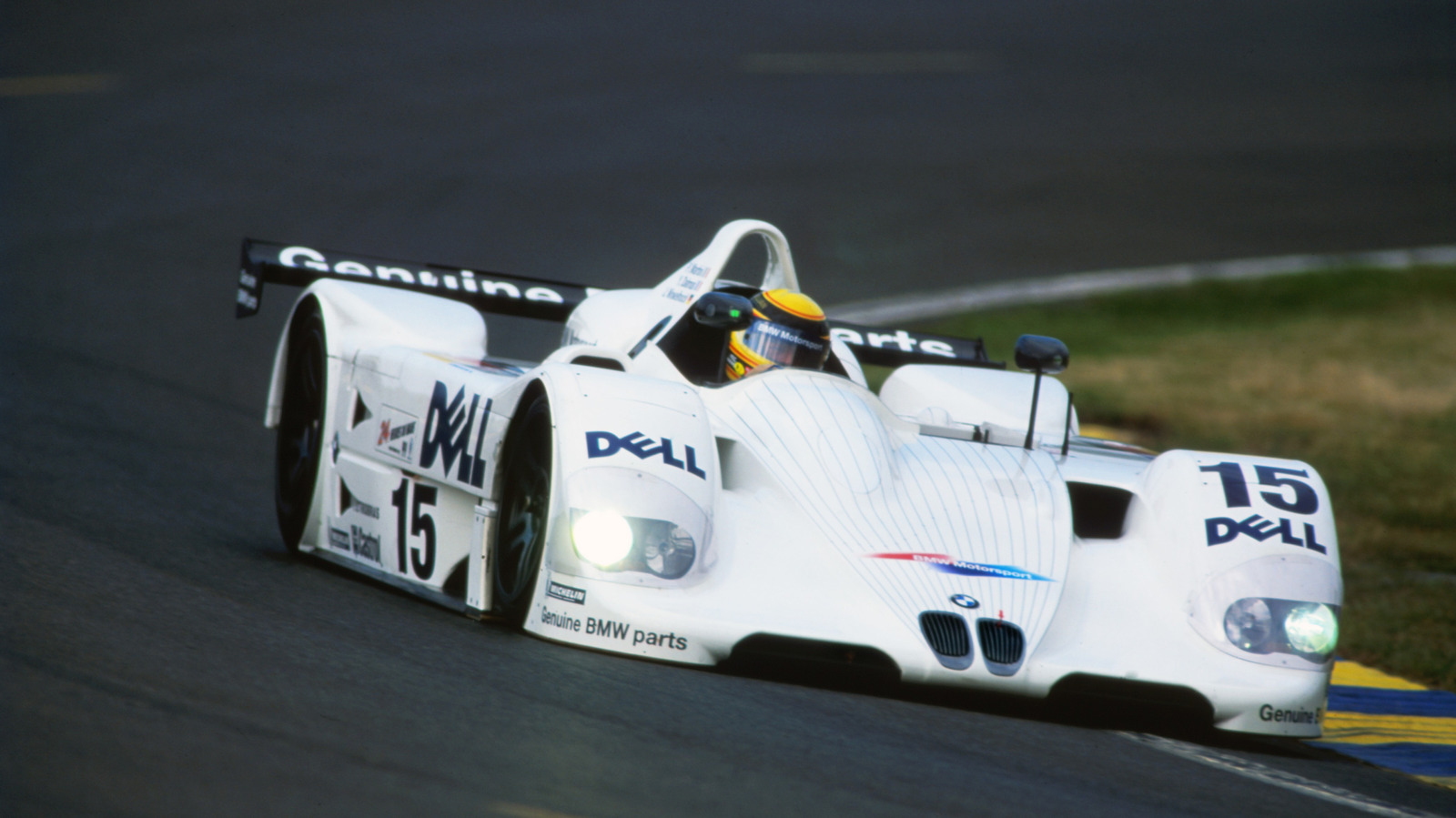


The 24 Hours of Le Mans has been running since 1923, and in that century-plus of racing, certain machines have burrowed so deep into the collective consciousness of car enthusiasts that they become something closer to religion than motorsport. A recent reader poll on Jalopnik, timed to this weekend’s race, laid bare just how personal and irrational those attachments really are.
The Mazda 787B dominated the conversation, and of course it did. The 1991 overall winner remains the only rotary-engined car to ever take the top step at Le Mans, wringing 900 horsepower from a naturally aspirated 2.6-liter four-rotor engine that screamed like a banshee through the Mulsanne night. One reader described visiting the actual car at Mazda’s Hiroshima museum as “a religious pilgrimage.” Nobody laughed. Nobody disagreed.
But the most revealing picks weren’t the obvious ones. They were the failures.
Toyota’s GT-One, a machine of heartbreaking beauty, came up repeatedly. Its entire program was scrapped so Toyota could spend nearly a decade running mid-pack in Formula 1. The Nissan R390 GT1 earned praise not for results but for Nissan’s stubborn commitment to building a road-legal version first, honoring the homologation spirit of GT1 rules while rivals ran thinly disguised prototypes.
The Alfa Romeo SE 048SP never even raced. It was shelved before it turned a wheel in anger. One reader admitted being drawn to “what could have been” stories, and that impulse ran through nearly every pick.
The Nissan GT-R LM Nismo, the front-wheel-drive prototype that Nissan abandoned after a disastrous 2015 campaign, found a champion too. Everyone says FWD isn’t a good race car,” the reader wrote. “Too bad Nissan abandoned it.” Nissan appears across the list more than almost any other manufacturer, not for winning, but for trying wild things and then walking away.
Contrast that with the Panoz LMP-1, a front-engined prototype running a NASCAR-derived 6.0-liter V8 against mid-engined European machinery. It never won Le Mans either, but it beat Audi’s legendary R8 more often than any other car of the era. One reader called it “a big American bird flipped at the European establishment.
The 2023 Garage 56 Hendrick Motorsports Camaro hit a similar nerve. Le Mans organizers had prepared a warning system to alert the field about this supposedly slow stock car intruder. They didn’t need it. Hendrick read the regulations carefully, stripped weight the ACO didn’t restrict, uncorked power NASCAR had capped, and the thing ran all 24 hours while sounding like the loudest car on the circuit.
The McLaren F1 GTR rounded out the list with perhaps the most staggering stat of all. A car designed for the road, pressured into racing by customers, it won Le Mans outright on its very first attempt in 1995, the first manufacturer to do so since Ferrari in 1949. It beat purpose-built prototypes with a detuned engine.
What threads through all of these picks is not speed or trophies. It’s audacity. Readers gravitated toward machines that defied convention, broke from the engineering consensus, or simply refused to be sensible.
The rotary that shouldn’t have won. The front-engined car that shouldn’t have been fast. The stock car that shouldn’t have survived. The prototypes that never got their chance.
Le Mans has always been less a race than a dare. The cars people remember most aren’t necessarily the ones that crossed the line first. They’re the ones that had no business being there at all and showed up anyway.

Share this Story