
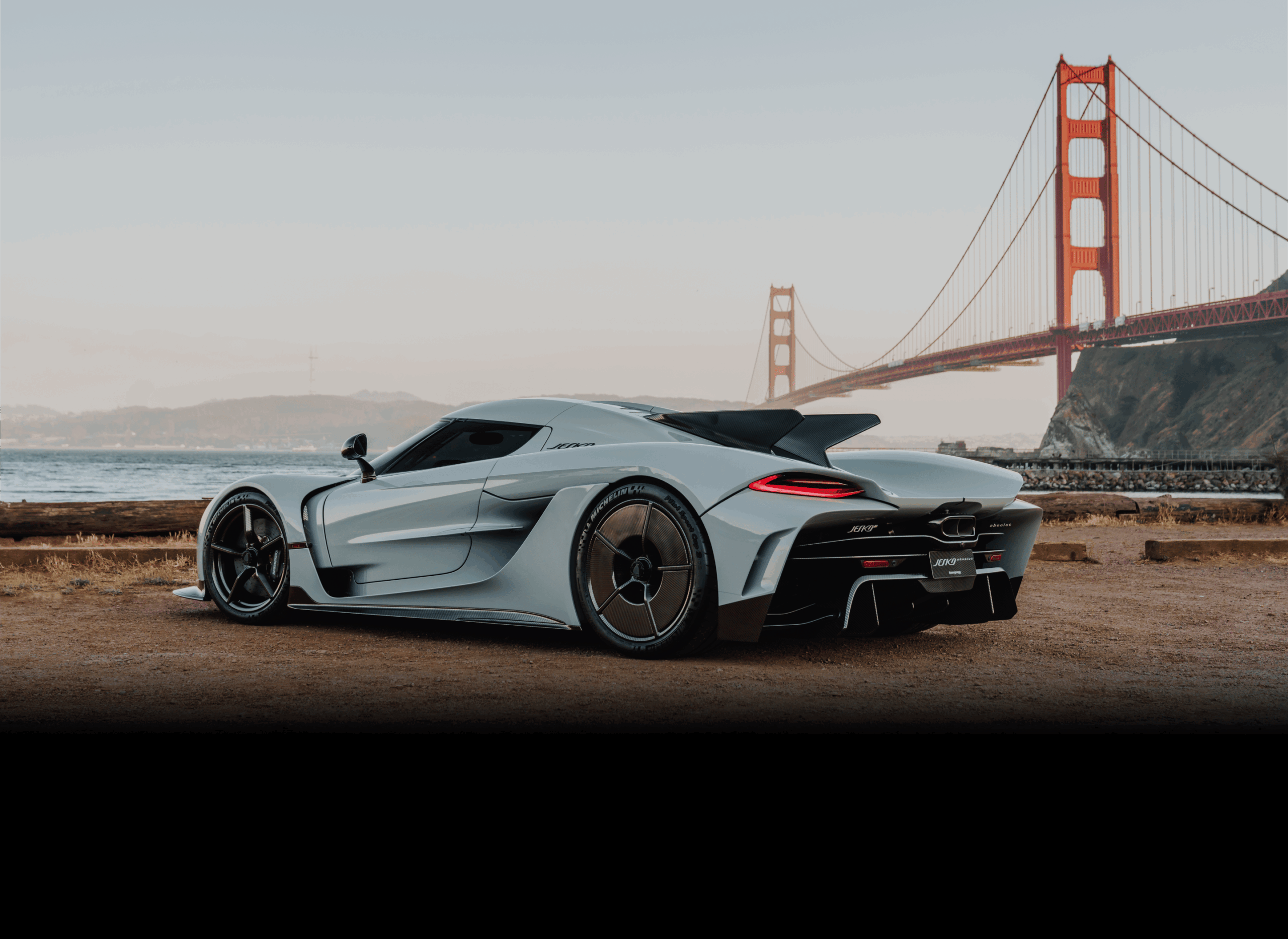


The Koenigsegg Jesko Absolut just ran an 8.54-second quarter-mile at a trap speed of 190 mph. No hybrid motors. No all-wheel drive. No prepped drag strip. Just a twin-turbocharged 5.0-liter V-8 and a Swedish airfield.
That trap speed is the number that should stop you cold. It’s 40 mph faster than a Ferrari LaFerrari and 30 mph faster than a Bugatti Chiron Super Sport at the quarter-mile mark. Those are cars with every technological advantage money and engineering can buy — electric motors, all-wheel-drive systems, launch control algorithms refined over thousands of development hours. The Jesko Absolut showed up with rear tires and violence.
The run happened at Koenigsegg’s home airfield in Ängelholm, Sweden, earlier this spring, and the details only sharpen the absurdity. Test driver Markus Lundh didn’t lift at the quarter-mile. He kept his foot buried and drove one-handed while filming the run on his phone.
At the half-mile, the Absolut was doing 232 mph, having covered that distance in 12.76 seconds. A Porsche 911 Carrera T needs roughly that same amount of time just to finish a quarter-mile.
The Corvette ZR1X recently became the quickest car Car and Driver has ever tested, a legitimate supercar killer from General Motors at a fraction of hypercar pricing. But it needed a prepped drag-strip surface to post its numbers, and it still came up short of the Jesko in both elapsed time and trap speed. Koenigsegg did this on asphalt that exists primarily so airplanes can land on it.
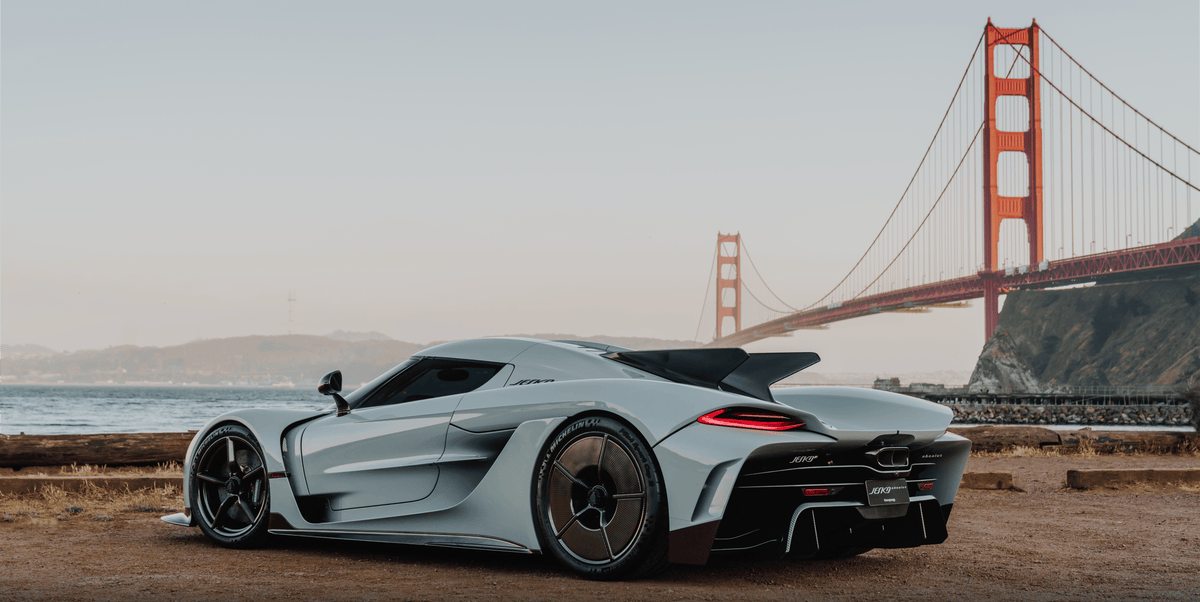
There is a caveat, and it’s worth being honest about. Koenigsegg claims the Jesko’s 0-to-60 time is slower than the ZR1X’s, a concession that tells you something about rear-wheel-drive power delivery with 1600 horsepower on tap. That figure, by the way, requires biofuel.
Car and Driver hasn’t independently verified any of these numbers. The publication notes it’s been more than 25 years since Koenigsegg let them test one of its cars, and that encounter ended with a fried clutch after four runs.
So we’re taking the company’s word for it, which is always a dicey proposition in the hypercar world where record claims flow like champagne at Pebble Beach. But the video exists. The data exists. And the physics of a 190-mph trap speed are hard to fake.
Only 125 Jesko Absoluts will be built, each carrying a price tag around $3 million before options. That’s Bugatti money for a car built by a company that operates out of a former Swedish air force hangar with a fraction of Volkswagen Group’s resources.
Christian von Koenigsegg has always been the industry’s most stubborn independent, and the Jesko Absolut is the purest expression of that stubbornness — a refusal to chase electrified hybrid complexity when cubic inches and forced induction still have something to say.
Koenigsegg has signaled that electrification is coming to its future hypercars. That’s inevitable. But right now, in mid-2025, the fastest production car trap speed anyone has recorded belongs to a machine that gets its power from eight cylinders, two turbochargers, and a driver crazy enough to film the whole thing with one hand on the wheel. The hybrid establishment just got embarrassed by a combustion engine and a Viking with a phone.
Share this Story