
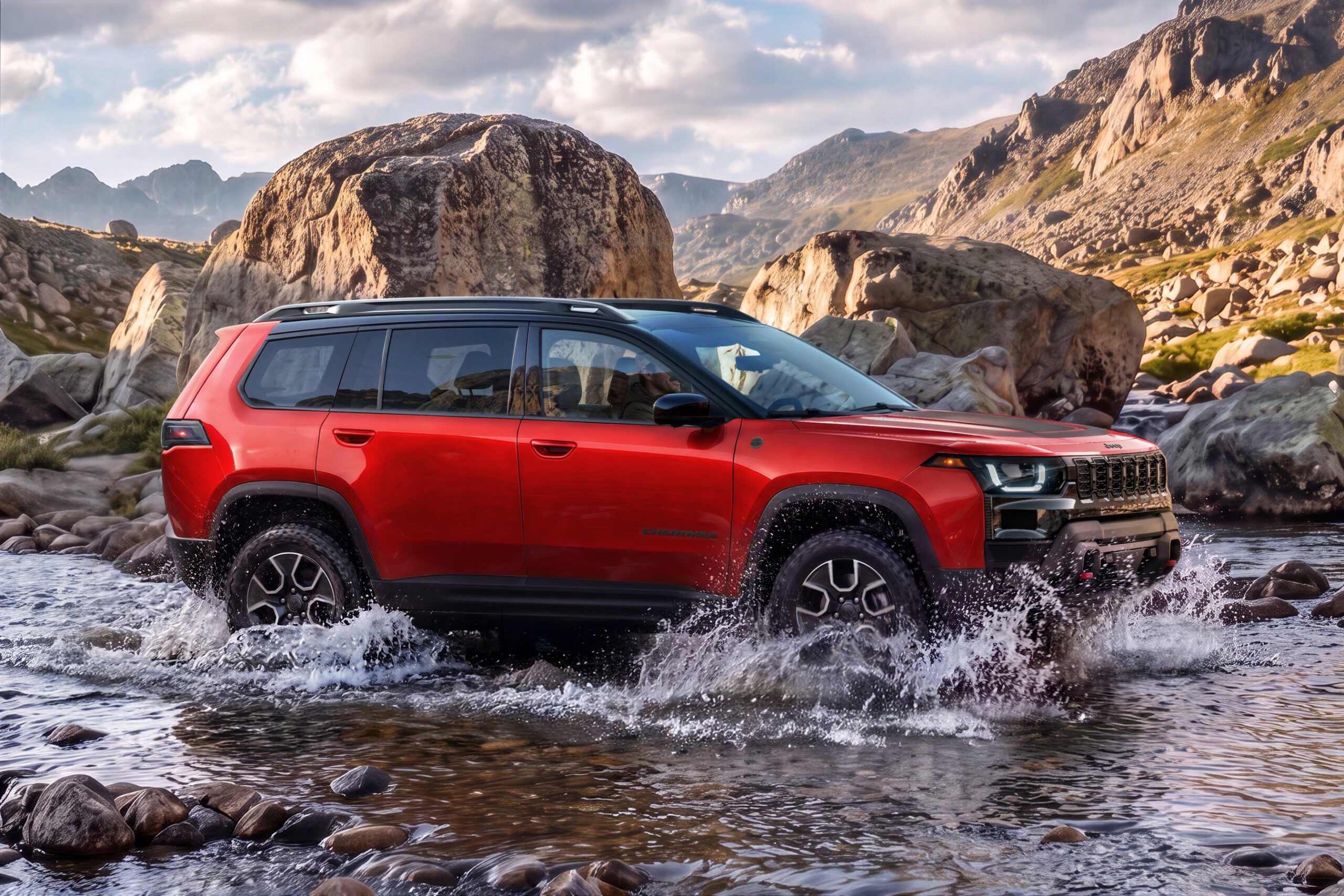


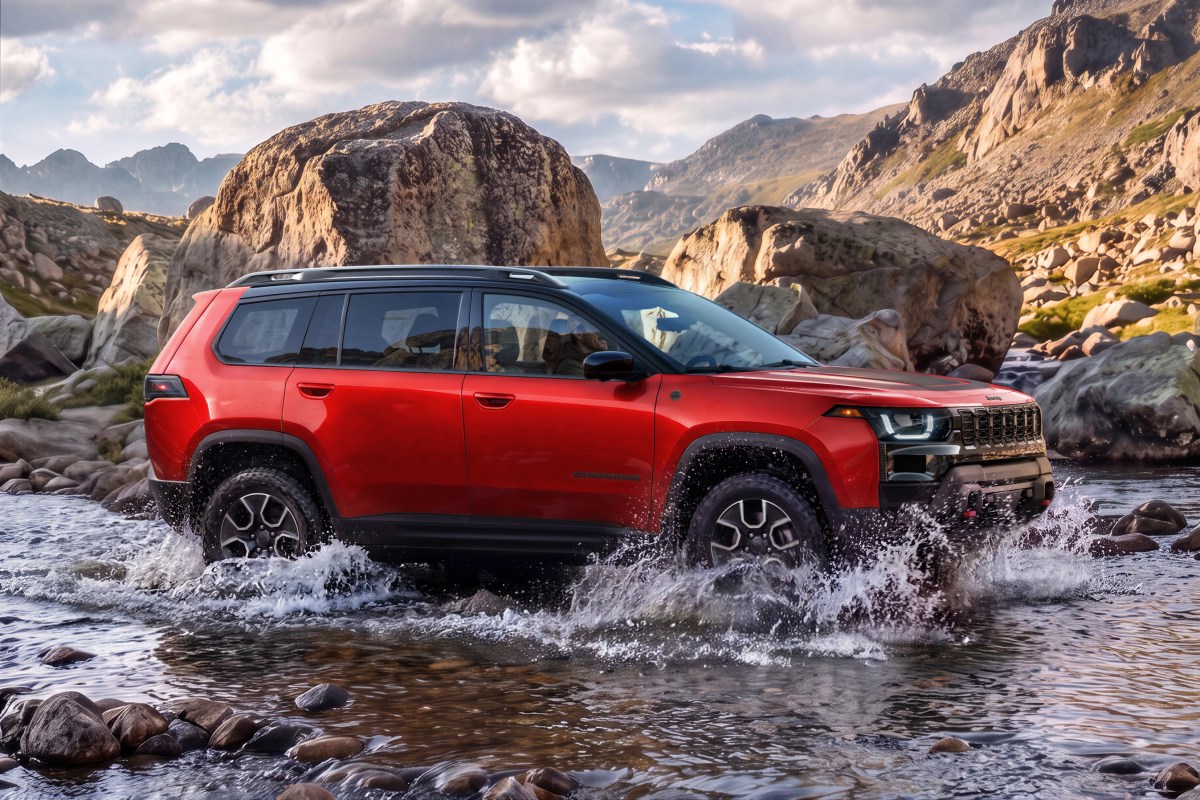
The 2027 Jeep Cherokee Trailhawk arrives with a two-speed transfer case, an electronic locking rear differential, and 9.0 inches of ground clearance. On a spec sheet, that’s enough to make every compact crossover with a “trail” badge look a little nervous.
Jeep is calling this its segment-best entry, and the numbers back the claim, mostly. A 28.8-degree approach angle, 21.9-degree breakover, and 31.8-degree departure angle top nearly every rival in the compact-to-midsize crossover space. The two-speed transfer case is a segment exclusive, the kind of hardware that used to be reserved for body-on-frame trucks.
But “on paper” has never been the same as “on dirt.”
The Ford Bronco Sport Sasquatch still holds the approach angle crown at 31.2 degrees and packs a mechanical locking rear axle. It doesn’t have low range, which is a real handicap in technical rock crawling, but the Bronco Sport is also physically smaller. That matters when trails narrow and wheel placement becomes everything.
The Subaru Forester Wilderness, meanwhile, quietly beats the Cherokee in the one metric that tends to matter most in daily off-road use: ground clearance, at 9.3 inches. It lacks the locking diff and transfer case, but Subaru’s symmetrical all-wheel-drive system has earned a loyal following among people who actually use their vehicles in snow, mud, and gravel roads rather than boulder fields.
Honda’s CR-V TrailSport and Toyota’s RAV4 Adventure don’t even pretend to compete at this level. Neither publishes a breakover angle, and their ground clearance figures trail the field. They exist to sell a lifestyle, not deliver one.
The Cherokee Trailhawk gets its 9.0 inches of clearance from a one-inch lift over the standard model. It can ford 24 inches of water. Jeep’s Active Drive II system is a genuine mechanical advantage in a class that mostly relies on software to simulate capability. A real crawl ratio changes how a vehicle behaves on steep, loose descents and technical ascents in ways that traction control algorithms cannot replicate.
So why the hesitation?
The new Cherokee shares its architecture with the model it replaced. Jeep didn’t reinvent anything here. It bolted on the right hardware and tuned the geometry.
That’s a proven playbook, but it also means the Cherokee carries the same fundamental compromises it always has. The vehicle leans midsize in a segment that rewards agility. Extra length and width help on the highway and hurt on tight switchbacks.
There was a time when “Trail Rated” on a Jeep fender was the only credential that mattered in this space. That era ended when Ford dropped the Bronco Sport with a locking diff and Subaru started lifting Foresters and bolting on skid plates. The competitive landscape got real, fast.
Jeep is responding with the right formula: genuine mechanical hardware instead of marketing fluff. The two-speed transfer case is the ace in the hole, and no rival currently matches it. Whether buyers in this segment actually need low range is a different question entirely, one that separates people who wheel from people who want to look like they could.
Pricing hasn’t been announced. Neither has a firm on-sale date. The spec sheet says the Cherokee Trailhawk is the most capable compact crossover you can buy. The trails haven’t weighed in yet.

Share this Story