
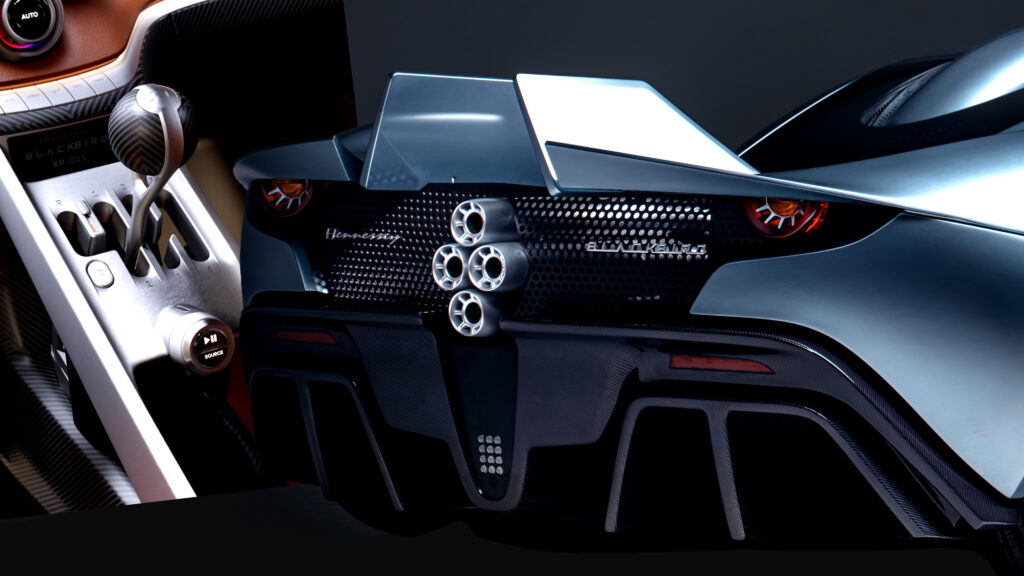


Hennessey just built a $2.5 million hypercar with no screens, no turbos, no digital gauges, and a physical ignition key. In a segment where rivals are stacking kilowatts and touchscreens like casino chips, the Texas outfit is calling the bluff.
The Blackbird, named after the Lockheed SR-71 spy plane, is Hennessey’s third hypercar following the Venom GT and Venom F5. But it shares almost nothing philosophically with either predecessor. The F5 was built to chase 300 mph. The Blackbird is built to make you forget about the number entirely.
Under the carbon fiber sits an Ilmor-developed 6.2-liter naturally aspirated V8 projected to make between 800 and 850 horsepower while spinning past 9,000 rpm. No turbochargers. No electric motors. Just displacement and engineering violence channeled exclusively to the rear wheels through a gated six-speed manual.
Hennessey claims a 0-60 time of 2.5 seconds and a top speed of 220 mph. Those are ferocious numbers by any standard, but in the current hypercar climate where four-figure horsepower is table stakes, they almost feel restrained. That restraint is deliberate.
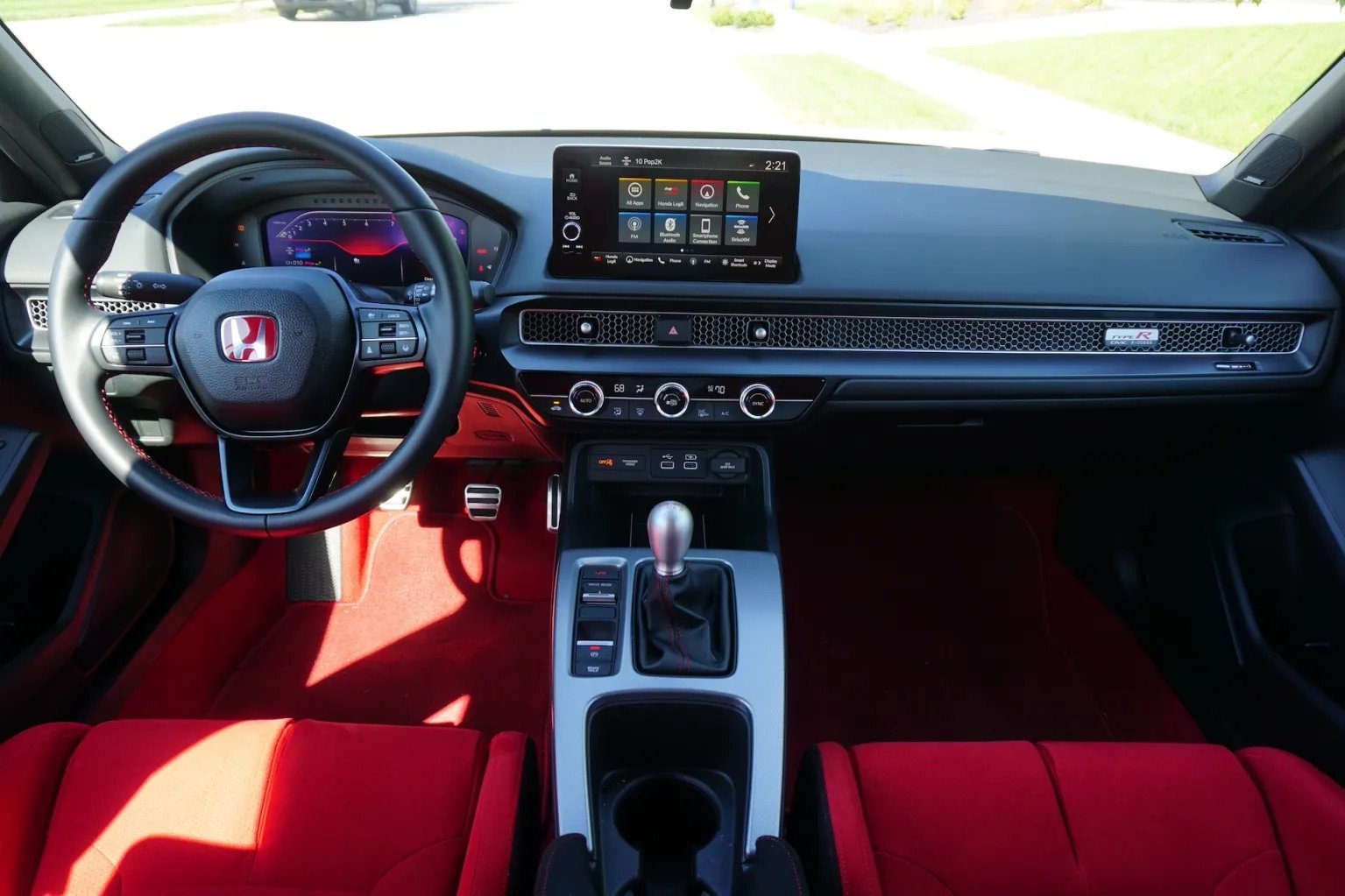
The cabin tells the real story. A large analog tachometer dominates the instrument panel. Physical switches handle everything else. The shift linkage is exposed, you start the car with a key, and smartphone connectivity exists only through the driver’s own device. There is literally nothing to swipe.
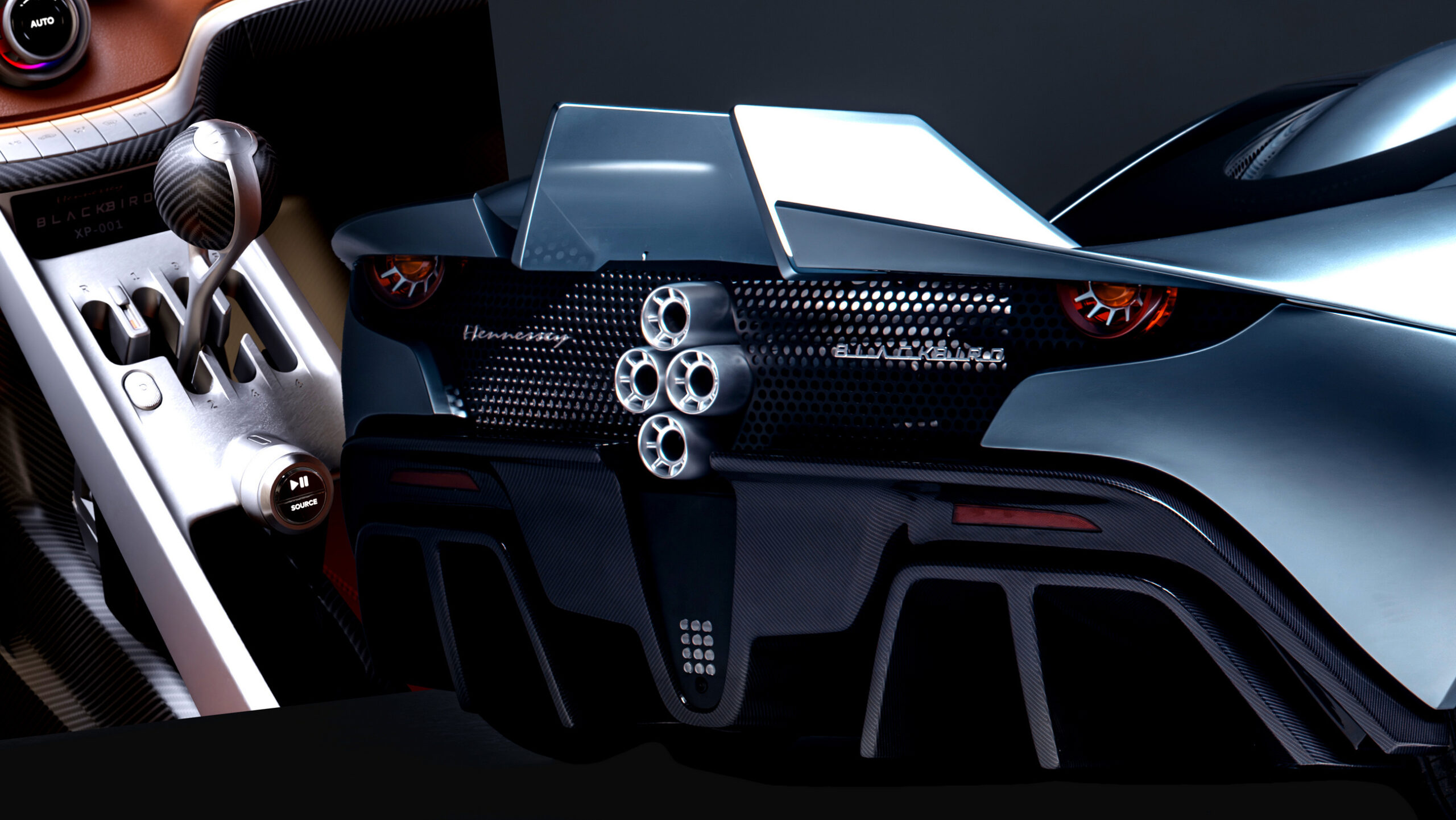
This is not a stripped track weapon, though. Hennessey engineered adaptive suspension into the platform, carved out space for two carry-on bags, installed four cupholders, and claims the car can comfortably cover 800 miles in a day. The bespoke carbon fiber chassis and body target a dry weight below 3,000 pounds, roughly 400 pounds lighter than a Porsche 911 GT3 RS.
Production is capped at 71 units. More than two-thirds are already spoken for ahead of the public debut at The Quail during Monterey Car Week on August 14. Customer deliveries won’t begin until 2029 or 2030, which means buyers are putting down deposits on a car they won’t touch for half a decade based largely on a philosophy.
That philosophy is worth examining. The hypercar market spent the last ten years in an escalation spiral. More power, more screens, more active aero, more software intervention. Rimac built a 1,914-hp electric missile, Bugatti went hybrid, and Koenigsegg crammed megawatts into everything. Somewhere along the way the driver became a passenger with a steering wheel.
Hennessey is arguing that a meaningful slice of wealthy buyers have grown tired of being managed by their own cars. No traction control nannies making split-second decisions. No head unit demanding a software update. Just an engine, a gearbox, and whatever courage you packed that morning.
Whether this represents a genuine market correction or a clever niche play by a small-volume builder depends on what happens next. If Pagani, Gordon Murray, or anyone with real engineering credibility follows Hennessey’s lead, the analog hypercar might become its own category. If not, the Blackbird will exist as a beautiful outlier, 71 cars scattered across the garages of people who wanted to remember what driving used to feel like.
At $2.5 million before taxes, remembering doesn’t come cheap. But two-thirds of the run is already gone, and the car hasn’t even been shown in public yet.

Share this Story