
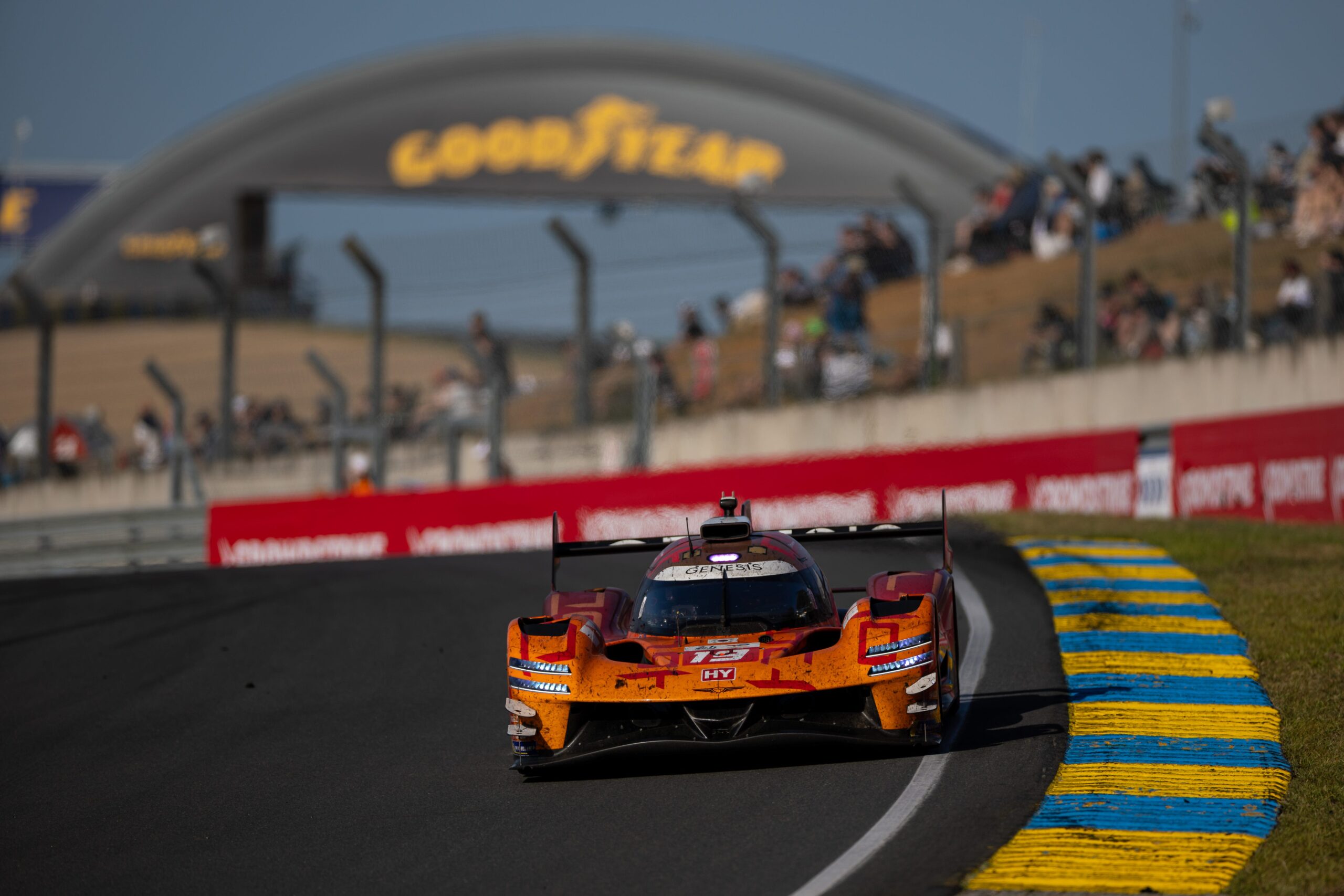


Eighteen months before the 2026 24 Hours of Le Mans, Genesis Magma Racing didn’t exist. No team, no car, no infrastructure. Last Saturday, one of its two GMR-001 hypercars crossed the finish line at Circuit de la Sarthe in 13th place after 24 hours of racing, making Genesis the first South Korean automaker to compete in the world’s most storied endurance race.
That trajectory — from PowerPoint to Mulsanne straight — is either reckless or brilliant. Probably both.
The architect is Cyril Abiteboul, a motorsport lifer who cut his teeth in Formula 1 with Renault and Caterham before leading Hyundai’s WRC program to its first Drivers’ Championship with Thierry Neuville in 2024. That success earned him a dual role: president of Hyundai Motorsport and team principal of the brand-new Genesis Magma Racing WEC operation.
His first move was hiring people who’d already made the mistakes he couldn’t afford to make. Sporting director Gabriele Tarquini raced six seasons in F1 before dominating touring cars. Chief engineer Justin Taylor came from Chip Ganassi Racing and Ferrari AF Corse, and the advisory bench includes Jacky Ickx, who won Le Mans six times and knows the place like his own driveway.
The car itself is a study in pragmatism over pride. Rather than designing a bespoke Le Mans Hypercar chassis from scratch, GMR chose the LMDh route, building around a pre-homologated Oreca platform. That partnership, announced in December 2024, shaved months off the development timeline and gave the team a backdoor into Le Mans experience — they ran an LMP2 entry with IDEC Sport in 2025 as a scouting mission.
The powertrain solution was equally clever. Instead of engineering a clean-sheet engine, the team welded together two race-proven 1.6-liter inline-fours from Hyundai’s WRC program, creating a 3.2-liter twin-turbo V-8 designed to survive more than 3,100 miles of continuous punishment. It’s the kind of hack that only works when you know exactly what those base components can endure.
With less than a year between the first engine fire-up and Le Mans, validation became the chokepoint. A five-day shakedown at Paul Ricard. Three days at Barcelona. A 32-hour endurance grind at Algarve in Portugal.
Abiteboul was candid about the gaps: “We still do not have all of the capabilities that we want in terms of simulators and test benching, but we are doing the best with what we have.”
The team’s competitive debut at Imola in April yielded finishes in 15th and 17th. At Spa, the No. 17 car cracked the top ten and scored the program’s first championship points in just its second race. Not bad for a team still learning its own car.
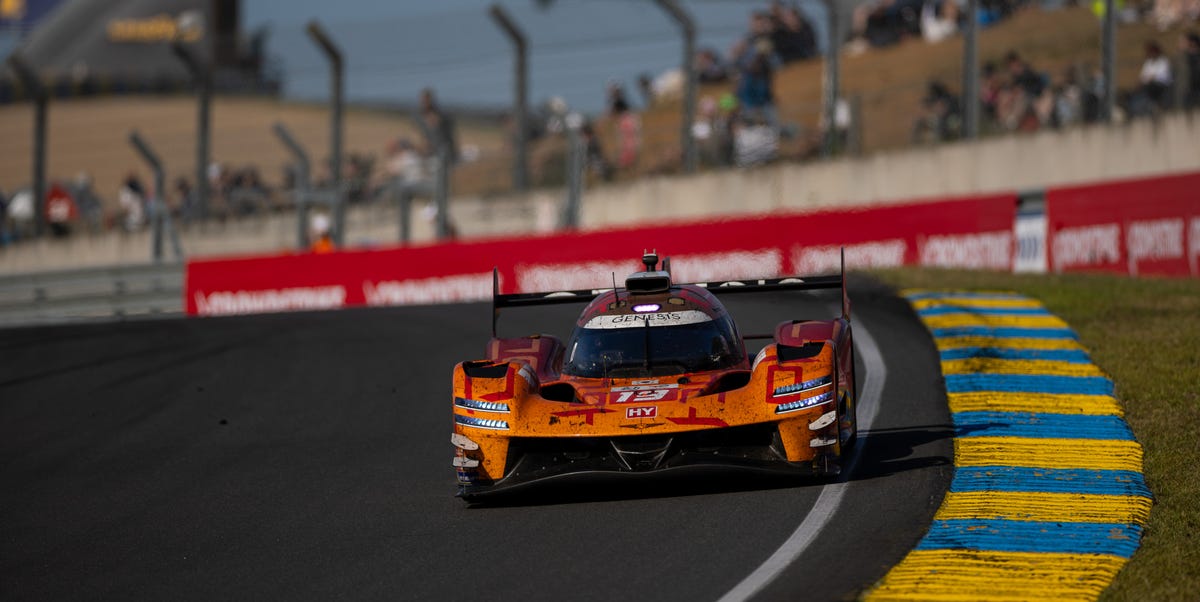
Le Mans was harsher. The No. 17 car, piloted by Pipo Derani, Mathys Jaubert, and three-time Le Mans winner André Lotterer, suffered a front suspension failure early Sunday morning and never returned to the track. The No. 19, driven by Paul-Loup Chatin, Mathieu Jaminet, and Dani Juncadella, ground through the remaining hours to finish 13th overall.
Thirteenth place doesn’t make headlines at a race won by Toyota, Ferrari, or Porsche. But finishing Le Mans on your first attempt, with a car that existed only as CAD files 14 months earlier, is a statement that transcends the result sheet. Plenty of well-funded programs with longer runways have failed to do as much.
“Everything has to be learned, and you have to be totally humble about that process,” Ickx said during the race’s final hour. “But we smile because we are here, we made it, we exist.”
Genesis now has rubber on the asphalt at La Sarthe. The layer is thin. But it’s there.
Share this Story