
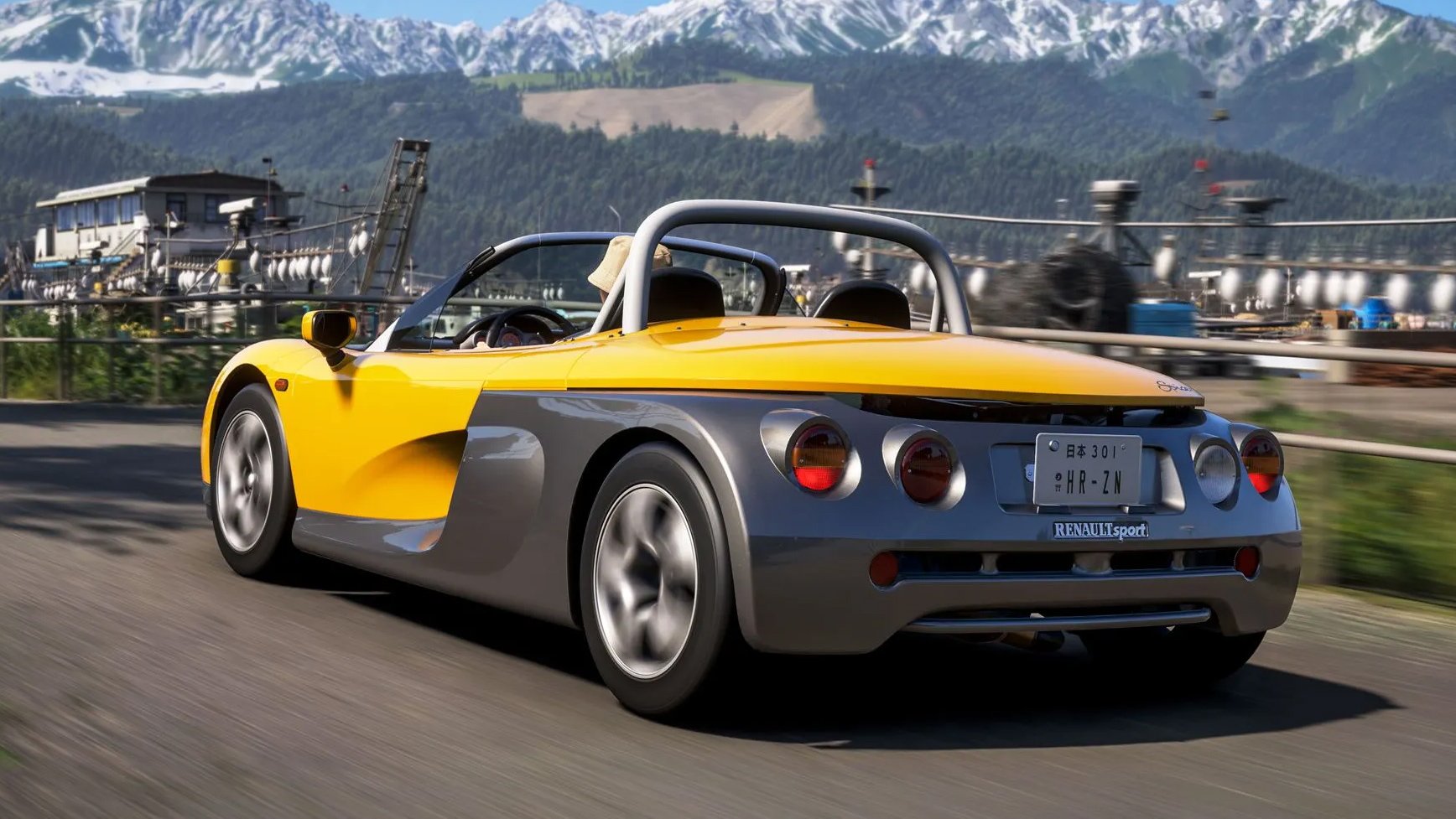


The Renault Sport Spider hasn’t appeared in a video game since the early 2000s. Not in any Forza. Not in any Gran Turismo. Nothing. That drought ends September 24, when the lightweight French oddball joins Forza Horizon 6 as part of the monthly Car Pass update.
It arrives alongside the McLaren W1, which will grab the bigger headlines. The W1 sits at the apex of the modern hypercar wars and slots neatly next to the Ferrari F80 already in the game’s roster. But the Spider is the more interesting story, because it reveals just how easily the digital car world can erase a machine from collective memory.
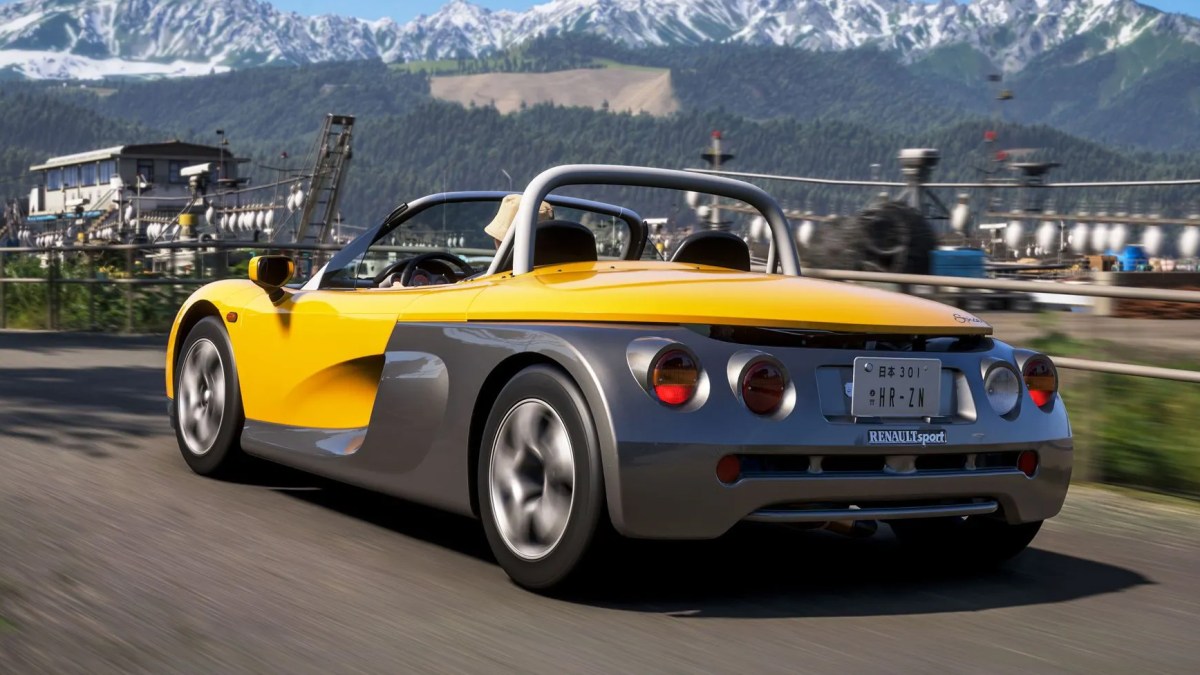
According to Internet Game Car Database, the Spider’s last appearances were in titles like Project Gotham Racing 2, Metropolis Street Racer, and Racing Evoluzione. Every one of those games is at least 23 years old. Somewhere between the mid-2000s and now, the licensing trail went cold. Whether that was Renault’s doing or simple publisher indifference, the result was the same: a generation of sim racers grew up with no exposure to one of the strangest production cars France ever built.
Renault launched the Spider in 1996 as both a road car and the basis for a one-make racing series. It weighed under 2,200 pounds, carried the 150-horsepower four-cylinder from the Clio Williams mounted behind the driver, and came without a roof. Not an optional roof. Not a detachable hardtop. No roof, period.
The styling looked like a concept car that somehow slipped past the homologation office. Wide, low, two-tone, with an interior stripped to almost nothing. Think less Miata, more Lotus Elise with Gallic flair and fewer creature comforts than a go-kart.
Renault produced just over 1,700 examples total. Eighty of those were dedicated motorsport variants pushing closer to 200 horsepower. The road car started at £19,000 new, which translates to roughly $62,000 in today’s money. That was never bargain territory, and it helps explain why the Spider remained a cult object rather than a mainstream hit.
The Elise, which launched the same year and shared the Spider’s philosophy of radical lightness, went on to become a fixture in racing games and enthusiast culture worldwide. The Spider did not. Lotus built thousands more cars, kept the platform alive for decades, and maintained licensing relationships with major studios. Renault moved on.
That gap between real-world merit and digital presence is what makes this Car Pass addition worth paying attention to. The Spider earned its reputation on back roads and spec-racing grids across Europe. It just never earned a spot on the virtual roster where most people under 40 actually discover cars like this.
Playground Games and Turn 10 have been aggressive about filling blind spots in the Forza car list over the past several years, pulling in models that other franchises ignore. Adding the Spider feels like a continuation of that approach, a deliberate effort to stock the garage with machines that have stories beyond horsepower figures and lap times.
Whether it becomes a fan favorite or a curiosity people drive once and forget remains to be seen. But for the first time in over two decades, players will at least have the chance to find out.
Share this Story