


Ferrari’s first electric car accelerates so violently that the company had to consult NASA and conduct medical studies to figure out how much force the human body actually wants to endure. That’s either the most Ferrari thing ever said, or the most expensive humblebrag in automotive history.
CEO Benedetto Vigna told Autocar India that EV acceleration can be so intense it disturbs the brain. Not his words loosely paraphrased — that’s nearly a direct quote from the man running a company built on speed. Ferrari’s solution wasn’t to dial back the power. It was to call rocket scientists and doctors to find the precise threshold where exhilaration tips into discomfort.
The car in question is the Luce, Ferrari’s inaugural battery-electric vehicle. It will produce north of 986 horsepower from four electric motors, hit 62 mph in 2.5 seconds, and top out at 192 mph. A 122-kilowatt-hour battery feeds the whole operation. On paper, those numbers are brutal but not unprecedented — the Tesla Model S Plaid and Rimac Nevera already live in that neighborhood.
What Ferrari is really doing is something far more calculated than chasing a zero-to-sixty time. The company is engineering sensation. Vigna admitted that raw, unfiltered EV thrust isn’t enjoyable past a certain point — it just makes you wait for the punishment to end. So the Luce’s acceleration curve will be sculpted, not just unleashed.
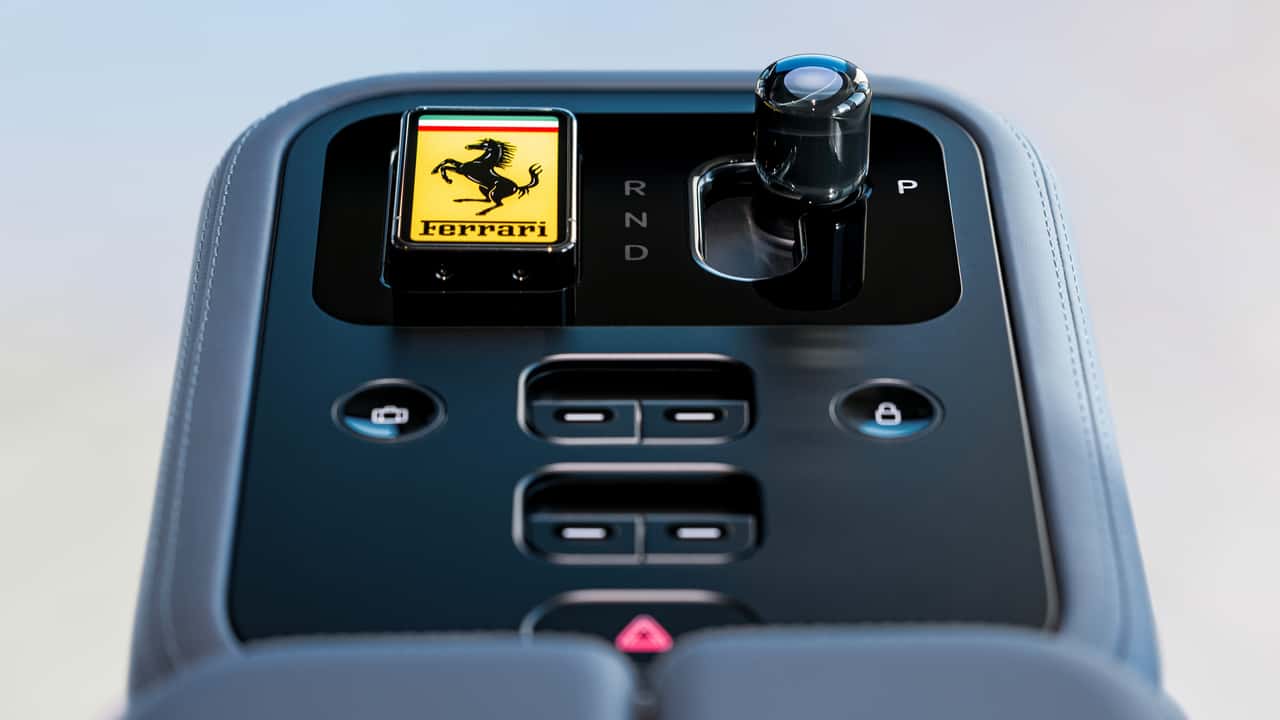
This tracks with everything Ferrari has been signaling about the Luce. The interior, already revealed, features physical buttons and switches — a direct rebuke to the capacitive touch controls plaguing modern supercars, including some of Ferrari’s own recent models. Vigna himself has acknowledged that touchscreen controls cost roughly half as much as physical ones, which makes their inclusion here a deliberate choice, not a cost-saving measure.
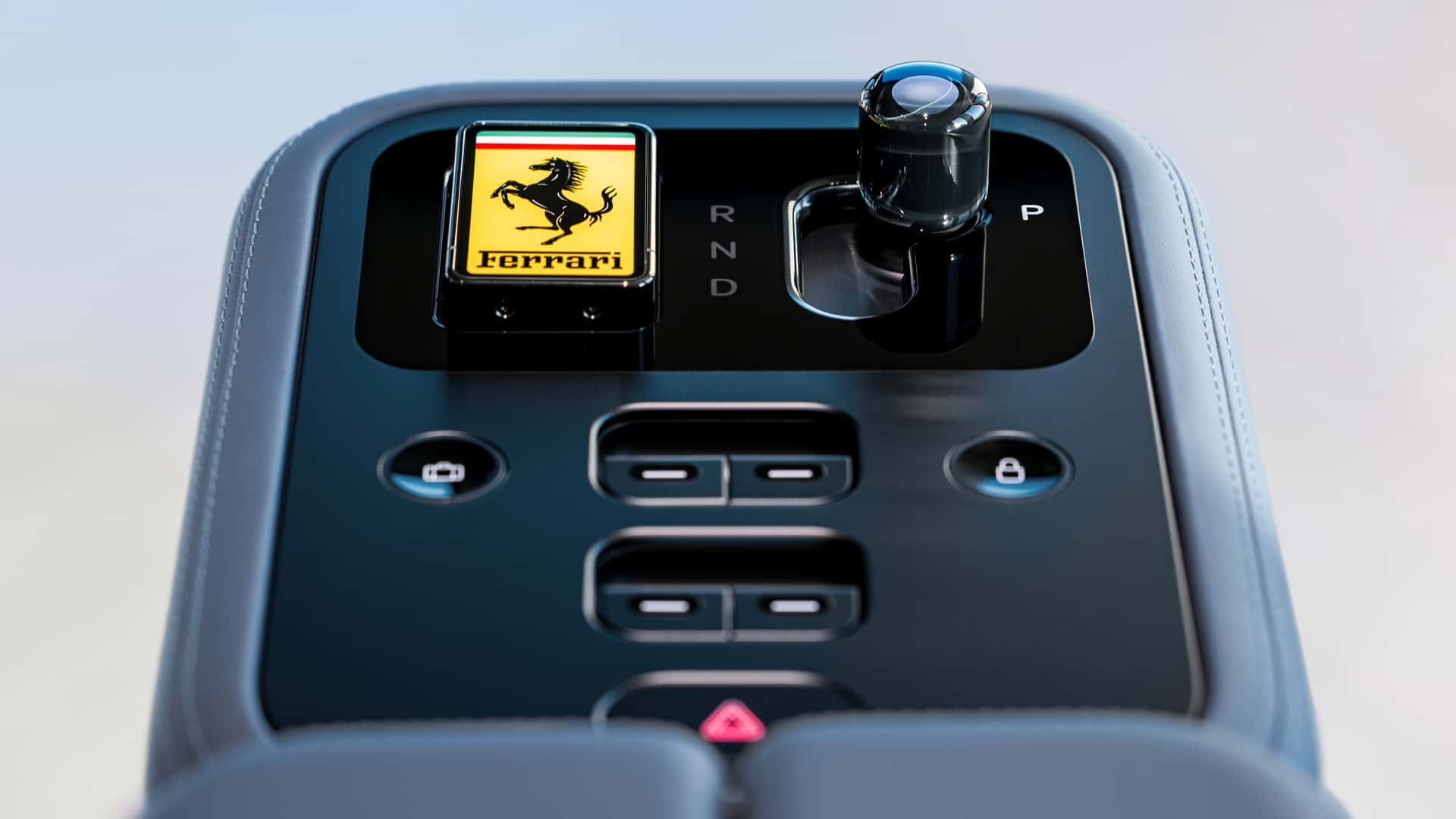
The cabin was co-designed with LoveFrom, the firm led by former Apple design chief Jony Ive. That collaboration tells you Ferrari sees the Luce as a design object first, an EV second. The company isn’t trying to compete with Tesla on spreadsheet metrics. It’s trying to make electricity feel like Maranello.
The chassis borrows its active suspension from the Purosangue SUV and the F80 hypercar. Independent rear-wheel steering rounds out a platform that sounds engineered to make a two-and-a-half-ton electric car behave like something much lighter and more alive.
Ferrari expects to debut the Luce later this year. Pricing hasn’t been announced, but no one buying this car will be checking their bank balance first.
The NASA angle is catnip for headlines, and Ferrari knows it. But strip away the theater and there’s a legitimate engineering question buried underneath: how do you make an electric supercar that doesn’t feel like a theme-park ride? Porsche wrestled with this on the Taycan. Lotus is wrestling with it on the Eletre. Every EV manufacturer dealing with instant torque has to decide how much violence the driver actually wants.
Ferrari’s answer is that more isn’t always better — that the shape of acceleration matters as much as the magnitude. Coming from a company that has spent 78 years selling speed as a religion, that’s a significant philosophical shift. The Luce doesn’t need to be the quickest EV on a drag strip. It needs to feel like a Ferrari when the light goes green. Whether NASA helped them find that feeling remains to be seen.
Share this Story