
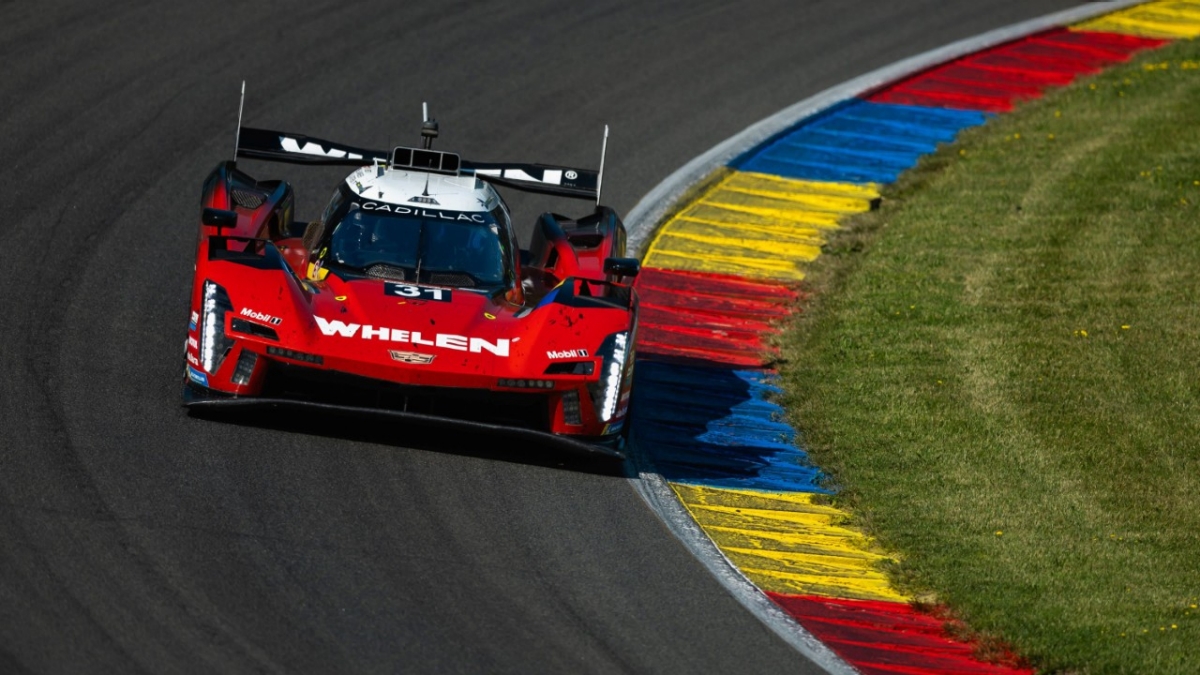


Cadillac Racing walked away from the 2026 IMSA WeatherTech SportsCar Championship season with all three Grand Touring Prototype titles. Manufacturer. Team. Driver. A clean sweep built on an overhauled aero package and a management philosophy that most factory programs talk about but rarely execute.
Jack Aitken claimed the Driver Championship aboard the No. 31 Cadillac Whelen entry, which also took Team honors. The car won at Detroit, Cadillac’s home track, and at Watkins Glen, while racking up additional awards for leading laps, pole positions, and pit efficiency.
But the hardware only tells part of the story. The real shift happened before the season even started.
Cadillac Racing Program Manager Keely Bosn pointed to a revamped aerodynamic and braking package on the V-Series.R as the catalyst. “We wanted an aero package to help make the car more drivable,” Bosn said. “At Daytona, we hit the ground running and the update really proved itself.”
That Daytona confidence carried through the entire year. Cadillac’s GTP podium streak now stretches back to the 2025 Indianapolis race, with 11 podiums across nine rounds in 2026 alone. Wayne Taylor Racing broke through for its first V-Series.R win with the No. 10 car at Road America, adding depth to a program that could have easily relied on a single dominant entry.
The depth was deliberate. Starting in 2025, Cadillac formalized what it calls the “One Team” strategy, linking its three partner squads into a single technical ecosystem. Action Express and Wayne Taylor Racing run IMSA duty, while Hertz Team JOTA handles the World Endurance Championship. Engineers and race leads from all three teams attended both IMSA and WEC rounds this season.
“When we say we have a ‘One Team’ approach, we truly mean it,” Bosn said.
The driver pool was shared too. Aitken and Earl Bamber ran most of the full schedules in both series. Jordan Taylor, Will Stevens, Louis Delétraz, Filipe Albuquerque, and Ricky Taylor all crossed over between programs, carrying setup knowledge and driving feedback across continents and time zones.
That cross-pollination is something few manufacturer programs manage with any consistency. Porsche runs large multi-team operations. Toyota has deep WEC infrastructure. But Cadillac’s approach of rotating drivers specifically to serve as human data links between teams is a structural choice, not just a scheduling convenience.
“It’s one thing for us on the technical side to be pushing certain methodologies or setups,” Bosn said. “It’s another thing for that to come from the drivers.”
The IMSA title is in the bag, but Cadillac’s 2026 isn’t finished. Two WEC rounds remain, and the 2027 IMSA season opens at Daytona in roughly three months. There is no off-season in prototype racing, just shorter gaps between problems to solve.
Bosn made no promises about repeating the sweep. She talked instead about process. “We’ll evaluate what went well and what didn’t go well, and how we can make incremental improvements for next season,” she said. “Our development is ongoing. It never stops.”
That language is cautious by design. The GTP class is a brutal environment where Balance of Performance adjustments can erase an engineering advantage between races. Cadillac’s competitors, Porsche, BMW, Acura, Lamborghini, are not standing still. A hat-trick in 2026 guarantees nothing about 2027.
What Cadillac has built, though, is an organizational machine that moves faster than the sum of its parts. Three teams functioning as one, sharing data, sharing drivers, sharing hard-won knowledge from two hemispheres of racing. The results followed the structure, not the other way around.
Daytona is 90 days out.
Share this Story