
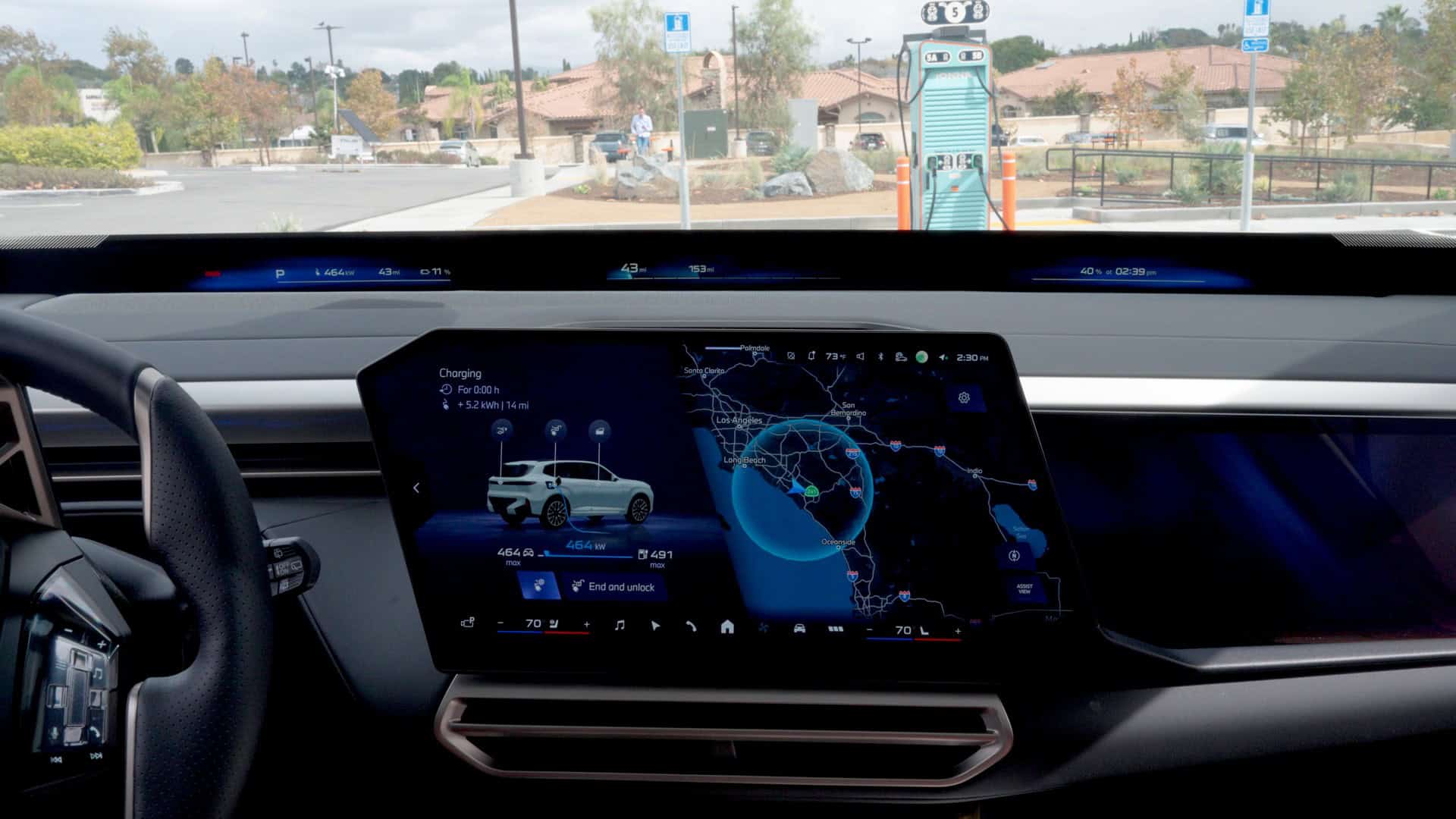


The central display read 464 kW. That number, captured during a carefully staged demonstration in California, briefly exceeded BMW’s own 460-kW official claim for the upcoming iX5 60 xDrive. It is the fastest charging rate ever recorded on a production BMW, and for about ten minutes, it delivered roughly 170 miles of added range.
Then comes the asterisk.
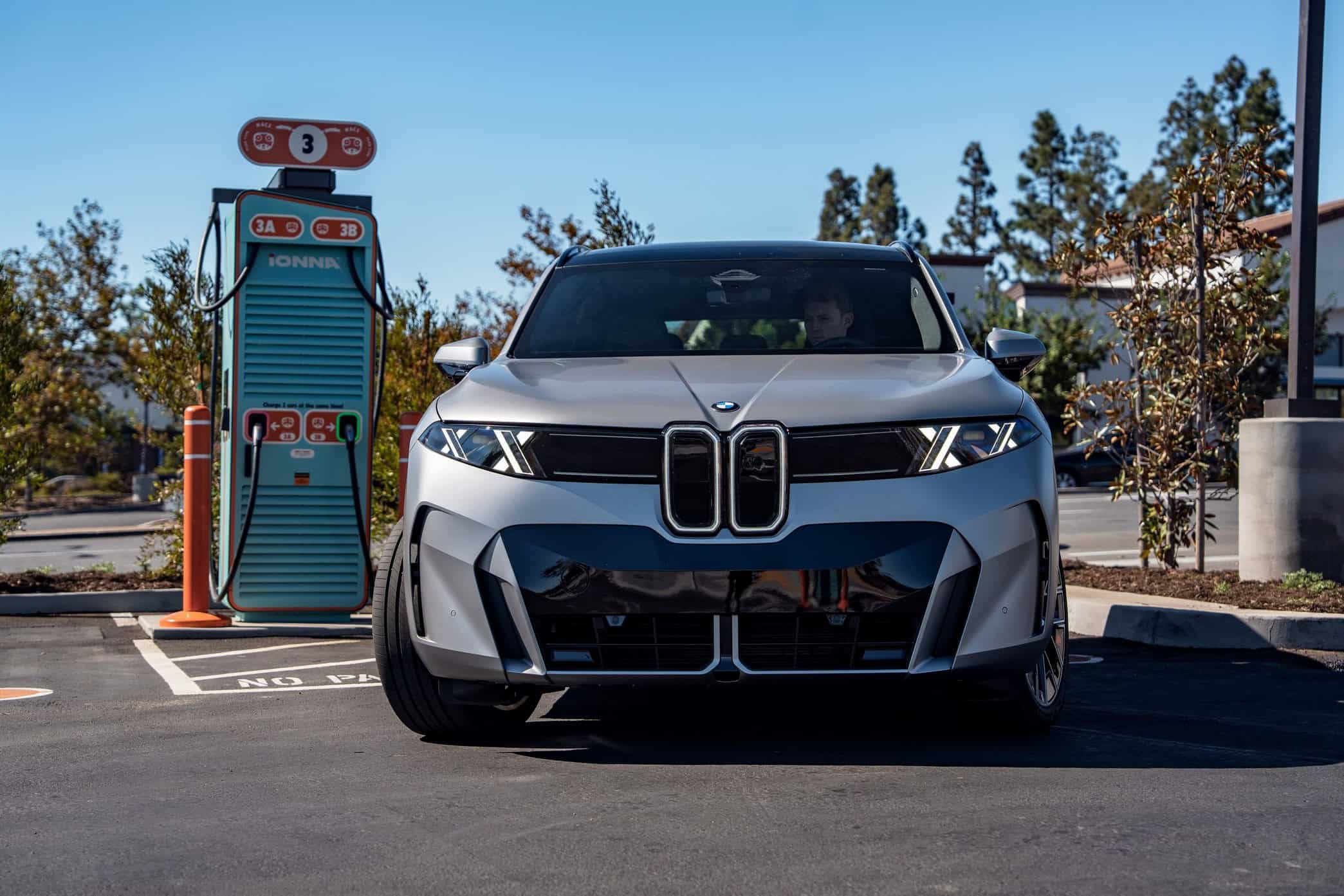
BMW itself acknowledged that the charging hardware used in the demonstration “doesn’t reflect commercially available charging hardware in the United States today.” Read that again. The automaker flew to California, partnered with IONNA and Alpitronic, set up ideal conditions, hit a number that will absolutely appear in marketing materials, and then admitted the infrastructure to replicate it doesn’t yet exist for regular customers.
That tension sits at the heart of every high-power EV charging claim right now. The cars are outpacing the chargers. BMW engineered a 144-kWh battery, the largest it has ever dropped into a production vehicle, capable of a 10-to-80-percent fill in roughly 22 minutes under perfect conditions.
The vehicle side of the equation is solved. The grid side is not.
IONNA, the charging network joint venture backed by BMW, GM, Honda, Hyundai, Kia, Mercedes-Benz, and Stellantis, contributed its expertise to the demo. Alpitronic supplied the high-power hardware. Each brought a piece of the puzzle, but the puzzle isn’t assembled yet for the public. Most DC fast chargers deployed across the U.S. today top out well below 400 kW, and many struggle to sustain 150 kW consistently.
The iX5 itself, on paper, looks like the EV that BMW should have built two years ago. A revised EPA estimate pegs range at up to 450 miles. BMW has already driven one 500 miles on a single charge with 50 miles still in the tank.
It starts at $81,250, which parks it right in the luxury SUV sweet spot where BMW has printed money for decades. Battery pack production begins in December at BMW’s Woodruff, South Carolina facility. First deliveries are slated for Q1 2027.
Only the 60 xDrive variant launches initially, though cheaper and pricier versions are expected to follow. The specs matter less than the strategy. BMW is positioning the iX5 as a range anxiety cure, a vehicle so overstuffed with battery capacity and charging speed that prospective buyers have no reason to hesitate.
But a 460-kW peak charging rate is a promise that depends entirely on someone else keeping up their end. Peak power is exactly that, a peak. It doesn’t hold for the full session.
Real-world speeds will vary with battery temperature, state of charge, ambient conditions, and most critically, whether the charger plugged into the car can actually deliver that kind of power. BMW built the machine. Now it needs America to build the outlets.
Share this Story