
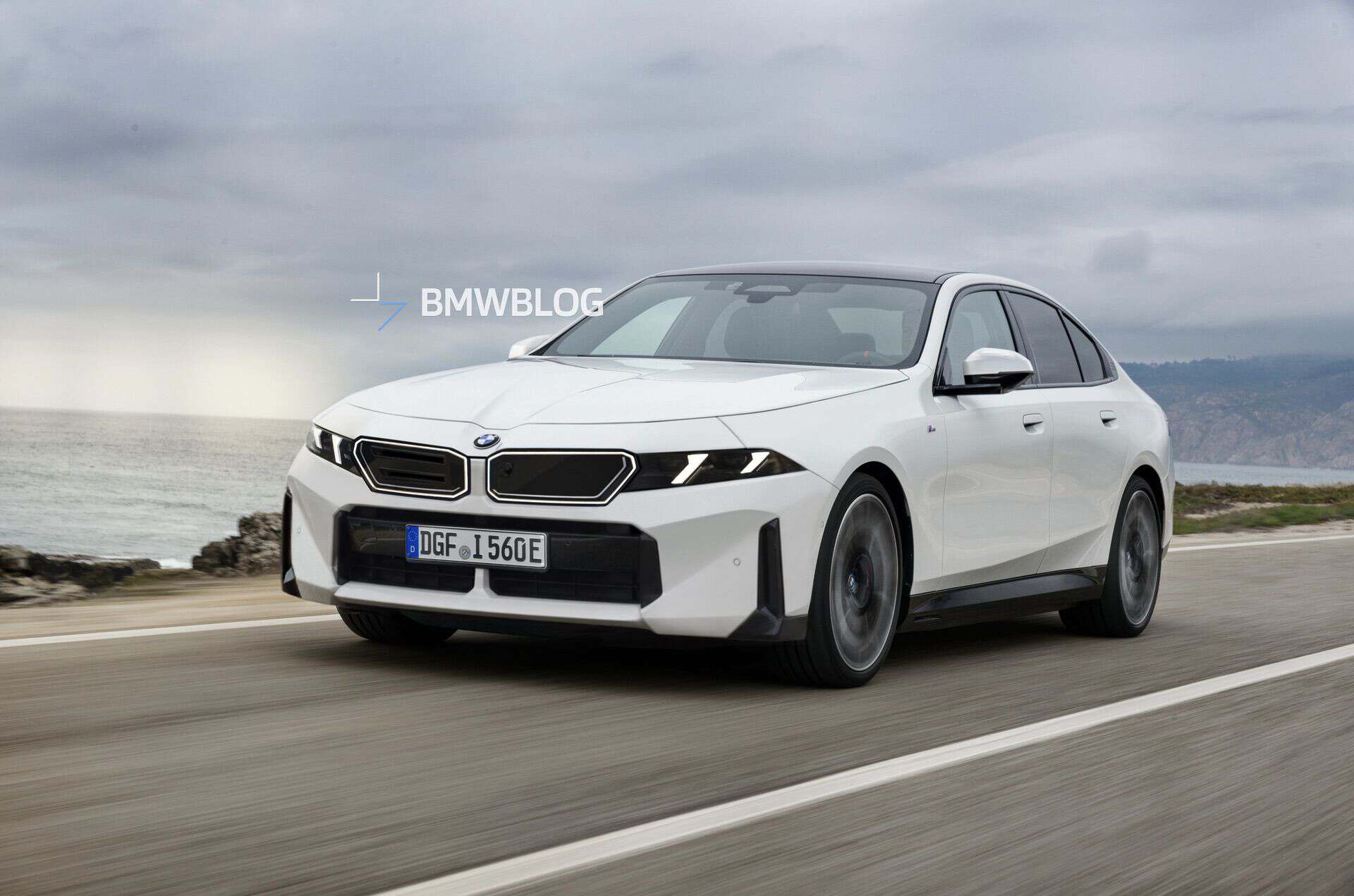


BMW had the chance to give the G60 5 Series a proper Neue Klasse face. It blinked.
Production of the facelifted sedan is slated to begin around July 2027, making it a 2028 model year car in the U.S. But the radical front end that appeared on early prototypes has been shelved. According to sources familiar with the program, Munich walked back plans for a complete Neue Klasse makeover because the tooling costs for an entirely new front end couldn’t be justified on a mid-cycle refresh.
What remains is a compromise. A new rendering based on insider information shows Neue Klasse headlights grafted onto a face that otherwise stays loyal to the current G60. The kidney grille keeps its split design but shrinks vertically, picks up illumination, and borrows some inner graphics from BMW’s newer cars.
It’s less aggressive than what the 5 Series wears today, which is arguably an improvement. The current kidneys swallow the car’s face whole. Dialing them back lets the headlights do the talking.
Below those lights, the bumper barely changes. The intakes, the lower fascia, the general proportions of the nose are evolutionary tweaks, not a rethink. The side profile goes completely untouched, which is standard practice for any LCI.
Expect new wheel designs and fresh paint options. Nothing more.
The real overhaul happens inside the cabin. BMW plans to swap in iDrive X with a 14.9-inch central display and Panoramic Vision, the windshield-projected system that replaces a traditional instrument cluster with three fixed tiles and six customizable widgets in the driver’s line of sight. The rotary iDrive controller appears to be dying, and an optional passenger screen rounds out the tech upgrade.
Under the hood, the gasoline and plug-in hybrid lineup stays put. The one wild card is the European-market 520d, where BMW may drop the B47 four-cylinder diesel in favor of the B57 inline-six diesel with a 48-volt mild-hybrid system. A larger engine loafing at lower loads can be a cleaner path through Europe’s tightening emissions regulations, and it signals that BMW hasn’t written off oil burners yet.
No output figures have leaked, and BMW hasn’t confirmed the swap.
The electric i5 is where the facelift gets genuinely interesting. When BMW updated the i7 earlier this year, it replaced the car’s prismatic battery cells with Gen6 cylindrical cells developed alongside Rimac. The result was 112.5 kWh of usable capacity, 250 kW charging, and more than 700 km of WLTP range.
The i5 rides on the same CLAR architecture, and the Rimac partnership extends beyond a single model. If the same battery tech migrates down, the i5 could jump from 516 km of WLTP range to roughly 700 km. That is a 36 percent increase on a car that doesn’t change platforms.
It creates a strange split personality for the 2028 5 Series. The exterior refresh is cautious to the point of timidity. A few new lights, a trimmed grille, some interior screens.
But beneath the i5’s floor, BMW may be stuffing in a battery upgrade that changes the car’s competitive position against the Tesla Model S, the Mercedes EQE, and anything else in the segment.
The tension between a conservative skin job and a serious powertrain leap says a lot about where BMW is right now. It’s hedging, trying to bridge the gap between its current design language and the Neue Klasse era without committing fully to either. The 5 Series has roughly four more years on sale before its successor arrives.
That’s a long time to live in the middle.
Share this Story