
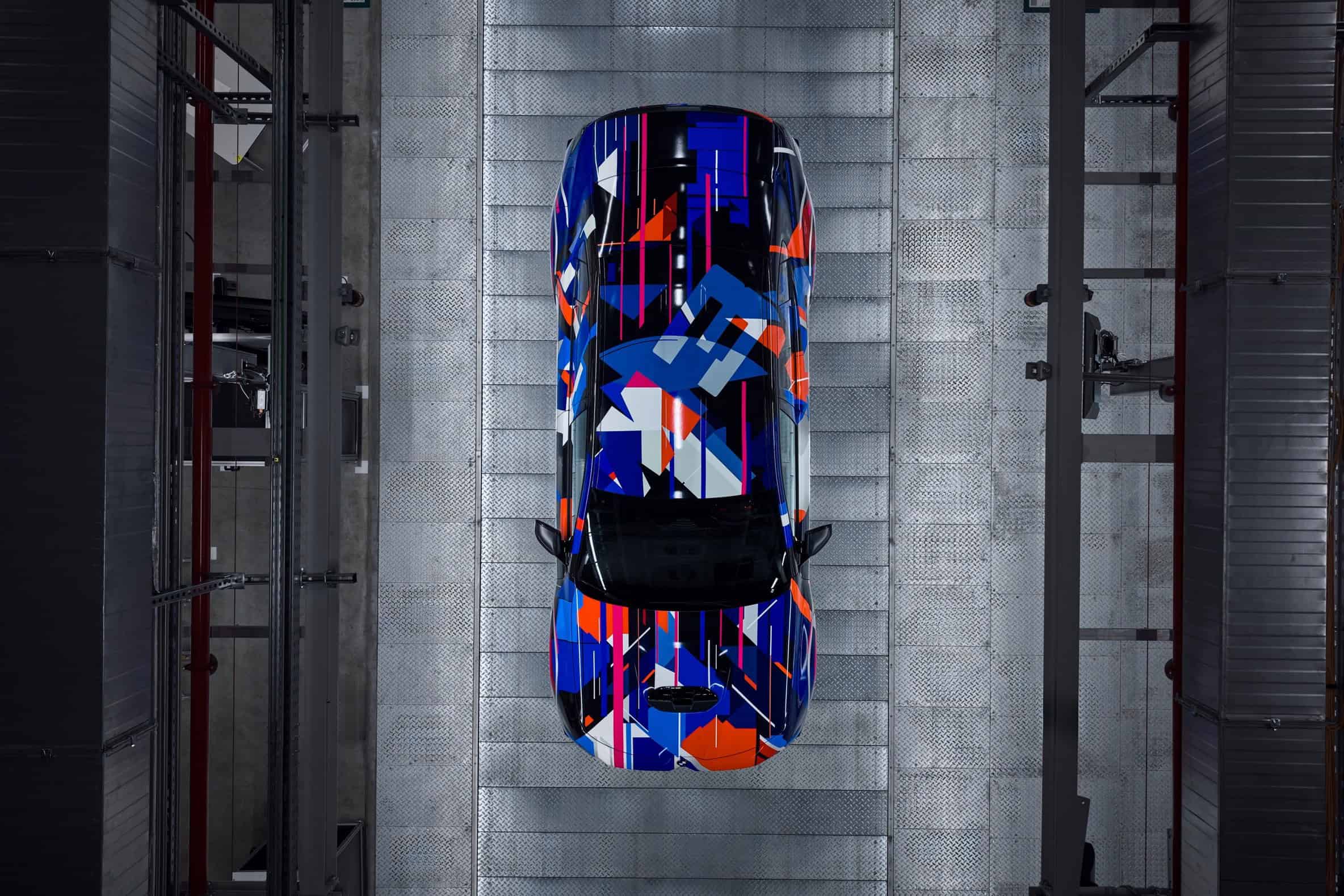


For more than a decade, every electric BMW wore a lowercase “i” like a scarlet letter. The i3, the i4, the i5, the iX. It was BMW’s way of telling you this one plugs in. Now, with the most sacred nameplate in its performance lineup, BMW is done explaining.
The electric M3 arriving in 2027 will be called the M3. Not iM3. Not M3i. Just M3.
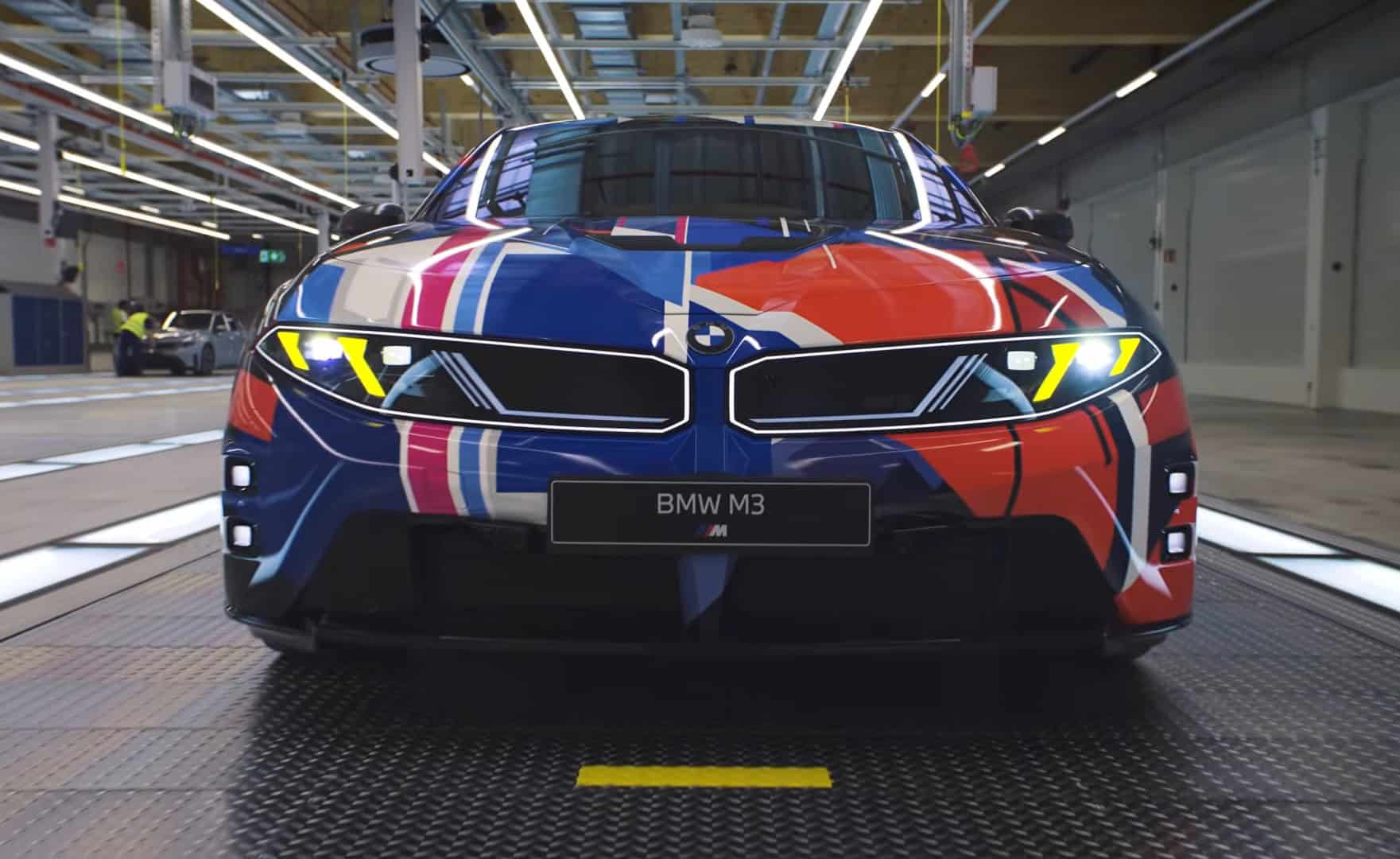
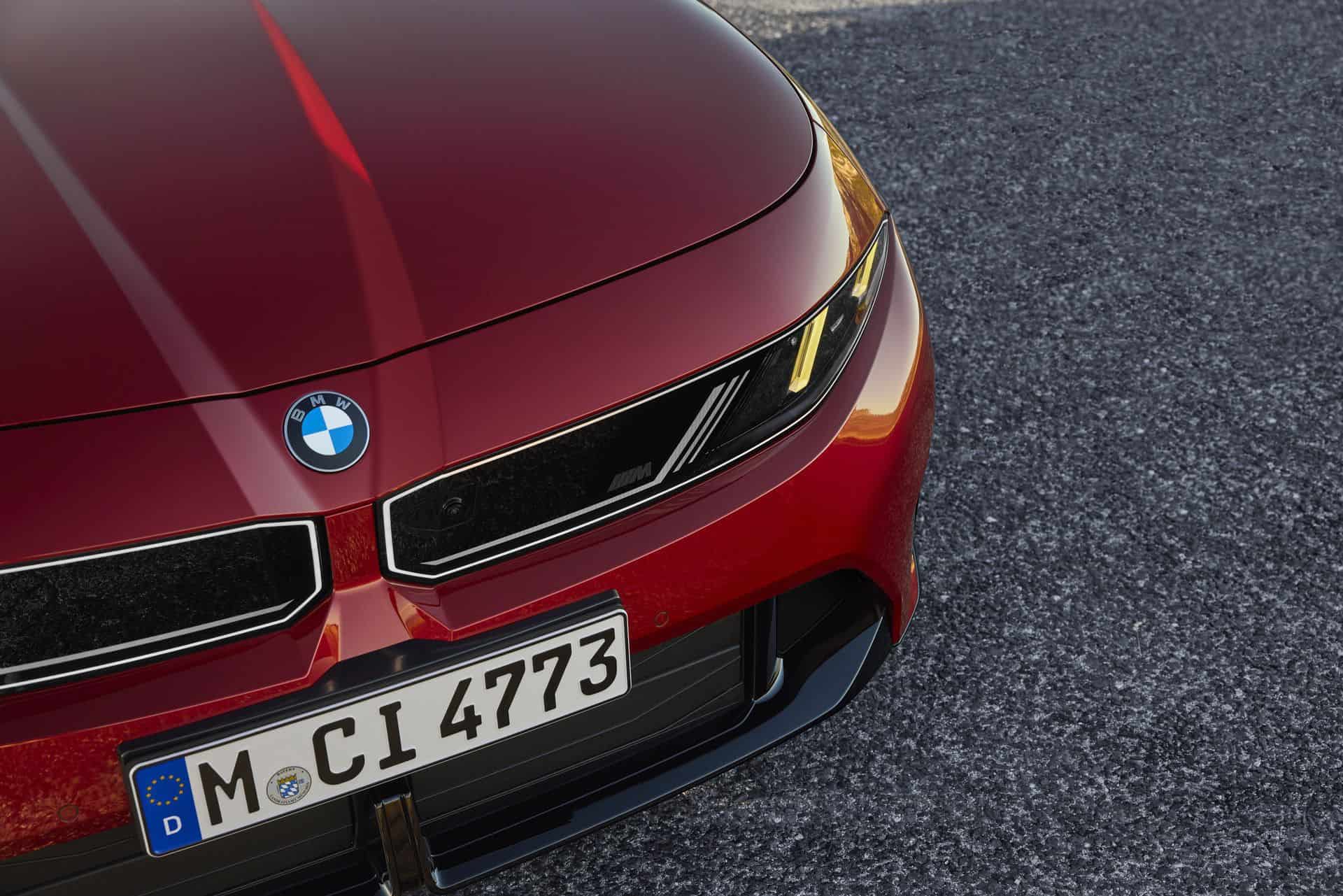
A new teaser video shows a camouflaged prototype wearing a license plate that reads BMW M3, plain as day. Official preview images have M3 badges on the doors, the roof, the trunk. BMW’s own press language calls it “the first fully electric M3,” with no qualifier stuffed into the name itself.
This is a deliberate break from a naming convention BMW established when the original i3 hatchback launched in 2013. That car created the template. Every electrified BMW since has carried the “i” prefix or suffix, including the new Neue Klasse i3 sedan that will share a production line with this very M3 at BMW’s Munich plant.
So why does the i3 sedan keep the letter while the M3 sheds it? Because BMW has decided the M3 badge carries more weight than any powertrain designation. Forty years of history, starting with the E30, built that equity. Slapping an “i” onto it would have made the electric version sound like a subcategory, a lesser thing, a spin-off rather than a successor.
The quad-motor sedan, internally coded ZA0, will be the first full-blooded M car born on the Neue Klasse architecture. Four motors, no exhaust, no apologies. BMW is betting that customers will understand what they’re buying without needing a letter to spell it out.
The strategy gets more interesting when you zoom out. A combustion-engined M3 sedan, the G84, is slated for 2028. Rumors point to wagon variants of both, an electric M3 Touring coded ZA1 and a gas-powered M3 wagon tagged G88. BMW could end up selling four M3 models at once, split evenly between electrons and gasoline.
That parallel lineup is exactly why the “i” becomes unnecessary. When one M3 has four electric motors and the other has an inline-six with tailpipes, nobody is going to confuse them at the dealership. The cars distinguish themselves. The name doesn’t need to do that work.
Munich’s plant is going EV-only from 2027, with the combustion 3 Series relocating to Dingolfing. But the M3, in its electric form, stays home. There is a certain poetry in BMW’s most storied performance car being the one that anchors the factory’s transformation.
The naming choice also sends a message to rivals. Mercedes-AMG and Porsche have been wrestling with how to badge their electric performance cars. BMW’s answer is the simplest one possible: keep the name, change the powertrain, trust the badge.
Whether the car itself can live up to four decades of M3 expectations is a separate question entirely. A quad-motor EV weighing north of 4,500 pounds will drive nothing like an E30 or an E46. The physics are different, the character will be different, and the sound, or lack of it, will be different.
But BMW has decided none of that changes what the car is called. The M3 is the M3. The “i” era, at least for M cars, appears to be over before it started. What remains to be seen is whether the car beneath the badge earns the name or merely borrows it.
Share this Story