
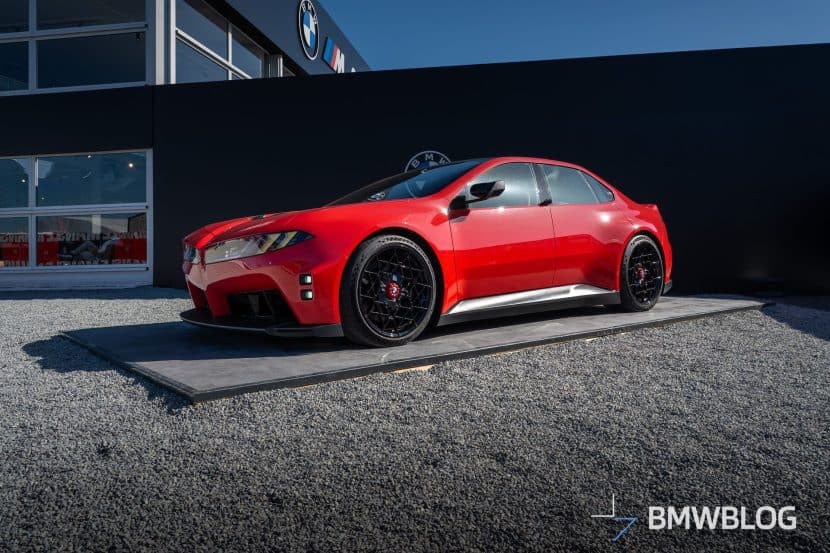


Le Mans, of all places, is where BMW chose to telegraph the naming future of its most sacred sedan. During a panel at the French endurance classic, BMW M CEO Frank Van Meel and design chief Oliver Heilmer laid out a simple but loaded argument: the M3 badge belongs to the car, not the powertrain.
There will be no iM3. The electric version arriving next year will simply be called M3. So will the combustion G84 variant, and possibly a Touring, if BMW green-lights it.
Van Meel’s logic is straightforward. The “i” prefix, in BMW’s internal hierarchy, denotes an EV-first architecture or sub-brand. The M3 is a performance car first, and the motors replacing the engine are a technical detail, not an identity shift. In his framing, it’s no different than when the M3 moved from a manual gearbox to a dual-clutch transmission. Nobody renamed it then.
It’s a clean argument on paper. Whether it holds up on asphalt is another matter entirely.
The electric M3 will carry one of the most scrutinized nameplates in the German performance canon. The E46 M3 remains the emotional benchmark for a generation of enthusiasts who fell in love with a naturally aspirated inline-six that demanded skill and rewarded attention. Every successor has been faster, heavier, and a little further from that ideal.
The G80 is quicker than any M3 before it and also the most divisive, from its face to its curb weight. An electric M3 continues that trajectory with ruthless efficiency. It will almost certainly demolish straight-line times.
It will also be heavier. The real test, whether it can replicate the M3 experience on a twisting back road over a long drive, doesn’t get settled in a Le Mans press panel. It gets settled when tires meet tarmac.
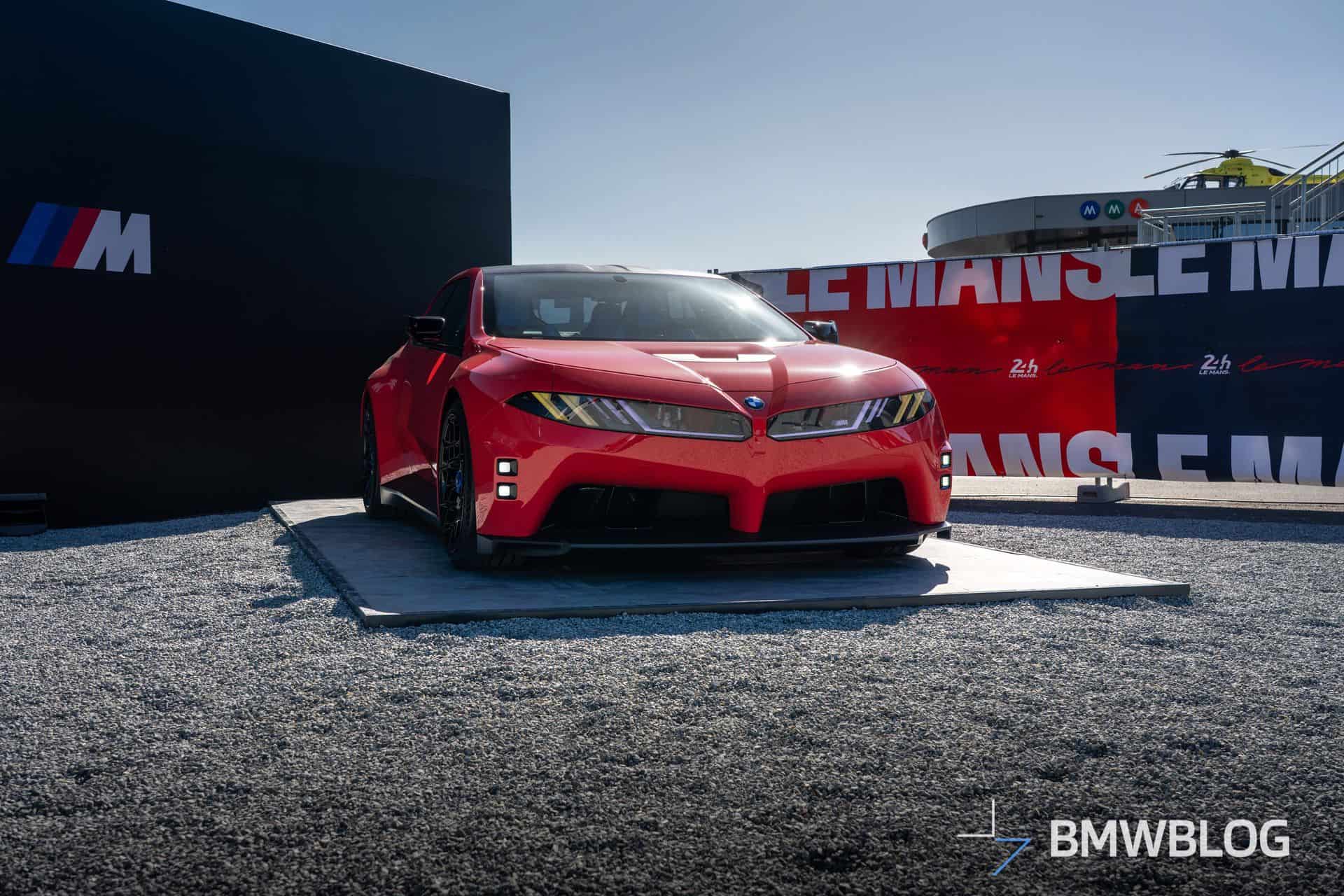
Heilmer added another layer to the announcement. BMW M is moving toward a unified design language across all its products, regardless of model or powertrain. The BMW M Concept Neue Klasse is the physical preview of that direction, with its surfacing, proportions, and face structure meant to establish a template.
Whether that’s reassuring depends entirely on how you feel about BMW’s recent design choices. The G80’s front end split the enthusiast community in a way the E46 and E90 never did. A unified M design language could either resolve that tension or calcify it across every product in the lineup.
The naming decision itself is sharper than it looks. Calling it iM3 would have put the powertrain first and the performance heritage second. It would have pre-sorted the audience into EV buyers and M buyers, two groups that don’t always overlap. By keeping it M3, BMW is saying: judge this car on whether it delivers, not on what fuel it doesn’t burn.
That’s a higher bar. The iX M60 technically wears an M badge, and plenty of enthusiasts would argue it never truly earned one. The electric M3 won’t get that kind of grace period.
It inherits five decades of expectations built on mechanical feel, driver engagement, and a specific kind of analog thrill that batteries have yet to replicate. Van Meel is betting that the badge is bigger than the engine. He might be right.
The M3 has survived turbocharging, automatic transmissions, all-wheel drive, and a grille that launched a thousand memes. Electrification is just the next test. But it’s the biggest one yet, and the answer won’t come from a stage in France. It’ll come from the first hard corner.
Share this Story