
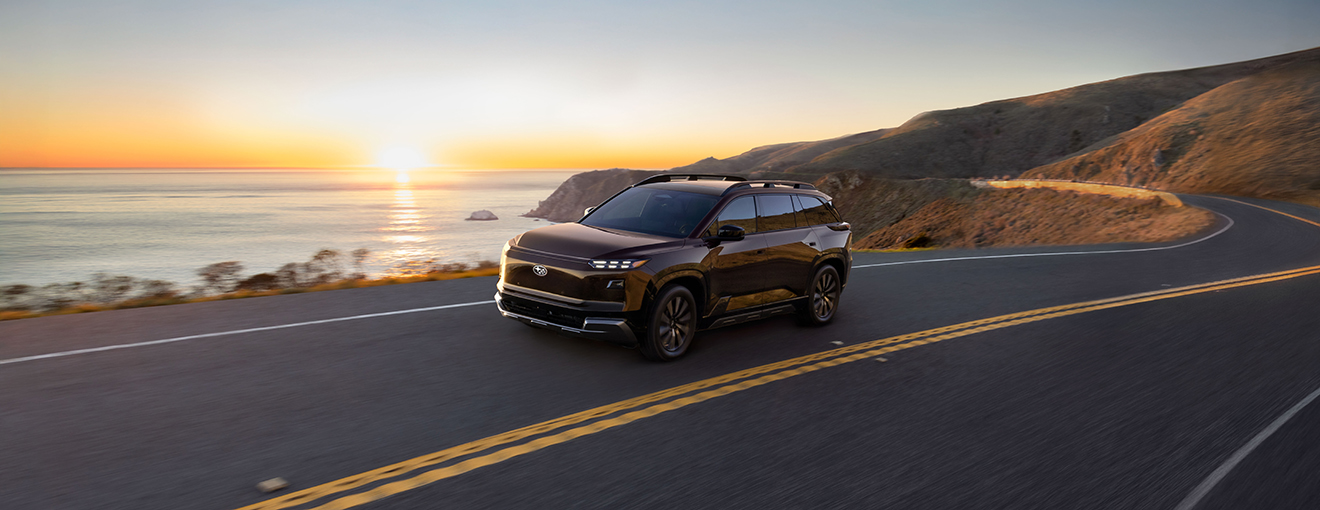


Four years ago, Subaru had exactly one electric vehicle — the underwhelming Solterra, a Toyota joint venture that barely registered in the market. Now the company has unveiled its fourth EV in rapid succession, and this one carries the heaviest burden of all: replacing the Ascent, Subaru’s bread-and-butter three-row family hauler.
The 2027 Subaru Getaway debuted at the New York Auto Show with numbers that demand attention. Dual electric motors producing 420 horsepower, a 95.8-kWh battery targeting more than 300 miles of range, and zero to 60 in under five seconds. Standard all-wheel drive comes across the lineup, making it, by a comfortable margin, the most powerful production Subaru ever built.
That last fact alone tells you how dramatically the brand’s identity is shifting.
The Getaway seats up to seven with a bench second row or six with captain’s chairs. Subaru claims six-footers can sit comfortably in all three rows — a statement every automaker makes and few deliver on. Cargo space behind the second row measures 45.6 cubic feet with the third row folded, which beats the Kia EV9, while all seats up nets you 15.9 cubic feet — adequate, not generous.
Ground clearance sits at 8.3 inches, and the X-MODE dual-mode system carries over with Snow/Dirt and Deep Snow/Mud settings, plus Grip Control and Downhill Assist. Towing tops out at 3,500 pounds. That matches the EV9 but falls short of the Rivian R1S, and for boat owners and camper towers, it may not be enough.
Charging runs through a standard NACS port, opening up Tesla’s Supercharger network. Subaru quotes 150-kW peak charging speed, enough to go from 10 to 80 percent in roughly 30 minutes. An onboard battery preconditioning system keeps charge times consistent even in 14-degree weather — a meaningful real-world detail for a brand whose core buyers live in snow country.
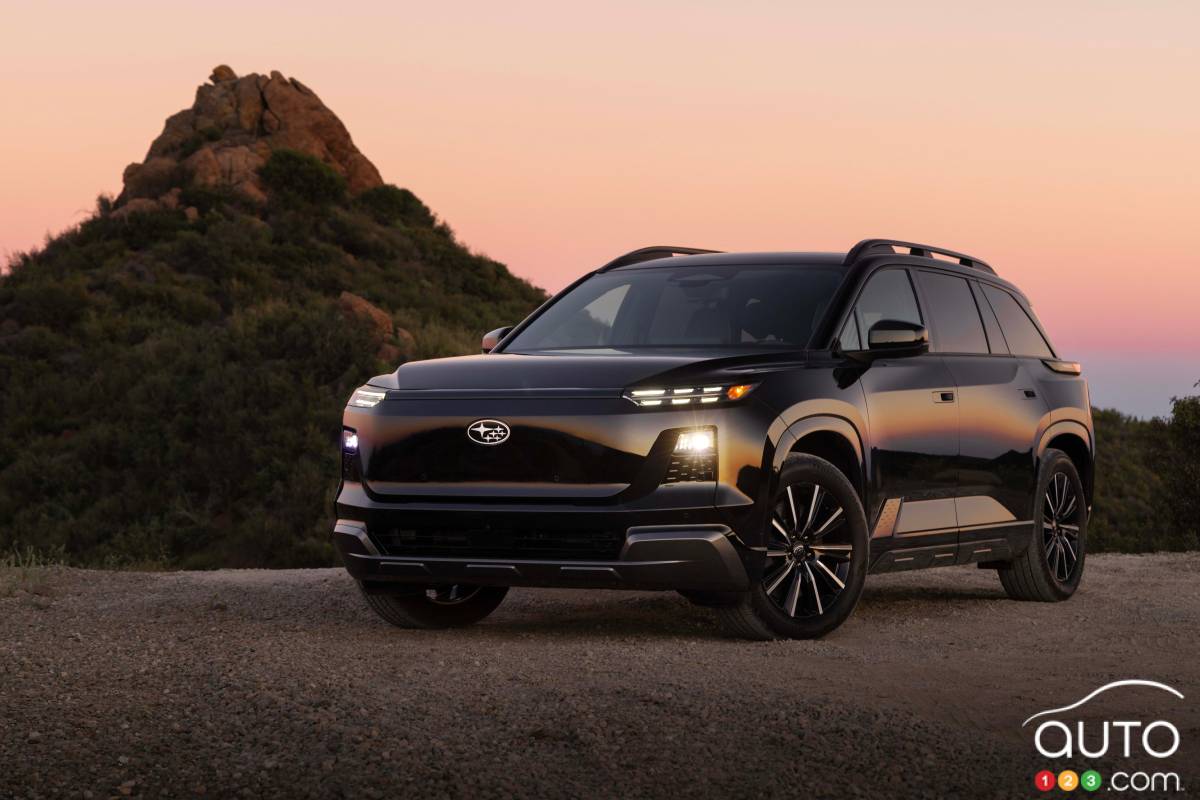
A standard-range model with a smaller 77.0-kWh battery is slated for 2027, presumably at a lower price point that could make or break the Getaway’s volume prospects. Subaru hasn’t released pricing on any trim, which is telling. The three-row EV segment is brutally competitive on value right now, and the Kia EV9 has already established a price anchor that’s hard to undercut.
Inside, the tech package is competitive but not groundbreaking: a 14-inch touchscreen, 12.3-inch digital cluster, wireless Apple CarPlay and Android Auto, and the full EyeSight driver-assistance suite as standard. Higher trims add a panoramic moonroof, heated and ventilated seats in the first two rows, a heated third row, and a 360-degree heated steering wheel. USB-C ports in every row and dual wireless phone chargers round out the family-friendly pitch.
The real question hovering over the Getaway is whether Subaru’s fiercely loyal customer base — people who buy Outbacks and Foresters for their rugged simplicity and hold them for 200,000 miles — will follow the brand into a fully electric three-row. The Ascent sold well precisely because it was straightforward and affordable. The Getaway needs to be both of those things while also being electric, powerful, and worth its inevitably higher sticker price.
Subaru is calling this the vehicle for family adventures, and the specs support that pitch. But the company is now four EVs deep in a transformation it started late, moving fast in a market that punishes hesitation and rewards execution. The Getaway arrives at dealerships in late 2026, and that’s when the real test begins — not on a show floor, but on a monthly sales chart.
Share this Story