
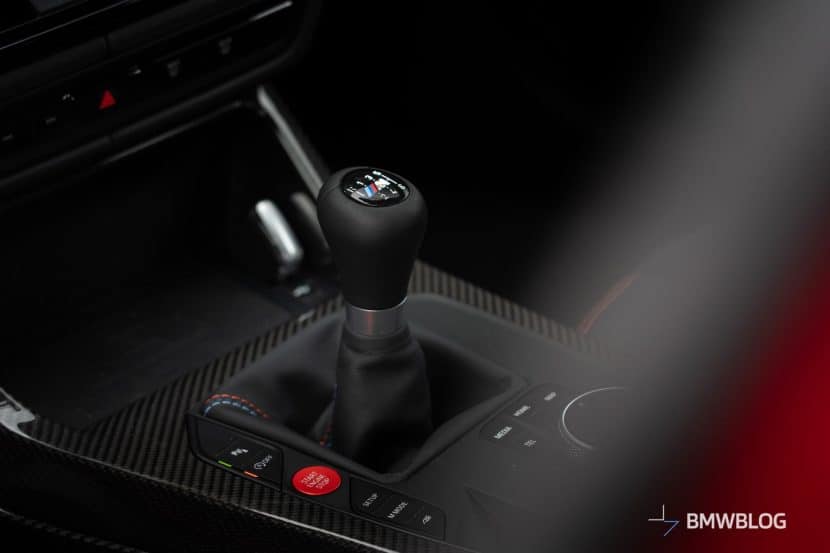


The 2027 BMW M3 CS Handschalter rolls off the line with 473 horsepower, a six-speed manual, rear-wheel drive only, and a 75-pound diet. It starts at $108,450, is limited to North America, and exists as the swan song for the G80 generation. BMW spent years insisting the manual was a dead format, then built perhaps the most desirable M3 in a decade around one.
Which makes the silence around a G87 M2 CS Manual almost deafening.
The M3 CS Handschalter is a surgical car. The twin-turbo S58 stays at 473 hp and 406 lb-ft, but BMW attacked everything around it — carbon fiber body panels, forged wheels, titanium rear silencer, bucket seats, CFRP interior trim. The claimed 75-pound weight savings requires the carbon-ceramic brake option, which alone strips 31.5 pounds. The rest comes from everywhere else they could find grams to shave.
It’s an impressive effort. But the G87 M2 is sitting right there, already doing half the work.
The M2 has had a six-speed manual since launch. It has never offered xDrive. There’s no philosophical leap required, no drivetrain deletion to justify, no hand-wringing about whether rear-drive purity still sells.
The M2 has been the purist’s entry point in the M lineup from day one of the G87 generation. And the clock is ticking. The next-generation M3, the G84, is expected in 2028 with xDrive standard and no manual option.
BMW has already confirmed the electric M3 ZA0 for 2027. If the next M2 follows the same path — and there’s no reason to believe it won’t — then the G87 is the last M2 that will ever leave a factory with three pedals.
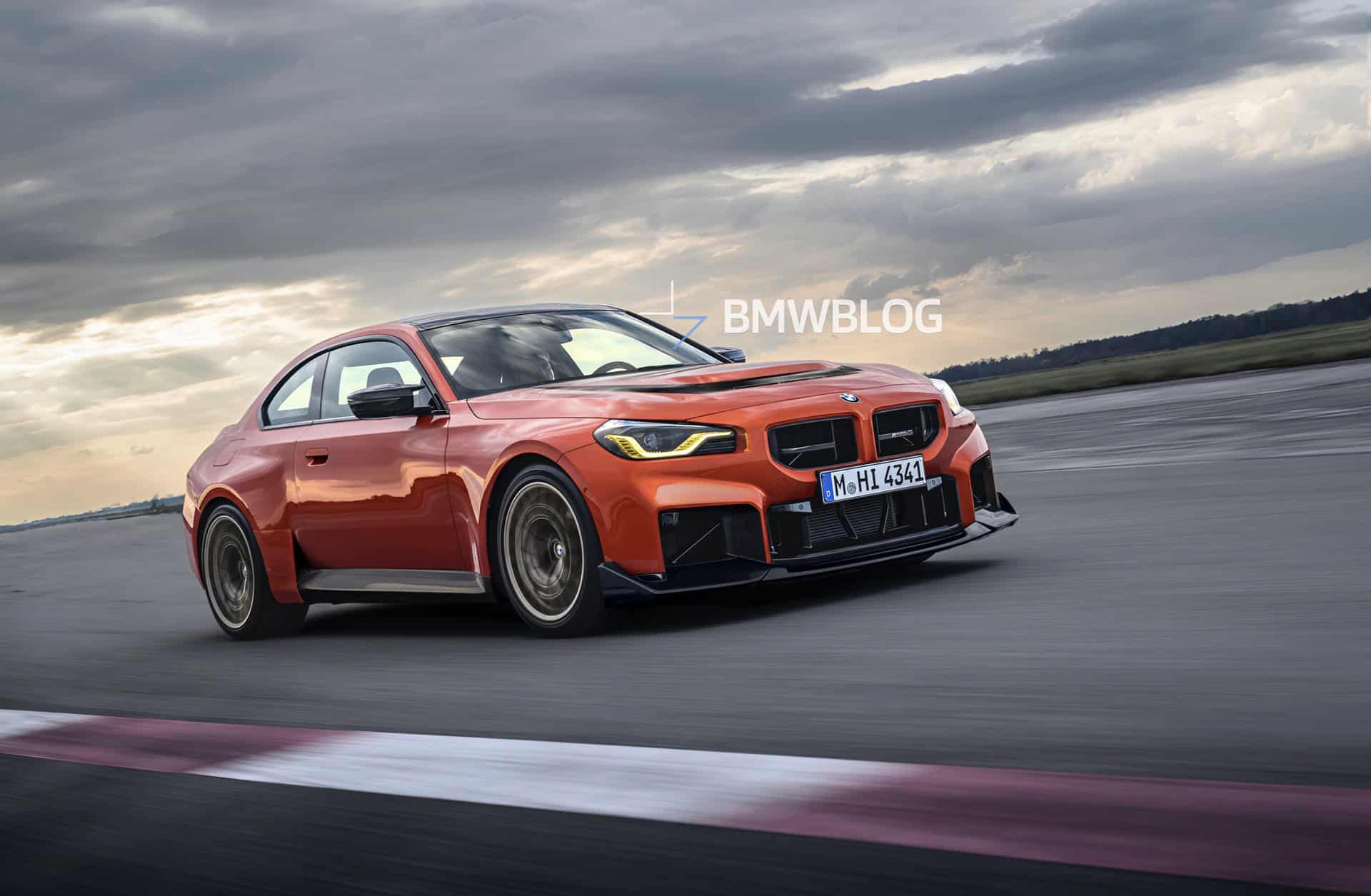
The F87 M2 CS proved exactly what happens when BMW gets this formula right on the smaller car. It was rare, focused, immediately recognized as the definitive version of its generation. Clean examples have appreciated steadily since production ended.
Nobody who bought one regrets it. Plenty who didn’t have been kicking themselves since.
BMW doesn’t need to invent anything new. The M3 CS Handschalter already wrote the playbook: carbon body elements, forged lightweight wheels, titanium exhaust, bucket seats, CFRP trim, CSL-sourced dampers, auxiliary springs, lowered ride height. Bolt that package onto the G87 platform and you have a car that would matter more per pound lost than the M3 version does.
The G87 has always carried more weight than a car its size should. Anyone who drove the F87 noticed immediately and hasn’t stopped mentioning it.
Price is the trap to avoid. The M2 has always been the M car you could actually justify. Push a CS version past $90,000 and it starts competing with its bigger sibling for the same buyer’s dollar, which defeats the entire point.
Keep it sharp, keep it under that threshold, and limit production enough that it holds its value without becoming artificially scarce.
One more thing BMW should reconsider: geography. The M3 CS Handschalter is a North America exclusive, which made sense as a regional farewell for a sedan. But restricting the last manual M2 ever built to a single market would be the kind of boardroom logic that looks inexplicable a few years later. The G87 sells in Europe, Australia, and across Asia, and the final manual version should be available everywhere.
BMW proved something with the M3 CS Handschalter that many inside Munich probably didn’t expect: there is still a market for a lightweight, manual, rear-drive M car priced above $100,000. The demand was real enough to greenlight production.
The M2 version would be cheaper to build, easier to engineer, and would land in a segment with even less competition. The parts are in the bin. The recipe is written. The generation is ending. All that’s left is the decision.

Share this Story